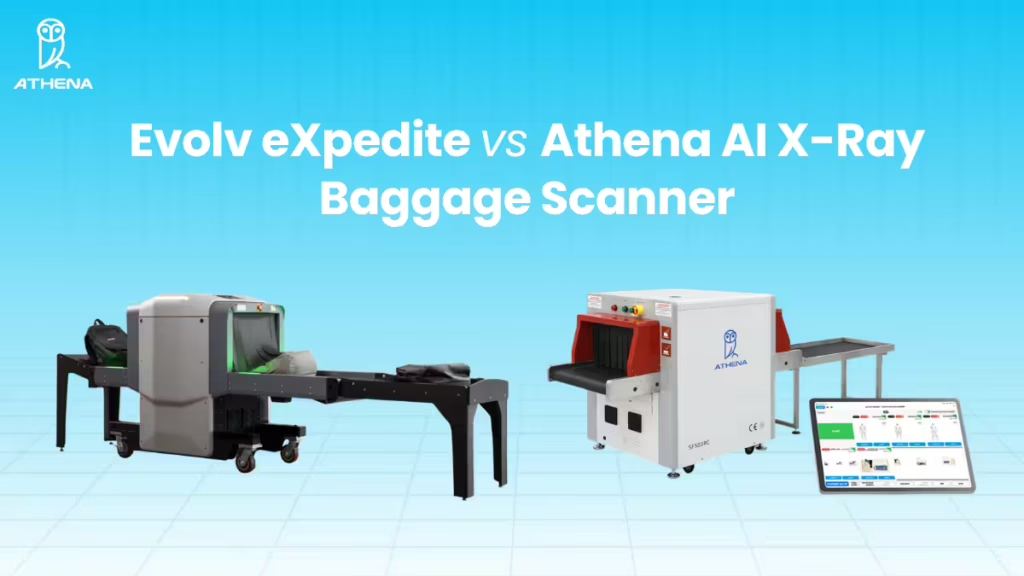

Organizations searching for the best AI-powered X-ray baggage scanner often compare the Evolv eXpedite and the Athena AI X-Ray Baggage Scanner. Both systems are designed for modern high-throughput entryway security screening, both support conveyor speeds around 0.75 m/s, and both can process up to approximately 2,000 bags per hour in high-volume environments. [1, 2, 3]
Both systems also use dual-energy AI X-ray imaging. [1, 2, 3] Dual-energy imaging is the industry-standard method that distinguishes materials by density and effective atomic number, enabling AI models to help identify a wide range of threats. [8]
So if the core imaging technology is comparable, what sets the Athena AI X-Ray apart? For many organizations, the difference comes down to control, configurability, and platform depth — selectable screening modes and conveyor speeds, centralized multi-site review, human-in-the-loop workflows, and support for custom AI detection models, including drone-component detection. [3, 4, 5, 6, 7]
For organizations looking for more control and the best AI X-ray system for hospitals, schools, courthouses, stadiums, airports, government facilities, and critical infrastructure, those capabilities matter.
What is Evolv eXpedite?
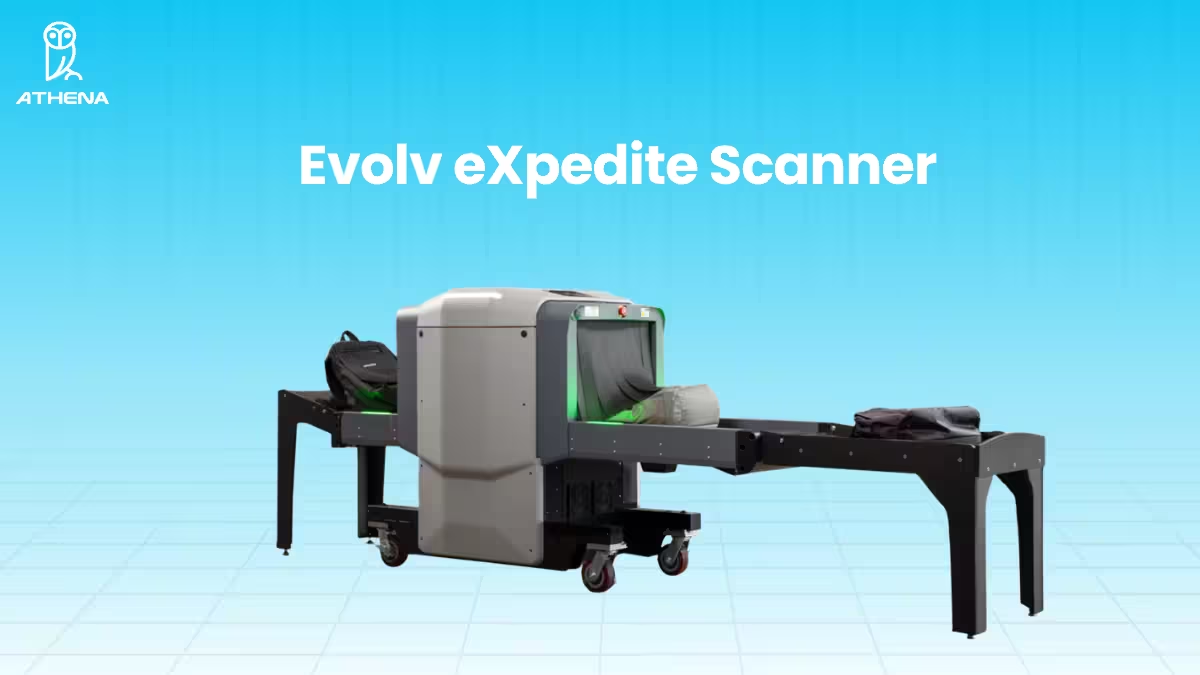
Source: evolv.com/concealed-weapons-detection/expedite/
Evolv eXpedite is an AI-based autonomous bag screening platform designed for fast visitor throughput and frictionless security screening. It uses dual-energy high-speed X-ray imaging together with machine-learning models to detect concealed threats, and a red-light / green-light workflow so operators generally do not need to interpret X-ray images. [1, 2]
- High-speed bag screening
- Autonomous threat detection
- Frictionless visitor flow
- Venue and event security
- Streamlined checkpoint operations
The platform is designed to reduce bottlenecks and improve entry speed in high-traffic environments.
What Is Athena AI X-Ray Baggage Scanner?
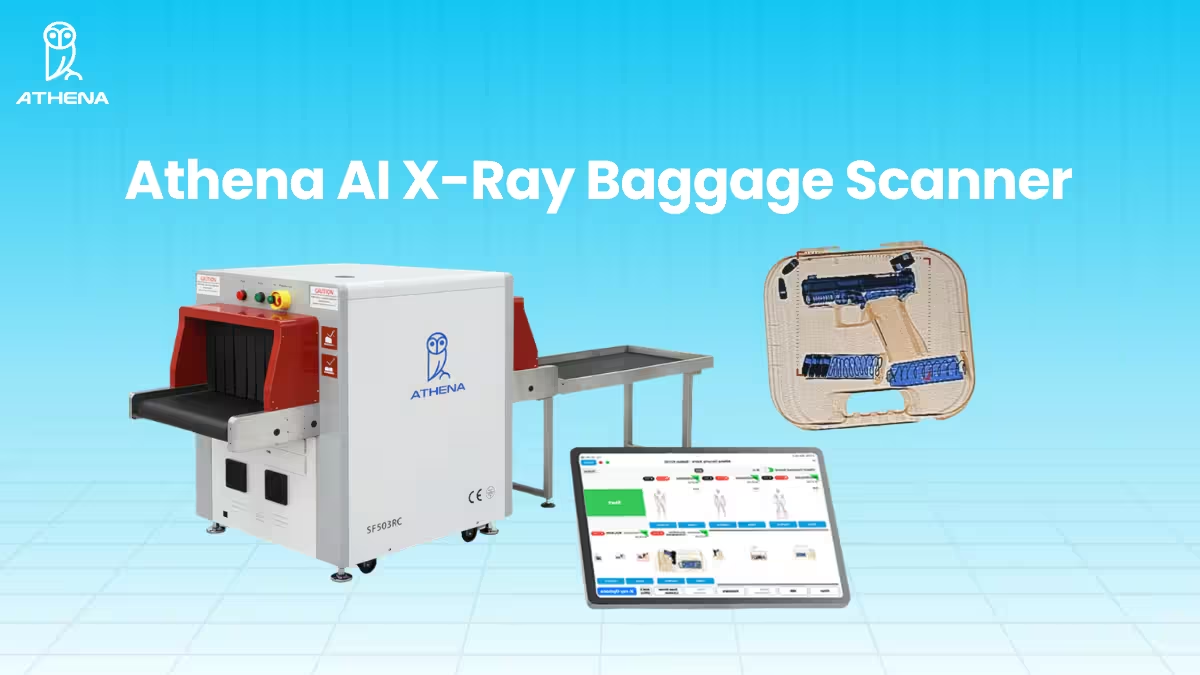
Athena Security offers an AI-powered dual-energy X-ray baggage scanner designed to combine high throughput with configurable controls, centralized oversight, and a broad, extensible AI platform. [3]
- Customizable dual-energy X-ray imaging with selectable modes
- AI-assisted threat detection
- Material composition and density analysis
- Configurable conveyor speeds (0.30–0.75 m/s)
- Human-in-the-loop workflows
- Centralized remote “Second Look” review
- DHS-aligned screening workflows
- Visitor management integration
- Multi-site analytics
- Custom AI model support
Athena’s platform is designed for organizations that want control, speed, and an extensible security platform. [3, 4]
Same Imaging Foundation — More Control and Configurability
Both Athena and Evolv publicly support approximately 0.75 m/s conveyor speeds and up to roughly 2,000 bags per hour, and both rely on dual-energy AI X-ray imaging. [1, 2, 3]
Where Athena differentiates is operator control and configurability. Athena supports configurable conveyor speeds from 0.30 m/s up to 0.75 m/s, [3] allowing organizations to balance throughput, threat sensitivity, screening workflows, operational efficiency, and security posture.
Athena’s dual-energy imaging supports material-based analysis, including effective atomic number / composition, material density, organic vs. inorganic materials, metallic vs. non-metallic objects, and mixed-density items. Material and density discrimination is inherent to dual-energy X-ray systems generally, [8] and Athena pairs it with selectable modes and operator controls so security teams can tune screening to their environment. [3]
Why Dual-Energy AI X-Ray With Controls Matters
Athena’s dual-energy X-ray platform supports AI-assisted identification of firearms, knives, dense metallic threats, non-ferrous weapons, electronics anomalies, suspicious organic materials, alcohol containers, and improvised threats. For example, some schools use Athena’s AI X-Ray system to help identify prohibited alcohol containers concealed inside backpacks during student screening.
By combining material-based analysis with configurable operator controls, Athena aims to improve threat classification, operator confidence, secondary screening workflows, security response speed, and overall screening accuracy.
Custom AI Models and Drone Detection
One of Athena’s largest differentiators is its ability to support custom AI detection models. [3, 7] Because dual-energy imaging captures material-composition and density information, organizations can work with Athena to extend detection to specialized security applications beyond traditional weapons detection.
Athena has publicly announced AI-powered drone-detection models designed to identify drone motors, propellers, batteries, electronics modules, structural drone components, and partially assembled drones concealed in bags or cargo. [5, 6] These models were developed for government and critical-infrastructure security use cases, expanding the platform into counter-drone screening, critical-infrastructure protection, government security, transportation-hub screening, cargo inspection, and enterprise security operations.
This flexibility allows Athena’s platform to evolve alongside emerging security threats.
Human-in-the-Loop AI and Centralized Oversight
Athena emphasizes human-in-the-loop, AI-assisted security operations with operator control.
Athena’s centralized “Second Look” platform supports remote alert review, multi-site monitoring, escalation workflows, centralized command oversight, operator accountability, and incident reporting. [4] Athena positions AI as a tool that improves operator awareness and decision-making rather than removing operator visibility. The system also includes iPad-based workflows, pinch-to-zoom controls, integrated WDS + X-ray alerts, simplified operator training, and DHS-aligned auditing workflows. [3, 7]
Watch it live below:
Athena vs. Evolv X-Ray Comparison
The table below reflects publicly available information for each system as of the review date. “Not publicly documented” indicates the capability is not described in the vendor’s public materials, not that it is necessarily absent.
|
Feature |
Athena AI X-Ray Baggage Scanner |
Evolv eXpedite |
|
Conveyor Speed |
0.30–0.75 m/s (configurable) |
~0.75 m/s |
|
Throughput |
Up to ~2,000 bags/hr |
Up to ~2,000 bags/hr |
|
Imaging Technology |
Dual-energy AI X-ray |
Dual-energy AI X-ray |
|
Material / Density Analysis |
Yes (inherent to dual-energy) |
Yes (inherent to dual-energy) |
|
Configurable Modes / Speeds |
Yes |
Not publicly documented |
|
Human-in-the-Loop Workflow |
Yes (operator-assisted) |
Autonomous; tablet-assisted resolution |
|
Custom AI Models |
Yes |
Not publicly documented |
|
Drone-Component Detection |
Yes |
Not publicly documented |
|
Centralized Remote Review |
Yes (“Second Look”) |
Not publicly documented |
|
Visitor Management Integration |
Native integration |
Not publicly documented |
Threat Containment vs. High-Speed Throughput
Evolv eXpedite uses AI-powered dual-energy X-ray detection with a red-light / green-light workflow. When a potential threat is detected, the system automatically stops the conveyor belt and highlights the suspicious bag for the operator on a connected tablet. [1, 2]
Athena gives customers configurable security workflows depending on whether the priority is maximum containment or maximum throughput. [3] In a containment-focused configuration, Athena can automatically stop the conveyor when a threat is detected and hold the suspect bag inside the X-ray tunnel until security personnel respond — a more controlled resolution for environments that require higher levels of security.
For customers prioritizing speed and continuous visitor flow, Athena can also be configured to keep the conveyor moving when a threat is detected. In this mode, Athena associates the suspicious bag with the individual carrying it by displaying both an image of the person and an image of the bag on the operator screen, so security personnel can quickly identify who the bag belongs to without interrupting throughput. By linking the threat, the bag, and the person, Athena gives operators greater situational awareness while letting customers choose whether the conveyor stops during an alarm event.
Which AI X-Ray Security System Is Better?
Organizations prioritizing frictionless visitor throughput, autonomous workflows, event-style screening, and fast entry processing may consider either platform, since both deliver high-throughput, dual-energy AI screening.
Organizations that also want configurable screening modes and speeds, centralized multi-site “Second Look” review, human-in-the-loop decision support, custom AI models, drone-component detection, native visitor-management integration, and dedicated hospital, school, and government screening workflows will find these capabilities in the Athena AI X-Ray platform.
Why We Believe Athena Is a Strong Choice
In our view, Athena delivers the same fast, frictionless, dual-energy screening experience customers expect — with added configurability, centralized oversight, and an extensible AI platform. Rather than a single autonomous workflow, Athena gives security teams selectable modes, deeper operator controls, and centralized visibility across sites.
With Athena, security teams can tune sensitivity and speed to each environment, route alerts to a centralized review team, adapt detection with custom AI models, and maintain high throughput while keeping operators in the loop — making it well suited for schools, hospitals, events, government facilities, transportation hubs, and enterprise security operations where both speed and decision quality matter.
Important note: No technology can guarantee 100% accuracy or prevention of all incidents. Any screening system should be used as part of a layered security approach that includes trained personnel and established safety protocols.
Sources
[1] Evolv eXpedite FAQ (dual-energy X-ray; analyzes material properties) — https://evolv.com/resources/blog/evolv-expedite-faq/
[2] Evolv eXpedite product page (dual-energy high-speed X-ray imaging; red-light/green-light workflow) — https://evolv.com/concealed-weapons-detection/expedite/
[3] Athena AI X-Ray with AI Assist datasheet (specs, configurable speeds, features) — https://www.athena-security.com/wp-content/uploads/2026/04/X-Ray-with-AI-assist-5030-1.pdf
[4] Athena Security – Centralized “Second Look” AI X-Ray feature (PR Newswire) — https://www.prnewswire.com/news-releases/athena-security-launches-centralized-second-look-ai-x-ray-feature-to-enhance-the-safety-and-speed-of-multi-site-screening-302553935.html
[5] Athena Security launches AI X-Ray drone detection (DroneLife) — https://dronelife.com/2025/11/28/athena-security-ai-x-ray-drone-detection
[6] Athena Security unveils AI X-Ray drone defense system (Yahoo Finance) — https://finance.yahoo.com/news/athena-security-unveils-ai-x-133500186.html
[7] Athena Security to roll out new X-Ray software update (Security Sales & Integration) — https://www.securitysales.com/news/athena-security-set-to-rollout-new-x-ray-software-update/613546/
[8] Dual-energy X-ray screening & effective-atomic-number material discrimination (ScienceDirect) — https://www.sciencedirect.com/science/article/abs/pii/S0168900222006040
Athena AI X-Ray Baggage Scanner vs. Evolv eXpedite · Last reviewed: June 18, 2026