Oleo Bone
Schedule Demo

Business Case Justification: Implementing the Athena Security Weapon Detection System in Hospitals

Enter Your Information to Learn About How Athena Could Save Your Facility Money While Protecting It From Threats
Executive Summary

Hospitals face a rising tide of violence, particularly in emergency departments, where healthcare workers, patients, and visitors are at increasing risk. The Athena Concealed Weapon Detection System (WDS) uniquely provides an advanced, proactive solution that enhances safety. By adopting this system, hospitals can protect lives, reduce liability, increase staff retention, and improve public trust—delivering a strong return on investment (ROI) both financially and operationally.

1. Problem: Rising Hospital Violence

  • Healthcare workers are 5x more likely to suffer workplace violence than other professions leading to higher turnover
  • 26% of Nurses (ANA 2025) are considering leaving their organization due to workplace violence


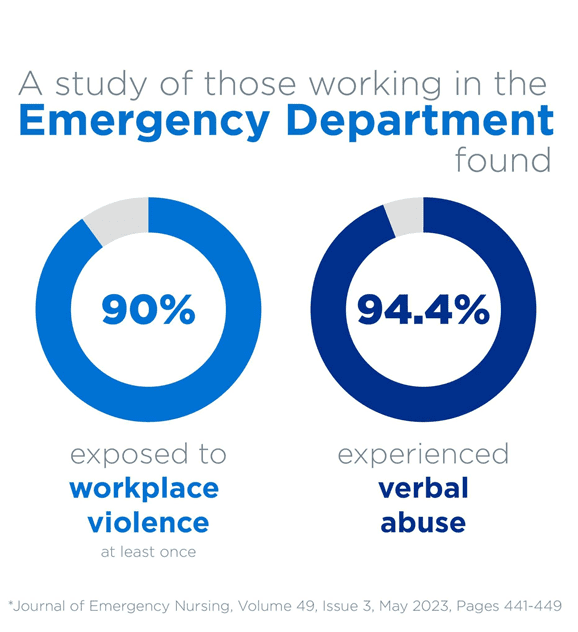
Emergency departments, open 24/7, are particularly vulnerable to volatile patients, agitated visitors, and community violence spillover leading to higher costs
2. Athena Security's Weapon Detection System Components

  • Athena’s system is an AI-powered weapon detection platform that seamlessly integrates with hospital operations. It is comprised of: 

    1. Advanced metal detection
    2. Controller Unit with LIDAR, HD Video, and AI Processing at the edge
    3. Operator Interface Unit for Officer interaction and engagement

    Athena Control Center: Audit, Reporting, and Analytics

3. Key Business Benefits Of The Athena Weapon Detection System

a. Proactive Entryway Security To Remove Prohibit Items
  • Detects weapons before a perpetrator enters the building.
  • Stops mass-casualty threats with real-time alerts and smart lockdowns.


b. Enhances Staff and Patient Safety
  • Staff feel safer, increasing job satisfaction and retention.
  • Reduces turnover and burnout caused by security fears and traumatic events.


c. Boosts Public Trust, Reputation, and HCAHPS Scores
  • Reassures patients and families that the facility prioritizes safety.
  • Demonstrates leadership in community responsibility.


d. Legal Risk Mitigation
  • Shows duty-of-care compliance, lowering exposure to lawsuits.


May reduce insurance premiums due to enhanced risk posture.

4. Return on Investment (ROI)

“If this technology helps retain just one nurse and doctor per year, it more than pays for itself.” — CEO, Major Health System


  • Nurse replacement cost: ~$65,000 per nurse
  • Physician replacement cost: $200,000+ per physician
  • $4 million of the Average Hospital Operating Budget Lost to Nursing Shortage: NSI cites that 1% change is nurse turnover costs ~$286k/year, and that’s 5.6% of your budget.
  • Athena System Average Cost: ~$38,000/year/lane and $40/hr ave for the officer.
  • Potential cost savings from incident prevention, reduced turnover, legal protection, and improved operational continuity far exceed investment.
  • Direct labor savings of $40/hr Security Officer by the reduction in staffing need versus the competing screening technology, methods, and staffing models.


Additional ROI contributors:


  • Lowered emergency response, incident recovery costs, lower insurance premiums
  • Reduced operational disruptions and improved patient flow. Improved HCAP.
  • Data-driven optimization of staffing and entry point usage. Athena helps save money with the Analytics and trust that the system is helping manage the screening lane

5. Other Cost Considerations

  • Base cost: ~$38K/year/lane includes the total cost of ownership of the hardware, software, service, and 24/7 technical support, all from one vendor.
  • One Vendor: Integration with visitor management systems, smart door logic, visual analytics, X ray with A.I., Holographic Information Officer, and more from one vendor.


Minimal infrastructure disruption: Small footprint and adaptable to existing entryways, instead of creating modeling needs.

6. Differentiators of Athena WDS ACC and Platform

  • Audit trail on all transits
  • Audit trail and accountability for Officer Resolution of Alarms
  • Audit trail to verify calibration testing
  • All under one roof: Integrates with X-ray with A.I., Visitor Management and Access Control (e.g., Jefferson Regional, Kaiser, Unity Health) with training, service, and support all from one vendor.
  • Patented Features like real-time threat recognition such as Evasion Alarm
  • AI-driven analytics on testing, throughput, alarm frequency, officer presence, and more
  • Enables compliance with Joint Commission, Department of Homeland Security, IAHSS, OSHEA,  and other safety standards


Portable, minimal footprint, aesthetically flexible for welcoming environments

7. Recommendation To Add Athena Weapon Detection Systems

Based on the evidence of rising threats, the unique vulnerability of healthcare facilities, and the tangible and intangible benefits provided, it is recommended that the hospital implement the Athena Weapon Detection System at all high-traffic entry points—starting with the Emergency Department.

This proactive investment not only protects people and saves lives but ensures the long-term financial, reputational, and operational health of the institution.


Here is an additional section for your business case that explains why Athena Security’s Weapon Detection System (WDS) is uniquely suited to ensure accountability and confidence in a hospital screening program—integrating content from the Feature List Q2 2025 document and aligning it with broader strategic concerns about hospital safety:

9. Of All Weapon Screening Options: Why Athena?

Confidence Through Accountability–Athena Sets The Standard

A sound weapon screening program isn’t just about the product—it’s about improving a consistent process, proving it works, works consistently, and is operated properly–or else, it should tell you! Athena Security’s platform stands apart because it provides full accountability at three critical levels: system performance, personnel compliance, and auditability of every screened individual.


1. Audit Trail on All People Screened

Athena’s system automatically captures and logs:


  • Real-time images and metadata of every person who walks through the detection portal.
  • ID scans and visitor management data (if used), including optional links to internal Person of Interest databases and government watchlists.
  • Records of any alerts, false alarms, voluntary disclosures, or secondary screenings.

This provides not only operational oversight but also proof of deterrence and the ability to conduct post-incident investigations efficiently. These logs ensure the facility can validate who came in, when, and what happened.


2. Audit Trail to Ensure the Technology Is Functioning

The system includes:


  • DHS 8.2 Verification of Calibration Testing and Recording, which ensures ongoing system health checks are conducted and logged.
  • System Auto Diagnostics that monitor power, connectivity, and system status remotely in real-time.
  • Business Intelligence (BI) Connector for exporting system performance metrics (e.g., alert rate, throughput, evasion attempts) into dashboards or compliance reports.


This not only reduces the risk of undetected malfunction but also helps meet DHS-recommended best practices and mitigates liability by showing documented system maintenance.


3. Audit Trail for Officer Compliance


Personnel accountability is equally important as reliable tech. Athena’s WDS features:


  • Officer Check-In Logs, ensuring officers walk through the system at regular intervals to demonstrate presence and readiness.
  • Secondary Screening Confirmation, Alert Resolutions verified via the interface and logged when officers respond to alerts.
  • Customizable Incident Reporting Forms to ensure security events are reported with consistency and completeness.


These features help answer two critical post-incident questions and provide real-time accountability:

“Was the officer following the standard operating procedure?”
“Was the alert properly cleared or escalated?”

Why This Matters

These audit capabilities aren’t just “nice to have.” They are essential for:


  • Legal defense and compliance: Documented procedures and compliance mitigate liability risk in the event of an incident. Accreditation will ask your staff about operating and safety procedures–stay in compliance.
  • Executive confidence: Leadership needs verifiable, reportable proof that the screening system is both effective and responsibly managed. We give photographic proof.
  • Staff trust: Nurses and clinical teams feel safer knowing that technology and people are held to high standards and that the hospital is invested in more than just hardware—it’s invested in outcomes.


These controls align directly with guidance in the white paper by Michael Gips, which emphasizes that “integration into policy and operations is critical to maximizing value” from a weapon detection system. It is not simply a technology deployment—it’s a cultural and procedural commitment to safety.

10. Patented Intelligence: Purpose-Built Technology for Reliable Screening

Unlike detection only products or loosely integrated systems, Athena Security has invested in building a patented, end-to-end platform designed specifically to solve the operational failures that undermine typical screening efforts. Athena’s Patent 20240037685, titled “Sub-Optimal Screening Detection and Prevention,” showcases a deep understanding of the human, procedural, and technological factors that cause security breakdowns—and offers real-time, automated solutions to catch them before they cause harm.

Key Patented Innovations

  1. Detection of Sub-Optimal Screening Events
    • The system identifies patterns that suggest a screening error is likely occurring—such as when:
      • No alert was triggered but a threat was present.
      • A security officer failed to perform a required secondary screening.
      • An individual evaded the system, or walked through improperly.
    • The system can automatically trigger a corrective action or notify supervisors, reducing the likelihood of human error going unnoticed.
  2. Real-Time Monitoring of SOP Compliance
    • The patent supports a closed-loop logic engine that checks whether proper steps were taken after an alert or anomaly.
    • If a secondary screening isn’t conducted, the system logs a compliance failure, creating a complete audit trail for each incident.
  3. Officer Check-In & Smart Door Logic
    • Patented features include regular officer walk-through checks and smart door integration to physically control access based on alert resolution status.
    • This ensures not only policy compliance but also physical containment of potential threats.
  4. Turnaround and Volunteer Buttons
  • Captures metrics on deterrence: if someone turns around or self-discloses a weapon, this is logged and time-stamped, contributing to deterrent effectiveness reporting.

Why This Benefits Customers

These innovations demonstrate that Athena’s commitment to providing the most sound screening program—it has created a full-spectrum security system that:


  • Closes known failure gaps in traditional screening processes.
  • Provides a quality audit trail for every screening decision and outcome.
  • Supports compliance with Department of Homeland Security (DHS) best practices.
  • Combines hardware, software, AI, SOP workflows, and personnel accountability into one seamlessly integrated solution.


By proactively identifying and patenting these system capabilities, Athena has:


  • Reduced the operational burden on hospital security teams.
  • Increased legal defensibility and reduced institutional liability.
  • Improved staff and public confidence by showing that the hospital takes security seriously and professionally.


Still have a question? Please email us at [email protected] 

Download Now