Active shooter incidents are unpredictable and evolve quickly. Athena’s active shooter training program prepares your personnel to respond effectively when seconds matter.
Training complements our weapons detection technology to detect firearms with human preparedness. Participants learn the Run, Hide, Fight method developed by law enforcement to protect life during active shooter events.


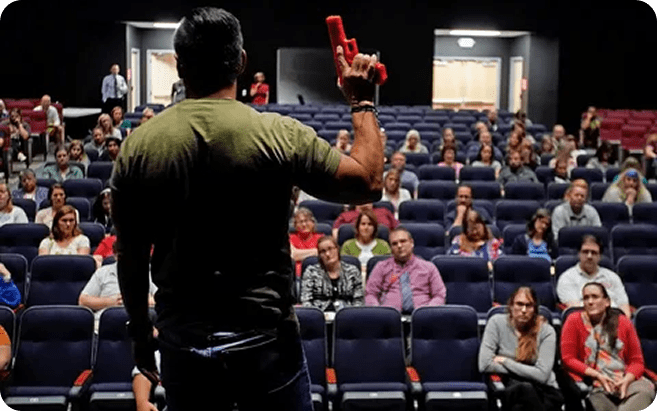
An active shooter is one or more individuals actively engaged in killing or attempting to kill people in a confined and populated area with a firearm. In most cases, active shooters use firearms with no pattern to victim selection. These incidents evolve quickly, giving victims little time to react without preparation.
Law enforcement officers responding to active shooter incidents focus on stopping the threat. First responders cannot help victims until the scene is secure. Employees, students, and citizens must know how to protect themselves before law enforcement arrives.
The training course teaches the three-option response method recognized by responding law enforcement officers nationwide. The curriculum covers situation awareness, evacuation procedures, hiding tactics, and fighting as a last resort.
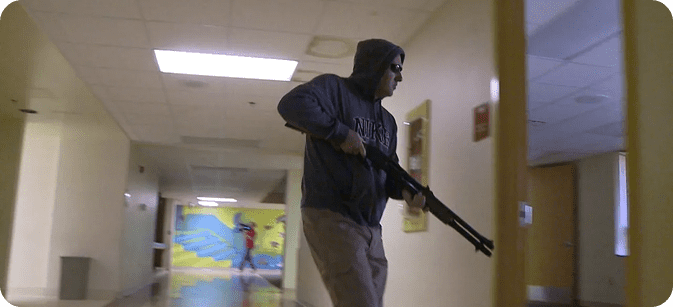
The program prepares organizations including schools protecting students, healthcare facilities safeguarding employees, and corporate buildings securing personnel. Training complements Athena’s weapons detection systems by addressing the human element of preparedness.
Training Components:

When an active shooter incident begins, escape is your primary goal. Leave belongings behind, help others evacuate, and warn people not to enter the area. Identify at least two evacuation routes from every location.
Once safe, contact law enforcement officers. Provide information about the shooter’s location, description, weapons, and number of potential victims.
If you cannot safely run, hide where the active shooter cannot see you. Lock and block doors, turn off lights, silence electronic devices, and remain quiet. Do not hide in groups. Spread out along walls or behind solid objects.
Use text messages to communicate your location to police without revealing your position to the shooter. Stay hidden until law enforcement arrives and provides clearance.
When an active shooter incident begins, escape is your primary goal. Leave belongings behind, help others evacuate, and warn people not to enter the area. Identify at least two evacuation routes from every location.
Once safe, contact law enforcement officers. Provide information about the shooter’s location, description, weapons, and number of potential victims.
Duke Health, Memorial Hermann, and school districts nationwide combine active shooter training with Athena’s weapons detection systems for comprehensive preparedness. Contact us to schedule training customized for your organization.
Create documented response plans identifying evacuation routes, safe hiding locations, and methods to contact law enforcement. Conduct regular drills so personnel practice procedures. Review and update plans annually.
Map at least two evacuation exits from every area. Post evacuation diagrams throughout the facility. Identify areas providing cover from weapons fire. Ensure emergency exits remain accessible and unblocked.
Develop methods to alert personnel about incidents quickly. Establish protocols for communicating with law enforcement officers when they arrive. Train employees on silent communication methods like text messaging.
Invite local law enforcement officers to conduct site assessments and provide training. Share building diagrams, access control information, and security camera locations with local police departments.
Assess your situation within seconds and choose the most reasonable option to protect your life. Consider whether you can safely evacuate, whether hiding locations exist nearby, or whether you must fight. Do not wait for others if it delays your evacuation.
Help people evacuate if you can do so safely. However, do not let others’ reluctance delay your escape. After reaching safety, provide assistance without returning to dangerous areas.
Some active shooter situations involve more than one person. Additionally, active shooters may plant improvised explosive devices. Report suspicious packages to law enforcement.
When law enforcement arrives, their priority is locating and neutralizing the active shooter. Keep your hands visible and empty. Follow all instructions immediately. Officers do not know who is a victim until the scene is secure.
Once officers secure your area, describe the shooter’s location, movement, description, clothing, and weapons. Identify areas where victims are located. Remain in safe areas until officers give clearance to evacuate.
Do not attempt to move wounded persons unless they are in immediate danger. Wait for first responders trained in emergency medical care. Do not re-enter the building to retrieve belongings.
Active shooter incidents create significant psychological trauma. Organizations should provide access to mental health professionals and support resources. Attend to physical injuries with appropriate medical care.
Cooperate fully with law enforcement during the investigation. Document your experiences while details remain fresh. Review your organization’s response and update emergency action plans based on lessons learned.
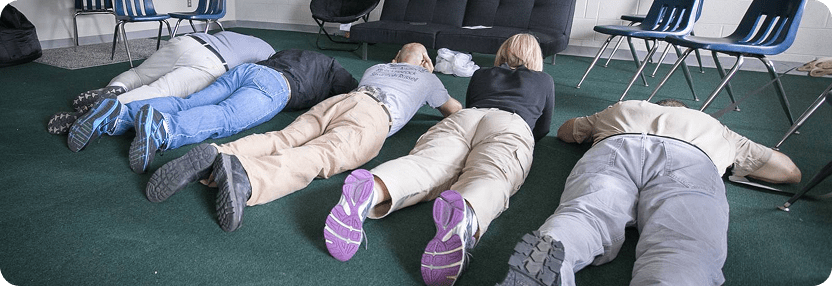
An active shooter training program prepares personnel to respond effectively during active shooter situations. The course teaches the Run, Hide, Fight methodology developed by law enforcement and endorsed by CISA and the Department of Homeland Security. Participants learn to evacuate when possible, hide when evacuation is not safe, and fight as a last resort when life is in imminent danger. Training covers threat recognition, emergency communication, and cooperation with responding law enforcement officers.
All employees, students, faculty, security personnel, and managers should receive active shooter training. The course benefits organizations including schools, healthcare facilities, corporate offices, government buildings, and any workplace where active shooter incidents could occur. Training is customized for different audiences including teachers protecting students, healthcare workers securing patients, and corporate employees safeguarding coworkers. Even citizens and community members benefit from understanding how to respond during active shooter events.
Training duration varies based on the depth of curriculum and size of the class. Basic awareness training can be completed in one to two hours. Comprehensive programs including scenario-based exercises may require half-day or full-day sessions. Organizations can schedule training that fits their operational requirements and participant availability. The course can be delivered to small groups or large audiences depending on facility needs.
Yes. Active shooter training addresses human preparedness while weapons detection technology provides prevention at entry points. Training prepares personnel to respond if an active shooter incident occurs despite preventive security measures. The combination creates layered security through prevention, detection, and response capabilities. Organizations implementing Athena’s weapons detection systems should also provide active shooter training to employees and students for comprehensive preparedness.
Run, Hide, Fight is the response method taught to civilians for active shooter situations. Run means evacuate the area immediately if you can do so safely. Hide means find a secure location out of the shooter’s view if evacuation is not possible. Fight means use aggressive force as a last resort when your life is in imminent danger and no other options exist. This three-option approach gives people a clear decision framework during chaotic and rapidly evolving incidents.
Preparation involves multiple steps. Identify evacuation routes and hiding locations throughout your building or campus. Understand your organization’s emergency communication methods. Know how to contact law enforcement and what information to provide. Participate in training and drills so you can respond automatically during actual emergencies. Discuss active shooter preparedness with family members, coworkers, and students. The more you prepare, the better you can protect yourself and others during violent incidents.
When contacting law enforcement, provide specific information that helps responding officers. State clearly that an active shooter incident is occurring. Give the exact location including building name, floor, and room numbers if possible. Describe the shooter’s location, direction of movement, physical description, clothing, and weapons. Identify the number of shooters if there are multiple individuals. Note the number and location of potential victims. Stay on the line if it is safe to do so and follow the dispatcher’s instructions.
Responding law enforcement officers’ first priority is stopping the active shooter to prevent additional deaths. Officers may rush past victims without providing aid initially. Keep your hands visible and empty when officers approach. Follow all commands immediately. Officers may evacuate you to a safe area or instruct you to remain in place. Do not leave the scene until law enforcement gives clearance. First responders will provide medical assistance to victims once the threat is neutralized.
Active shooter incidents are unpredictable, but proper training gives your personnel the skills to respond effectively. Our active shooter training program teaches the Run, Hide, Fight method while addressing your facility’s specific needs.
Visit CISA Active Shooter Preparedness for resources from the Cybersecurity and Infrastructure Security Agency and Department of Homeland Security.
Contact us to schedule training for your school, workplace, or community. We’ll develop a course addressing your unique security challenges.