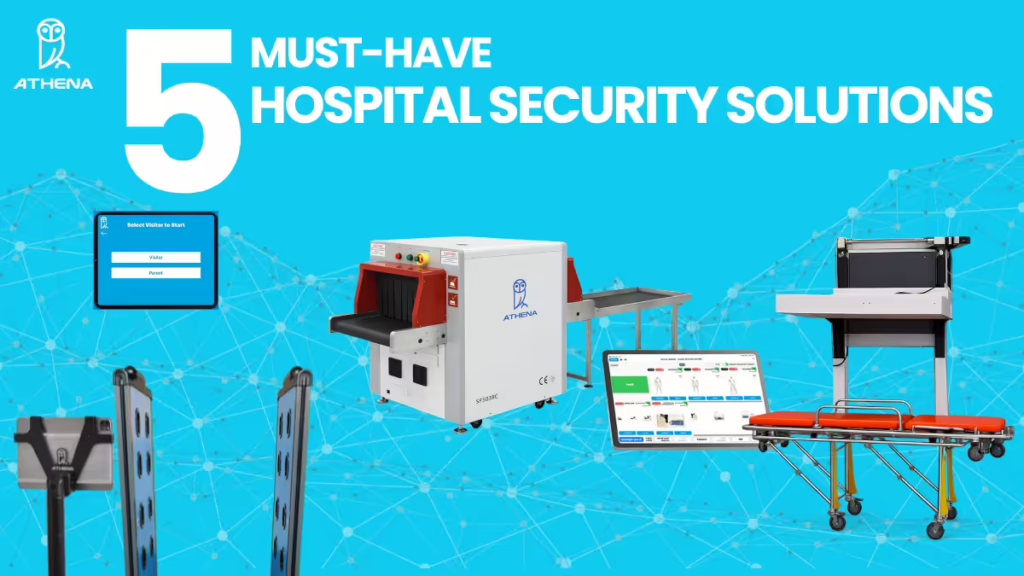

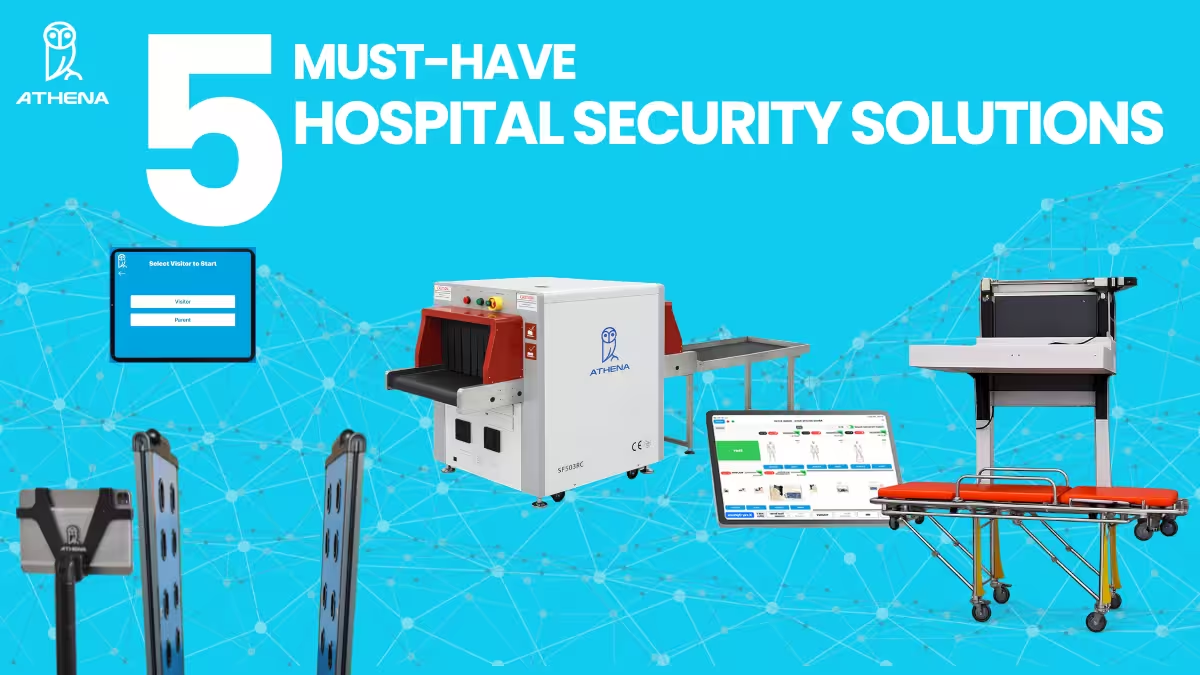
| Summary: This guide explores the most essential hospital security solutions that healthcare facilities in the U.S. need today to address rising violence and operational risks. It covers why hospitals are vulnerable to gun violence, outlines major hospital security challenges, and presents five must-have security technologies. The solutions include walkthrough metal detectors, X-ray baggage scanners, visitor management, ambulance bay weapons detection system, and integrated security platforms. It also walks through how to conduct a hospital risk assessment, improve DNS and cybersecurity, foster a culture of safety, and prepare for future trends. |
In 2022, violent incidents in U.S. hospitals increased by 57%, according to the American Hospital Association’s Burden of Violence report.
If you work in hospital security, you already live the reality behind the numbers. You see it during late-night shifts, at crowded entrances, and in situations that escalate faster than anyone expects. You balance safety, staffing, and budgets while trying to keep everyone calm in an environment that’s anything but.
And with so many systems and vendors out there, knowing where to even begin can feel overwhelming.
We put this guide together to make things simpler. Just four hospital security solutions we believe every facility should seriously consider in 2026, based on what’s working, what scales, and what actually helps your team on the ground.
What Makes Hospitals a Target for Gun Violence?
On November 13, 2025, a security guard fatally shot a knife-wielding man in the ER lobby of a New York hospital. Just months earlier in Enid, Oklahoma, a hospital safety officer was gunned down during a domestic disturbance. And in York, Pennsylvania, a gunman took ICU staff hostage before opening fire, killing a police officer and injuring multiple hospital workers.
These incidents are part of a growing, deeply concerning pattern.
Hospitals have become soft targets for gun violence, not because of failure, but because they’re open, accessible, and built for everyone. They operate 24/7, serve people in crisis, and are filled with emotionally charged situations and vulnerable individuals.
That accessibility—while essential to care—also creates serious security risks that should no longer be ignored.
Here’s why healthcare settings are uniquely exposed:
Environmental and Operational Factors
- Open Access: Hospitals often have multiple entry points and liberal visitation policies. That makes it hard to control who comes in and what they bring with them.
- Soft Target Perception: Unlike airports or stadiums, most hospitals aren’t built with visible security in mind. That makes them more appealing to attackers.
- High Occupancy, High Chaos: With staff, patients, and visitors moving constantly, a single incident can create mass confusion and casualties.
- Duty to Stay: Healthcare workers feel ethically bound to protect patients. Many won’t evacuate during active shooter scenarios, even if it puts them at risk.
Now, let’s see how motives and relationships can add to these reasons.
Perpetrator Motives and Relationships
- Personal Grievances: Some attackers seek revenge, believing they or a loved one was mistreated by staff.
- Familiarity with Facility: Many perpetrators are current or former patients, employees, or visitors with emotional connections to the hospital.
- Mental Health Crises: Paranoia, delusions, or suicidal ideation can push already fragile individuals into violence.
- Family-Driven Tragedies: Some incidents stem from attempts to end a loved one’s suffering or their own.
- Spillover Violence: Domestic disputes, gang conflicts, or neighborhood violence can easily follow victims into the ER.
While these factors play a pivotal role, broader societal issues also fuel violence.
Wider Societal Issues
Rising gun violence in healthcare mirrors what’s happening across the U.S., driven by inequality, untreated mental health conditions, housing insecurity, and gaps in access to care.
Hospitals didn’t cause these issues, but they’re forced to manage their consequences, often without the tools or hospital security solutions to stay ahead. And that brings us to the real challenge: even when you know the risks, protecting a hospital isn’t easy. Let’s talk about why.
What Security Challenges Do Hospitals Face Today?
Let’s start with the reality on the ground. Between service corridors, back hallways, multiple floors, and high visitor traffic, there are blind spots everywhere. Your security officers can’t be everywhere at once. Even with cameras, asking someone to monitor 20+ feeds across multiple buildings is unrealistic. This is especially the case when you’re already short on staff.
Then there’s the matter of patient safety.
In a hospital, you can’t just sound an alarm and evacuate. Patients in critical care, surgery, or recovery can’t move quickly or at all. That puts even more pressure on your team to prevent threats before they escalate.
And when something does go wrong, chaos always follows. Your team needs to coordinate instantly with staff, law enforcement, and families. And that’s a massive task.
So what’s behind these challenges?
Here are the four major categories hospital security leaders like you probably wrestle with every day:
- Workplace Violence and Patient Safety
- Verbal and physical assaults on nurses and doctors.
- Patients with addiction, behavioral, or psychiatric conditions.
- Risks of infant abduction or patient elopement during high-stress moments.
- Cybersecurity Threats
- Ransomware attacks targeting outdated hospital systems.
- IoT medical devices that create new vulnerabilities.
- Human error from untrained staff, like clicking on phishing emails.
- Physical Security and Access Control
- Dozens of access points, but limited control and security.
- Sensitive zones like ORs, pharmacies, and ERs require strict access, but flow must remain smooth.
- Hard to lock down a space that’s built to stay open.
- Operational Gaps and Resource Constraints
- Not enough trained security officers to cover the full footprint.
- Balancing a care environment with real safety controls.
- Emergency preparedness for power loss, natural disasters, and system failures.
The truth is, hospitals weren’t built for today’s security risks, and many teams are left patching gaps instead of proactively preventing incidents. As a result, many are turning to new technologies like virtual security officers to help fill coverage gaps without overextending staff.
In the next section, we’ll lay out the hospital security solutions that will help you shift from reactive to ready.
An Overview of Security Solutions for Hospitals
Before we dive deeper into each hospital security solution, here’s a quick overview for easy reference. Use this table to compare their purpose, benefits, and ideal use cases so you can start thinking about what makes the most sense for your facility.
| Solution | Use Case | Ease of Deployment | Integration Complexity | Best For | Scalability |
| Walkthrough Metal Detectors | Weapon screening at entry points | Very easy | Low | High-traffic entrances | Easily scalable |
| X-Ray Baggage Scanners | Screening bags and packages | Moderate | Moderate | Visitor and delivery checkpoints | Moderate |
| Access Control and Visitor Management Systems | Track, verify, and manage entry | Very easy | Low | Front desks, staff-only zones | Highly scalable |
| Integrated Hospital Security Platform | Centralized monitoring and response | Varies (depends on size) | Moderate to High | Hospitals with multiple systems | High (long-term ROI) |
| Ambulance Bay Weapons Detection System | Screening stretcher patients at EMS entry points | Moderate | Moderate | Trauma centers and high-acuity EMS volume facilities | Moderate |
5 Must-Have Hospital Security Solutions
Every hospital is different. But when it comes to physical security, a few essentials apply almost everywhere.
Based on what we’ve seen in the field and implemented for our healthcare clients across the country, these five solutions offer the strongest foundation for safety, visibility, and preparedness:
- Walkthrough Metal Detectors
- X-Ray Baggage Scanners.
- Access Control and Visitor Management Systems.
- Integrated Hospital Security Platforms.
- Ambulance Bay Weapons Detection System.
Let’s break them down one by one.
Walkthrough Metal Detectors
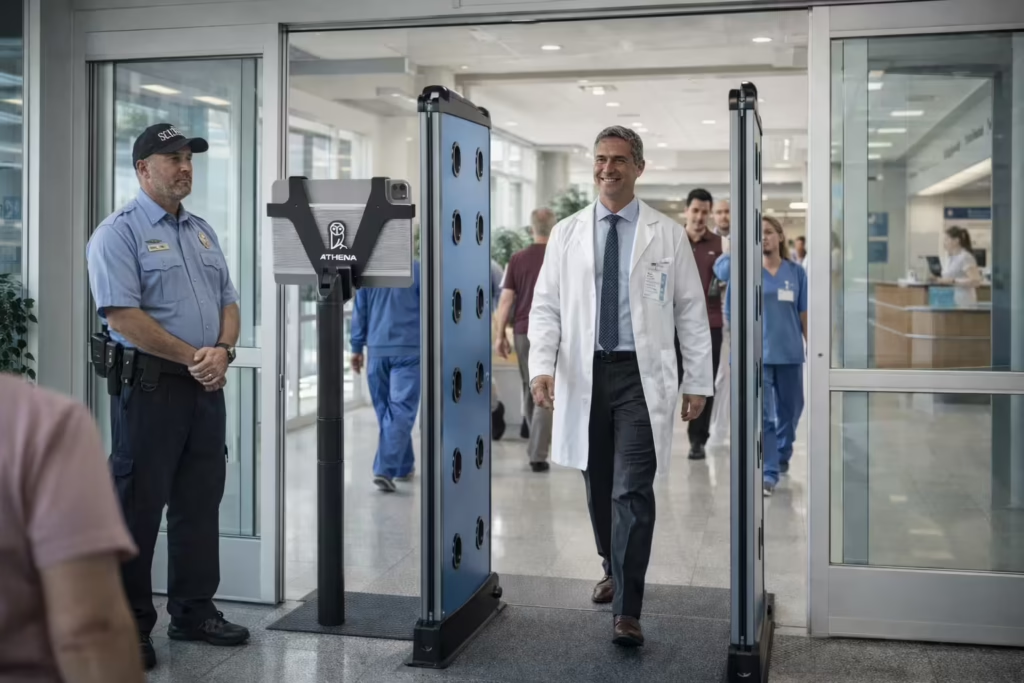
Walkthrough metal detectors are designed to screen individuals for weapons before they enter critical areas in a hospital. They can be installed at the entrances of emergency rooms, lobbies, or treatment zones. Walkthrough scanners range from conventional metal detectors to next-gen AI-powered solutions that identify real threats without slowing down hospital traffic.
Where to Deploy Them
- Main hospital entrances.
- Emergency department access points.
- Staff-only entry areas.
- Behavioral health and psychiatric wings.
- Event-based checkpoints (e.g., during high-risk visitor hours).
Key Benefits of This Hospital Security Solution
- Detects concealed weapons at hospital entrances.
- Enables fast, continuous screening without stopping foot traffic.
- Reduces reliance on manual bag checks and secondary screening.
- Lowers false alarms compared to traditional metal detectors.
- Supports earlier intervention before a situation escalates.
Athena’s walkthrough weapon detection system combines AI with advanced sensor technology to distinguish between everyday objects and real threats. It allows seamless, non-invasive screening while integrating with broader security platforms for faster officer response. It’s purpose-built for high-traffic, high-stakes environments like hospitals.
Check out how our Apollo weapons detection system operates in real-world scenarios.
For more details, check out these best walk-through metal detectors.
X-Ray Baggage Scanners
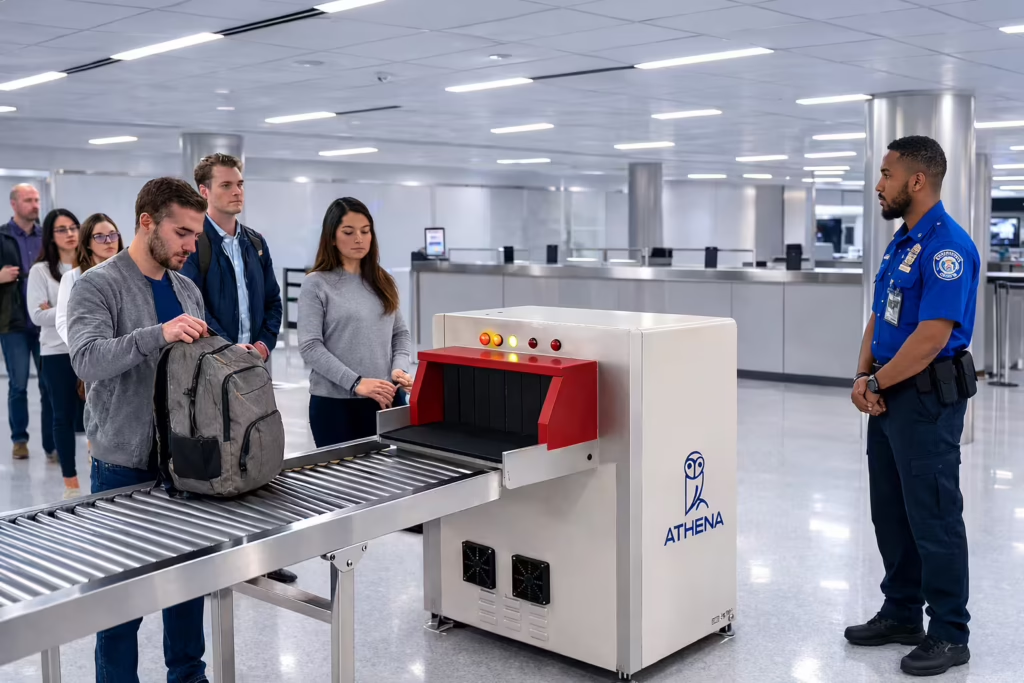
X-ray baggage scanners are designed to screen bags, purses, backpacks, and parcels for concealed weapons, explosives, or other prohibited items. Unlike manual bag checks, these systems give your security team a clear view of what people are carrying.
In hospital environments, they’re especially useful in high-traffic entry points where patients, visitors, and staff carry personal belongings through screening zones.
Where to Deploy Them
- Main hospital entrances.
- Emergency department entry points.
- Mailrooms and delivery areas.
- Staff access zones.
- Event-based security stations.
Key Benefits of This Hospital Security Solution
- Detects concealed items inside closed bags.
- Accelerates screening without compromising safety.
- Reduces the need for physical bag checks.
- Helps avoid human error in visual inspections.
- Provides image-based evidence for incident response and reporting.
Our X-ray scanner integrates high-resolution imaging with real-time analytics and automated alerting. Security teams can tag, flag, and report suspicious items with visual evidence, and export data for audits or investigations. The system supports seamless integration with broader hospital security platforms, making incident reporting far more efficient.
For more details, check out these best X-ray baggage scanners.
Access Control and Visitor Management System
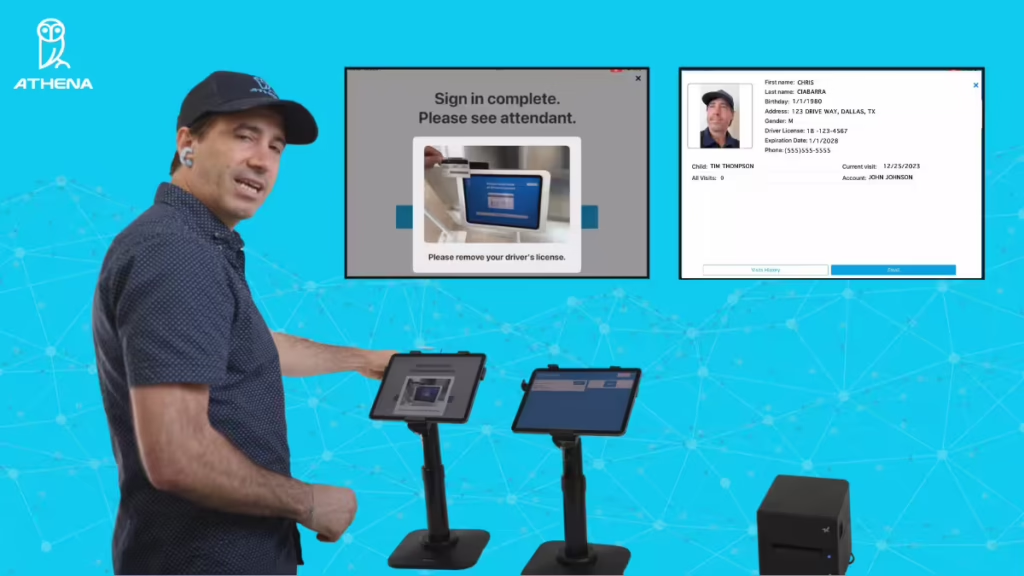
Access control and visitor management systems help monitor who enters your facility, where they go, and how long they stay. Modern platforms combine digital check-ins, badge printing, facial recognition, zone-based access, and real-time tracking to create a complete view of everyone on-site. This not only improves safety but also helps with compliance and incident reporting.
Where to Deploy Them
- Main lobbies and reception areas.
- Emergency department entries.
- NICUs, ORs, ICUs, and high-security zones.
- Staff-only entrances.
- Contractor/vendor check-in points.
Key Benefits of This Hospital Security Solution
- Creates a verifiable record of all hospital visitors and staff.
- Enables role-based access to sensitive zones.
- Automates check-in, reducing staff workload.
- Supports instant badge creation and ID verification.
- Aids in emergency response with real-time occupancy data.
Our access control and visitor management system is built specifically for healthcare. Its “Always On” technology ensures devices stay operational 24/7, even when the internet drops. Features like zone-based credentialing, auto-alerts for time violations, ID verification, and multilingual support offer a smarter, safer way to manage foot traffic across departments.
See below how always-on mode keeps operations running, even when the network goes down.
Ambulance Bay Weapons Detection System
Standard walkthrough metal detectors at your main entrance can’t screen a patient arriving on a stretcher. That single gap means every EMS arrival is an unmonitored entry point, and in high-volume trauma centers, that adds up fast.
An Ambulance Bay Weapons Detection System (AB-WDS) is built specifically for this blind spot. It uses millimeter wave imaging positioned at the EMS entry point itself to screen stretcher patients for both metallic and non-metallic threats, without requiring them to stand, walk, or be moved. The system sees through clothing and most medical equipment while ignoring the stretcher frame entirely.
One operator runs the entire workflow from a single Apple iPad console. Onboard AI analyzes each scan in real time, displaying a heat-map or skeletal overlay that pinpoints suspected weapon locations instantly. Every screening automatically generates a digital record—photo capture, confiscated-items log, operator attribution, and chain-of-custody receipt—so your documentation is audit-ready without any manual steps after the fact.
Where to Deploy Them
- Ambulance and EMS bay entry points.
- Trauma center intake corridors.
- Emergency departments where the ambulance bay connects directly to the ED.
Key Benefits of This Hospital Security Solution
- Screens stretcher patients at the EMS entry point.
- Detects both metallic and non-metallic concealed threats.
- Single-console operation keeps staffing requirements minimal.
- Enforces a consistent, DHS best practices-aligned protocol on every arrival regardless of shift or volume.
- Automatically generates chain-of-custody documentation during screening.
- Millimeter wave technology is non-ionizing, safe for continuous clinical use, and produces no workflow disruption for care teams.
The AB-WDS uses non-ionizing millimeter wave energy with a radiation output at or below 2 W/m², well under public safety limits, and operates at 55 dB or lower—about as loud as a normal conversation. It mounts on a hydraulic stand adjustable to patient intake height, requires no structural reinforcement, and runs on standard 120V power. Your IT team simply needs a network drop at the entry point.
It integrates directly with Athena’s broader platform, so ambulance bay screening data flows into the same dashboard as your lobby checkpoints, visitor management system, and incident reporting — closing the last unmonitored entry point in your facility.
Integrated Hospital Security Platforms
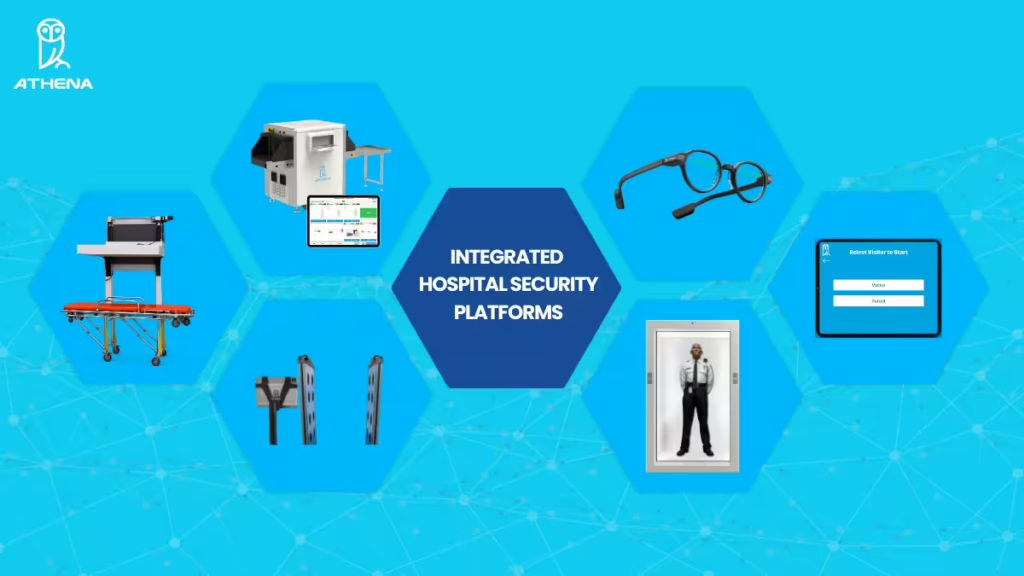
In complex, high-traffic hospital environments, using siloed, disconnected security tools creates delays, blind spots, and gaps. Integrated hospital security platforms bring everything into a single, centralized system that helps your team act faster and smarter.
These platforms unify your security operations into one interface, giving hospital security teams real-time visibility, automated alerts, and contextual data when every second counts.
Where to Deploy Them
- Across entire hospital campuses.
- Security operation centers (SOC).
- High-risk zones like ERs, ICUs, and pharmacies.
- Emergency response coordination points.
- Remote monitoring hubs.
Key Benefits of This Hospital Security Solution
- Consolidates multiple security systems into one platform.
- Enables real-time alerts.
- Helps coordinate faster emergency response.
- Improves data visibility and decision-making.
- Scales easily across departments or multi-site networks.
Athena’s integrated hospital security platform connects its weapon detection systems, X-ray scanners, AR glasses for security officers, patient experience technology, virtual security officers, and visitor management into a single ecosystem. It even integrates with EPIC.
Using real-time AI monitoring and presence-based automation, the platform delivers contextual alerts, automates video feeds, and enables centralized control from any location. Its open API also supports integration with third-party systems, so hospitals don’t have to rip and replace existing infrastructure.
And if you want to see how our integrated hospital security platform can help you secure your facilities and save lives, book a free live demo below.

How to Improve Cybersecurity for Hospital Security
Cybersecurity in hospitals isn’t just about protecting data. It’s about protecting lives. A ransomware attack doesn’t just lock files; it can delay critical treatments, disrupt surgeries, and shut down entire departments.
That’s why more hospitals are strengthening their first—and often most overlooked—layer of digital defense: DNS security.
What Is DNS Security, and Why Does It Matter in Healthcare?
The Domain Name System (DNS) acts like the Internet’s phone book. It translates web addresses into IPs so devices can connect.
But here’s the catch: if your DNS isn’t secure, attackers can use it to spy on your systems, launch attacks, and quietly exfiltrate data without setting off alarms.
Chris Ciabarra, CTO of Athena Security, put it plainly in his Forbes piece, DNS Security: How Healthcare Leaders Can Protect This Cyber Target.
“The bottom line is that security starts with being hard to find. DNS is where attackers look first. Make it your first control.”
How Athena DNS Protects Your Hospital
Our DNS security solution, H-Shield, was built with healthcare in mind. Here’s how it helps:
- Private encrypted DNS: Keeps internal traffic hidden from outside eyes by routing over HTTPS.
- DNS authentication: Every query must prove it’s legitimate. No certificate, no access.
- Separation of traffic: Internal and external DNS paths are split for added safety.
- Vendor allow-listing: Only pre-approved vendors can communicate with your systems.
H-Shield runs silently in the background and shields your infrastructure without disrupting care delivery. It comes as part of all of our hospital security solutions.
Want to Dive Deeper? Read our full guide on DNS Security for Healthcare.
How to Do Risk Assessment for Hospital Security
If we are being completely candid, we know that security gaps often stay invisible until something goes wrong. A good risk assessment brings those blind spots into the light before they become incidents.
Here’s how to do one that actually helps your security team stay ahead of threats:
- Start With Clarity
Before jumping in, get a clear picture of what you’re assessing. Are you reviewing your entire healthcare facility? A specific entry point? Or your data systems?
Once you’ve nailed that down, pull together the right team. This should include security leads, IT, clinical staff, facilities, and leadership. Everyone sees risk from a different angle, and you need all those perspectives.
- Know What Assets You’re Protecting
Next, list every asset that matters. That means:
- Physical spaces (like ERs, labs, pharmacies).
- Digital systems (EHRs, visitor logs, badge access).
- Medical devices.
- Sensitive data (especially patient records).
| Pro tip: Map how data flows across departments. This will show you where things could leak or break down. |
- Identify Your Weak Spots
Now ask: what could go wrong? Think across three types of threats:
- Physical: unauthorized access, workplace violence, theft.
- Cyber: phishing, ransomware, unsecured networks.
- Environmental: power outages, natural disasters.
Then, examine your current safeguards. Are your locks effective? Is your staff trained? Are your firewalls up to date? Look for gaps.
- Score and Prioritize Risks
Not every risk is equal. For each threat, evaluate how likely this is to happen. If it did, how bad would the damage be?
Assign each risk a score based on likelihood × impact. This gives you a simple way to prioritize what needs attention first.
- Build and Implement Your Plan
For your top risks, develop mitigation strategies. These could be:
- Technical (install new monitoring tools).
- Administrative (update visitor check-in policies).
- Physical (add walkthrough scanners or secure entrances).
Focus on changes that are realistic for your budget and staff, and that reduce risk without disrupting care.
- Monitor, Review, and Stay Flexible
Security risks evolve. So should your assessment.
Review everything at least once a year. Definitely after a major incident, system upgrade, or facility expansion. And make sure you document each step. Good records help you stay compliant, justify investments, and prove progress.
| Pro tip: If you’re using an integrated security platform like Athena Security, many of these steps can be automated or simplified. That means fewer manual gaps and faster response when it matters. |
For a quick discussion, call us at +1-866-592-3922.
How to Foster a Culture of Security in a Hospital
Even the best security technology can fall short if people aren’t bought in. A true culture of safety comes from the inside out. It stems from how leadership sets the tone to how frontline staff respond in the moment.
Here’s how to build a culture where security is second nature:
- Start With Leadership and Accountability
When hospital leadership shows up for drills, supports funding, and leads by example, the message is clear: this matters.
Make it clear who’s responsible for what, from data handling to physical access control. Build trust by removing fear from the reporting process. When staff can safely report mistakes or near misses, you uncover problems before they grow.
- Train People the Way They Work
Train “in the moment.” Use email banners for phishing alerts, or pop-ups for password reminders, right when people need them. Combine workshops, simulations, role-playing, and digital training tailored to roles and departments.
Make it easy for staff to know who to call, where to go, or what to do during a security event. When incidents do happen, share outcomes (anonymized if needed) to close the feedback loop and build trust.
- Bake Security Into Everyday Systems
Involve clinical staff, admin teams, and even food service workers in security planning. Don’t retrofit it. Integrate it right into the lifecycle from day one. Use drills, safety huddles, and daily rounds to build muscle memory and spot gaps early.
- Empower People and Celebrate Progress
Encourage staff to speak up when something feels off. Reward that instinct. Connect security to their real-world concerns, like protecting patients and coworkers. Celebrate teams that spot risks, suggest improvements, or handle incidents well. It reinforces that security is everyone’s job.
Creating a culture of security should never be about fear. That kind of motivation doesn’t last for long. True culture comes from shared responsibility, clarity, and care. When staff feel empowered and supported, security becomes second nature.
What Are the Future Trends in Hospital Security?
Here’s a look at the top 9 trends that are shaping the future.
Physical Security Is Going AI-First
- AI for Threat Detection: Smart cameras and screening systems are being trained to detect suspicious behavior, weapons, or unauthorized access. Athena’s Weapon Detection System already uses AI to distinguish between harmless objects and real threats, cutting false positives while keeping screening fast.
- Integrated Emergency Systems: Someone triggers an alert, and within seconds, entry points lock down, staff are notified through AR glasses, and emergency services are contacted.
- Biometric Access Control: Facial recognition, fingerprint scanning, and voice ID are becoming standard to secure high-risk zones like pharmacies or ICUs. They’re also being used to verify patient identities more securely.
Cybersecurity Is Moving to Zero Trust and Beyond
- Zero Trust Architecture: In a Zero Trust model, every device and person must authenticate their identity. H-Shield is built on this principle, verifying each query and keeping your internal network hidden and locked down.
- Blockchain for Healthcare Data: To prevent tampering and unauthorized access, blockchain is emerging as a secure foundation for digital identities and EHRs.
- Telehealth Security: With more care happening virtually, protecting telehealth platforms and patient communication tools from breaches is now a must.
Strategic Shifts and Regulatory Pressures
- Proactive Compliance: Legislation like the proposed Health Information Security Accountability Act (HISAA) is raising the bar for testing, reporting, and penalties. Security will need to be proven.
- Threat Intelligence Sharing: Hospitals are beginning to work together, sharing real-time attack data and defense strategies. Expect more regional security coalitions and faster threat response.
- Cyber Insurance Boom: As attacks get costlier, healthcare providers are turning to cyber insurance for financial protection. But to qualify, you’ll need to prove you have strong controls in place, like Athena’s DNS security platform.
It is crucial for any hospital to keep pace with these trends and make sure its hospital security measures evolve with the dynamic threat landscape.
Why Choose Athena Security for Hospital Security Solutions?
From AI-assisted scanners to Zero Trust DNS, the future of hospital security is intelligent, integrated, and proactive. And with Athena Security, you don’t have to wait for the future. It’s already here.
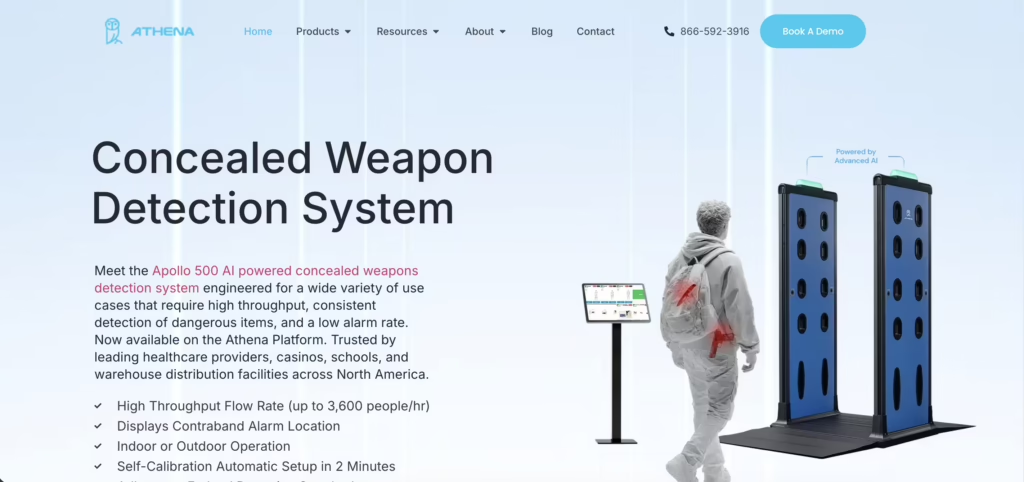
We’ve built every solution with real-world hospital challenges in mind. Whether it’s detecting weapons at entry points, screening baggage without bottlenecks, managing visitors with Always On visibility, or delivering silent, instant alerts through AR glasses, our platform is designed to help your team do more with less.
Most importantly, it all works together. No patchwork of disconnected systems. No vendor sprawl. Just one integrated ecosystem that keeps patients safe, staff supported, and operations flowing.
Watch below how Duke Hospitals has implemented our weapons detection systems.
So if you’re ready to stop playing defense and start leading with confidence, book a free live demo with Athena Security. Let’s build a safer environment, together.
Frequently Asked Questions About Hospital Security Solutions
Have questions about hospital security systems or how Athena Security fits into your environment? We’ve answered some of the most common questions we hear from healthcare security leaders below.
If your question is not here, call us at +1-866-592-3916. Our team is happy to help.
1. What Does Hospital Security Do?
Hospital security protects patients, staff, and property. Their job includes:
- Patrolling the building and grounds
- Monitoring cameras and alarms
- Screening visitors and controlling who comes in
- Responding to emergencies quickly
- Calming down tense situations
- Helping with high-risk patients
- Working with local law enforcement, if needed
They also help with theft prevention, enforce safety rules, and provide support to staff and visitors. Above all, they keep the hospital safe so care can happen without disruption.
2. How To Select A Hospital Security Solutions Vendor?
Choosing the right vendor can make or break your hospital’s safety strategy. So it’s important to follow a clear, focused process.
- Assess your hospital’s physical, digital, and operational security needs.
- Define the scope (access control, surveillance, IT security, emergency response).
- Evaluate vendors with proven healthcare experience.
- Ensure systems integrate with existing hospital technology.
- Check scalability and customization options.
- Review support, SLAs, and response capabilities.
- Verify certifications and healthcare compliance standards.
- Analyze the total cost of ownership and expected ROI.
| Pro tip: The right vendor will partner with you to build a safer, more responsive hospital. |
3. How do Athena Security’s Security Solutions Integrate With Existing Systems?
Our products plug directly into your existing workflows. They’re built on an open API architecture, which allows for seamless integration with systems like access control, visitor management, and EPIC without requiring major infrastructure changes.
4. What Type Of Training Do The Healthcare Security Professionals Receive?
The Athena Security platform is highly intuitive, so most security teams and administrators become comfortable with it in just a few days. To make this transition even more seamless, Athena provides structured, hands-on training and ongoing support.
This training includes:
- On-site implementation training (up to 3 days): Athena Security’s team conducts in-person training during the initial rollout.
- Workflow-aligned response training: Teams are trained on how to respond when the system alerts, including secondary screening procedures, incident logging, and handling authorized personnel such as armed officers.
- End-to-end system training: Coverage spans hardware configuration (sensitivity levels, troubleshooting), software usage, and analytics.
- Role-based training for all staff: Security officers, administrators, and leadership receive training so questions can be addressed internally without delays.
- 24/7 post-training support: A dedicated support team is available around the clock to resolve issues or provide guidance after go-live.
Our 24/7 support is specially designed for hospital admins and leaders who are looking for support more than anything else.
As Aja Chavez, Executive Director, Mission Prep Healthcare, says, “After years of managing hospital operations, I can tell you the difference isn’t the security system itself. It’s what happens when it stops working at 2 AM. The right vendor picks up. That’s it. We finally found one that does, and our daily headaches disappeared. Don’t get sold on the pitch. Get sold on who’s going to be there when things go wrong.”
5. How Can I Buy Athena Security’s Hospital Security Solutions?
We want you to experience the products before making a purchase. That’s why we offer free live demos.
As a first step, you can schedule a demo to see how our hospital security solutions fit into your workflows. From there, we’ll discuss your specific requirements and customize the solutions to meet your facility’s needs.
Book your free demo below.
Disclaimer: The information provided in this article is based solely on publicly available sources and is intended for general informational and guidance purposes only. It should not be relied upon as a final decision-making resource or as a substitute for professional advice. While we strive for accuracy and completeness, we make no representations or warranties regarding the correctness, reliability, or suitability of the content. If you believe any information should be updated, corrected, or removed, please contact our team for review.
Some of the images have been created using AI-based tools and are intended for illustrative purposes only. They may not accurately represent real individuals, locations, or situations. Any resemblance to real persons, living or dead, or actual events is purely coincidental.