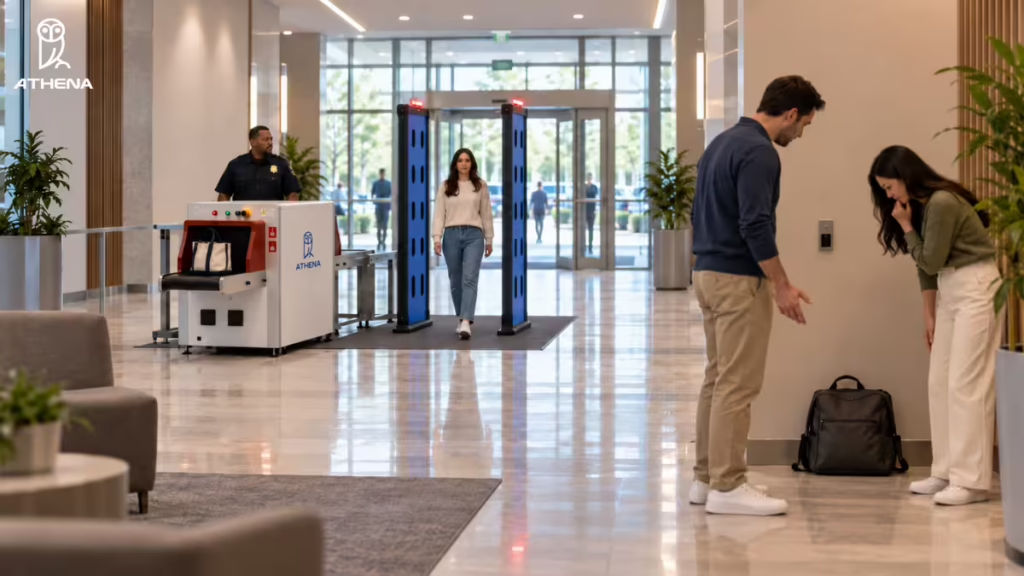

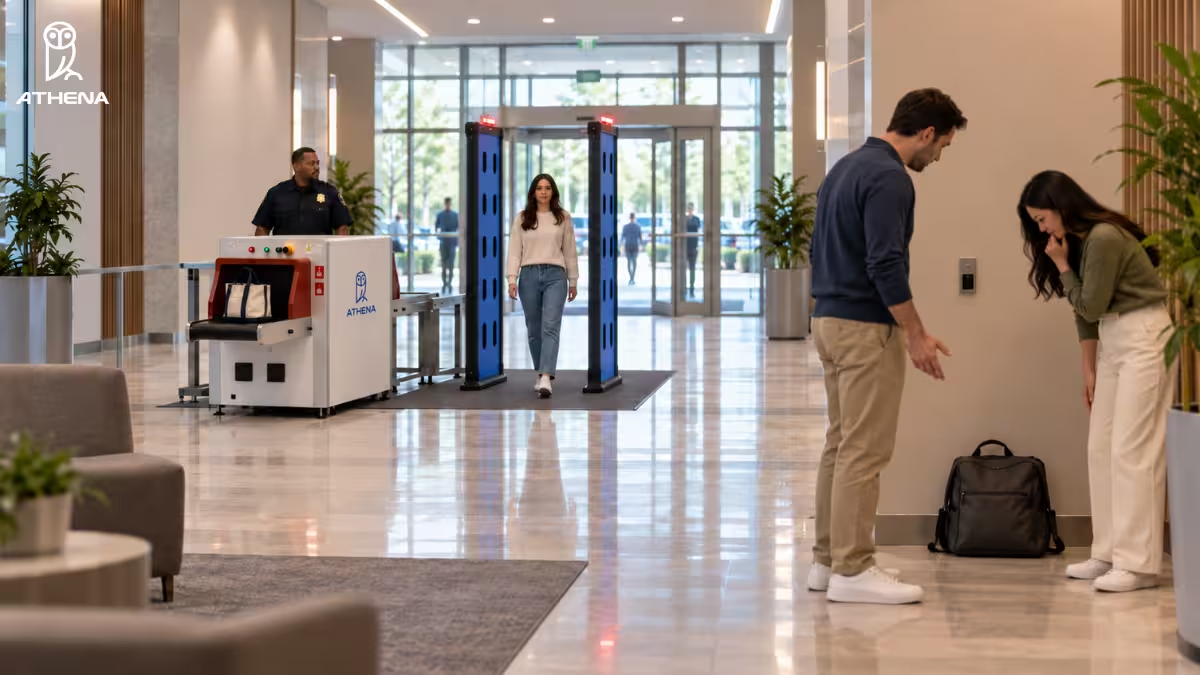
| Summary: Bag-to-person identification during X-ray screening matters for hospitals because X-ray screening alone only identifies what’s inside the bag, not necessarily who brought it. If someone abandons a bag or flees, there’s no way to quickly trace that individual. With bag-to-person identification, security officers can link a screened bag to the person who presented it. In fact, with Athena, they can also store the bag’s internal X-ray scan alongside its exterior image to quickly review what was inside it. |
In November 2022, an unattended bag found at the University of Utah Hospital led to patient relocation and hours of investigation before officials confirmed it was safe. Now, an ideal solution is to deploy X-ray screening to check every bag for threats at the entrance. But that won’t help a hospital quickly identify the owner or virtually review the bag’s contents if it’s found abandoned later.
Additionally, at busy entrances, security officers must quickly screen a high volume of personal belongings. Analyzing a complex X-ray scan can take 5 to 10 seconds, so someone can collect their bag and enter before the officer spots the threat. Even AI-generated threat alerts can go unnoticed during peak traffic, making it harder to trace the bag’s origins.
Bag-to-person identification automatically links the X-ray scan to a photo of the bag’s exterior and the owner’s face at entry, so security teams can locate the individual and recover the bag, even if AI misses a threat.
In this article, we’ll explain why bag-to-person identification during X-ray screening matters for hospitals.
What Happens When There’s No Link Between the Bag and the Person Who Presented It During Screening
Below are six problems your hospital may face when there’s no link between the bag and the person who presented it during X-ray screening:
- Risk of Questioning and Searching the Wrong Person: Officers may detect a threat inside a bag, but in crowded entryways, they cannot immediately determine who brought it inside the hospital. This can lead to unnecessary questioning and pulling aside innocent visitors to trace the bag owner.
- Difficulty Managing Abandoned or Unclaimed Bags: If a bag is abandoned before the screening, security officers have no visual method to instantly trace who presented it for the X-ray scan. Similarly, if officers find an unclaimed bag inside the hospital, they may struggle to identify who brought it through the security checkpoint.
- Delayed Incident Response: Matching the X-ray scan to the right bag and tracing the owner takes time. By then, the owner may have already retrieved the bag and walked deep into the hospital or simply fled.
- Disputed Bag Ownership: A person might outright deny owning the flagged bag. Or someone else might retrieve the bag (e.g., family members, colleagues, or other companions). Without a clear record of who placed the bag on the conveyor belt, incident reconstruction can be difficult later.
- Incomplete Screening Record: When personnel and baggage screening operate independently, it can be difficult to establish a shared record of who screened the bag, who handled the alert, and what actions were taken.
| Note: The phrase “bag owner” denotes the individual who brought the bag into the facility and placed it on the conveyor belt during weapons screening. For example, if Person A steals Person B’s bag, hides a weapon inside it, and enters the facility, then Person A is the bag owner. |
What Is Bag-to-Person Identification in Weapons Screening
Bag-to-Person Identification in X-ray screening is a feature that visually links the bag’s physical exterior to the individual who placed it on the conveyor belt.
How Does Bag-to-Person Identification Work
Here’s how bag-to-person identification works in our AI X-Ray Baggage Scanner:
- Triple-Image Capture: Integrated cameras automatically capture three images. This includes the internal X-ray image (shows bag contents), an external photo of the physical bag (shows color, brand, style), and a photo of the person placing it on the conveyor belt.
- Visual Association: The system consolidates these three images into a single record that can be accessed at any time.
- Rapid Interception: Even if the security officer identifies a threat 10 to 20 seconds after the scan, they can still view the person’s face and external bag photo. This allows them to intercept the individual inside the building without stopping the main entry line.
Similarly, if you find abandoned bags later in the hospital, you can look up the bag using the Athena Operator App. There, you’ll find a unified record with all three image captures, which can help trace the bag’s origin and review its contents.
| Expert Advice: While bag-to-person identification helps security quickly link a flagged bag to the right individual, it doesn’t replace personnel and baggage screening. For hospitals managing high-traffic entryways, the primary screening setup should ideally combine both a weapons detection system and an X-ray baggage scanner to catch weapons accurately. Bag-to-person identification complements this setup best. |
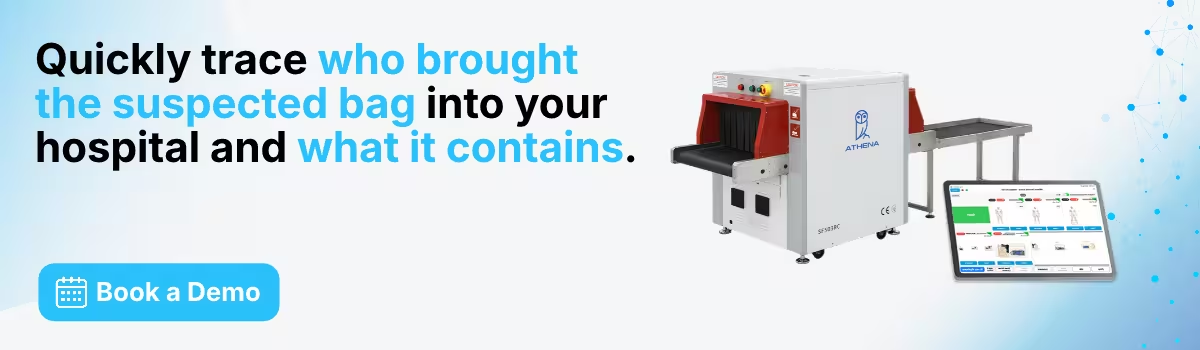
Why Does Bag-to-Person Identification in X-Ray Weapon Screening Matter for Hospitals
AI-powered X-ray screening is crucial for hospitals to detect prohibited items in bags while keeping entry lines moving. But no screening system is perfect. An alert can go unnoticed during a busy shift, or a threat can stay undetected.
Not to forget, hospitals and medical facilities have their own set of unique challenges that might complicate baggage screening:
- Unpredictable traffic makes it hard to match a bag to the right owner.
- Family members, visitors, or EMS personnel might carry the patient’s bags, creating disputed ownership.
- They cannot afford to halt medical access for lengthy manual bag searches.
Bag-to-person identification adds another security layer to tackle these edge cases. If you miss an alert or a threat, this feature helps trace a bag back to the person carrying it, enabling quick incident response.
Chris Ciabarra, CTO of Athena Security, puts it this way:
“If you’ve caught the person, you’ve caught the person. If you’ve got a gun, the system stops the machine. But there may be a 5% chance that you’re going to miss something. Bag-to-person identification helps you with that 5%.”
What Are the Benefits of Using Bag-to-Person Identification During X-Ray Screening
While a concealed weapons detection system and an AI X-ray baggage scanner help detect weapons in hospitals, adding bag-to-person identification can further enhance the efficiency of this screening setup.
Here’s how:
- Helps Identify the Bag’s Owner Quickly
- Makes It Easy to Handle Abandoned Bags
- Allows Rapid Incident Response
- Establishes Undisputed Ownership
- Offers a More Complete Record for Incident Review
Let’s discuss all six benefits in detail.
1. Helps Identify the Bag’s Owner Quickly
Security officers can quickly look up the screening record and identify who brought the bag inside the hospital without needing to question everyone in the area. This helps when the person has already moved past the security checkpoint and further into the premises.
Plus, it also gives security officers a visual reference to locate the correct bag for a specific X-ray scan, instead of relying on memory or the bag sequence on the conveyor belt.
2. Makes It Easy to Handle Abandoned Bags
With bag-to-person identification, security teams can immediately investigate the contents of an abandoned bag and determine whether it poses a threat. They can review the bag’s contents virtually (if it passed the screening checkpoint).
3. Allows Rapid Incident Response
By reviewing the triple-image capture at any time, officers can respond quickly and correctly. For example, they can decide whether to isolate the suspected bag, conduct a targeted screening on the bag and owner, or immediately alert law enforcement.
4. Establishes Undisputed Ownership
Bag-to-person identification creates a visual record of the person placing the bag on the conveyor belt. If they later deny owning the bag or someone else picks it up, officers can review the original record and hold the right person accountable.
5. Offers a More Complete Record for Incident Review
It consolidates every piece of information that security teams need to reconstruct the incident accurately. They don’t need to rely on memory or separate systems (which can be time-consuming and prone to errors).
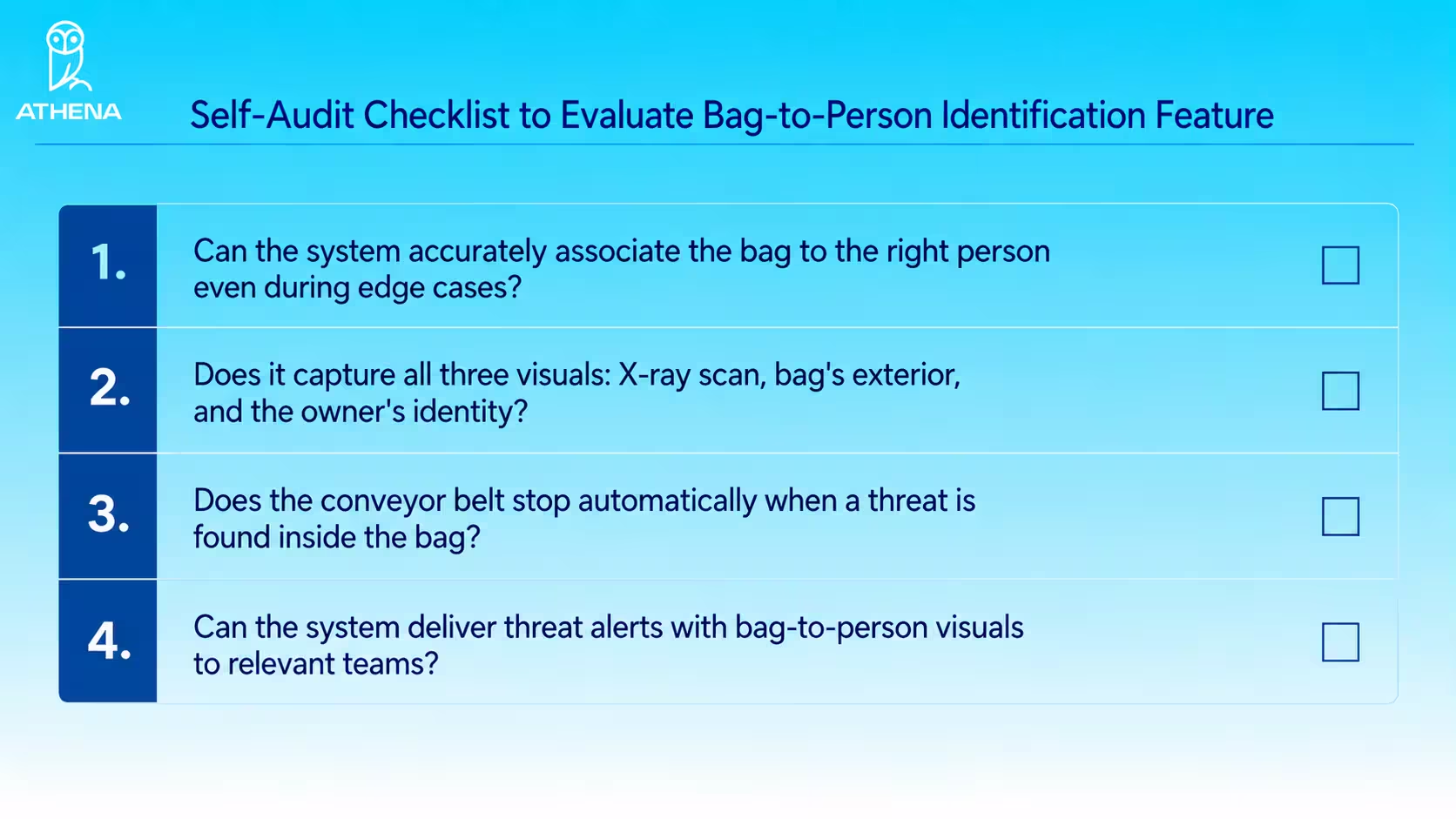
How To Evaluate an X-Ray Baggage Scanner with Bag-to-Person Identification (A Quick Checklist)
Ask yourself the following four questions to evaluate an X-ray baggage scanner with bag-to-person identification:
- Can the system accurately associate each bag with the correct person during busy checkpoints, when bags look identical, or when there’s a time lag between personnel and baggage screening lanes?
- Does it capture and link all three visuals into a single screening record: the internal X-ray scan, the physical bag’s exterior, and the owner’s identity?
- When a threat is detected, can the system automatically halt the conveyor belt to contain the bag inside and prevent the suspect from grabbing it?
-
Are threat alerts and bag-to-person visuals delivered seamlessly to operator tablets, AR alert glasses, or central SOC?
How Does Athena Security Help Hospitals With Bag-to-Person Identification During X-Ray Screening
Our AI-assisted X-ray baggage scanner includes built-in bag-to-person identification that cuts the hassle of handling physical RFID tags to match bags with their owners. We use a multi-camera setup to automatically capture all three images and link them together in one complete and DHS-compliant record.
In fact, our AI technology can integrate directly with your existing security X-ray machines. You don’t need to purchase expensive hardware, unless absolutely necessary.
This integration capability is one of the many reasons why leading healthcare networks like Duke Health and Franciscan Health have partnered with us.
Here’s what Larry Kennedy, Administrative Director for Supply Chains, JRMC, has to say about us:
“It’s been a great experience working with Athena. From the service that it provides to the engagement level that Athena has with us, and Athena’s willingness to work with us to integrate advanced technology with what the security personnel does on a daily basis.”
To see how our bag-to-person tracking works in practice and test its accuracy in your hospital’s real conditions, book a demo today or call us at 1-833-928-4362 to get started.
Frequently Asked Questions About Bag-to-Person Identification During X-Ray Screening
While you decide your next step, you might still have a few questions about bag-to-person identification. Below, we answer commonly asked questions about security footage confidentiality, bag-to-person tracking ROI measurement, and how to procure from us.
1. Does Capturing Bag Owner’s Image/Video During X-Ray Screening Count as PHI?
No, capturing a bag owner’s image/video during X-ray screening does not count as Protected Health Information (PHI) in isolation. However, it becomes PHI as soon as it’s linked to an individual’s health, treatment, or care details.
For example, if the screening event documents clinical details like the person entering a specialized care unit or using visible medical aids, then it’s PHI because these medical details can be used to identify the person.
Learn More: Accidental Disclosure of PHI in Hospital Security Systems
2. How to Measure the Value of Bag-to-Person Identification After Deployment?
To measure the value of bag-to-person identification after deployment, you must track four metrics:
- Time to Identify the Associated Person: How quickly can the security team find the person who entered with the flagged/abandoned bag?
- Time to Locate the Flagged Bag: How quickly can guards locate the right bag based on the X-ray scan of the internal contents?
- False Association Rate: What percentage of bags are paired to the wrong person?
- Automated Audit Readiness: How much time does your hospital save by automatically logging timestamped image files for DHS and internal compliance reviews?
The goal is to reduce the first three metrics while maximizing time savings on audit prep.
3. How Can I Procure Security Solutions from Athena Security?
To procure our security solutions, you can book a free live demo below. Our specialists will respond within 24 hours to discuss your facility’s specific requirements and walk you through our security solutions. We’ll then conduct an on-site or virtual assessment to evaluate your entrance layouts and foot traffic patterns before providing a customized quote.
You can also email us at [email protected] or call us at +1-833-928-4362.
Disclaimer: The images have been created using AI-based tools and are intended for illustrative purposes only. They may not accurately represent real individuals, locations, or situations. Any resemblance to real persons, living or dead, or actual events is purely coincidental.