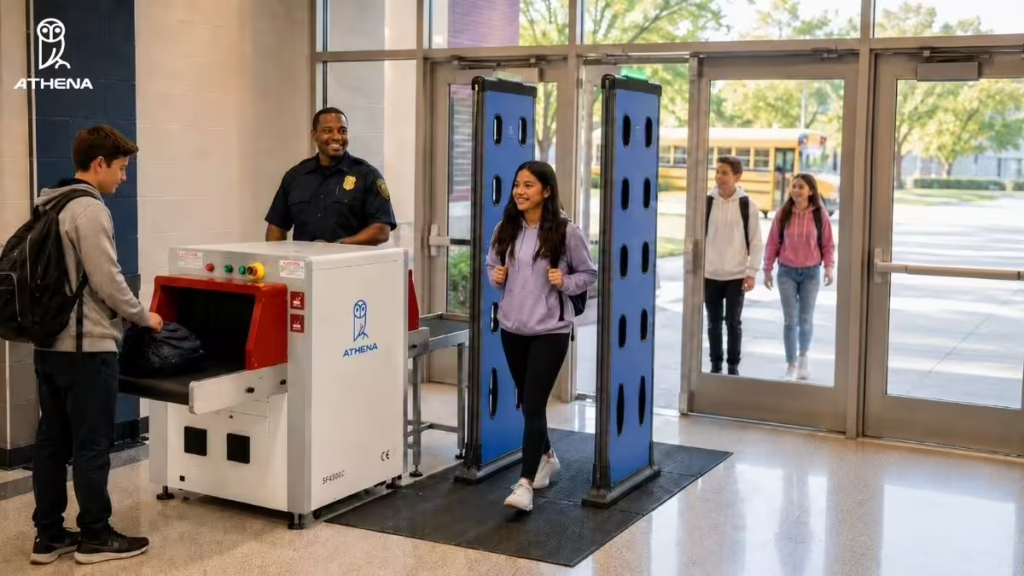

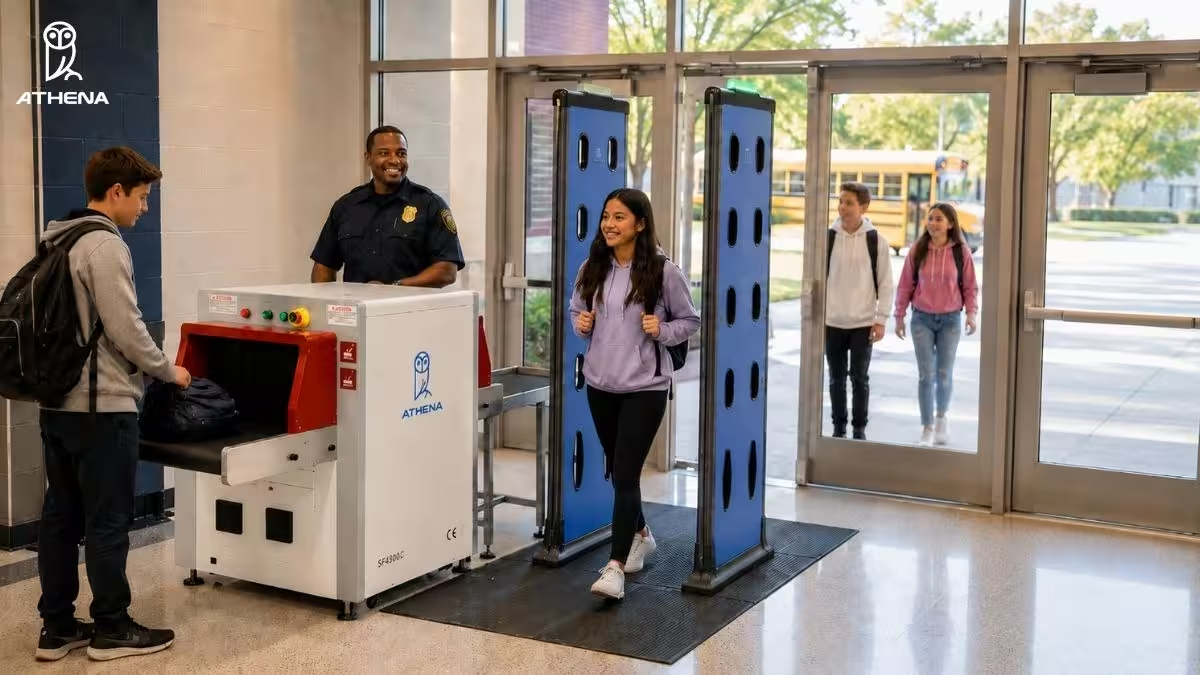
| Summary: Schools need both a weapons detection system and an X-ray scanner because they solve two different screening issues. The weapons detection system screens students, while the X-ray scanner screens bags. Together, they help schools reduce long lines, handle alerts faster, avoid too many manual bag checks, and plan a smoother entry process. This article also covers why rollouts fail and why long lines create concerns. It also discusses what schools should plan before installation, and how Athena Security helps deploy both systems. |
In April 2026, Pinellas County Schools paused a weapon detector pilot at two high schools, only 10 days after launch. The reported problems were long lines and frequent false alarms from everyday items like laptops, scissors, and metal water bottles.
Parents also said students were waiting outside instead of getting safely into school. That happens when schools expect one system to do too much.
The lesson from this story is not that schools should avoid weapons detection systems. The lesson is that schools need the right screening architecture. At school entrances, the challenge is always security versus speed.
If the system slows students down too much, it creates long lines outside. If it is tuned only for speed, smaller threats may become easier to miss.
And the right screening architecture includes a walkthrough weapons detection system to screen the students and an X-ray scanner to screen the bags.
In this article, we’ll explain why schools need both a weapons detection system and an X-ray scanner, and how the combined setup helps protect student entry without creating daily arrival issues.
Why Do School Weapons Detection Rollouts Fail?
School weapons detection rollouts often fail when schools prioritize speed without understanding what the system is actually tuned to catch.
A system may be able to move students through quickly if it is tuned only for larger threats. But if the school also wants to catch smaller weapons, such as knives, the system needs to be more sensitive. That is where the rollout can start to break down.
The Pinellas County pilot shows what can go wrong:
- Long lines formed during student entry.
- False alarms were triggered by a mixture of everyday items, like laptops, scissors, and metal water bottles.
- Some students reportedly avoided bringing school-issued computers because screening became a hassle.
- Detectors were reportedly turned off at times to keep students moving through the line.
This shows the real issue because students do not walk in one by one with empty hands. They arrive in large groups and carry backpacks, laptops, water bottles, and other daily school items.
And if schools do not build the screening setup around this reality, even a well-intended safety measure can create new problems, including long waiting lines, as shown in the video below.
Why Schools Need Both a Weapons Detection System and an X-Ray Scanner?
Schools should use WDS and X-ray together because each system handles a different part of the screening process.
A weapons detection system helps detect concealed weapons carried by a person. It can also help identify where a possible threat is located. But when students enter with carry-ons, the screening process becomes more complex.
That does not make the weapons detection system ineffective. It means the school is asking one system to handle two different jobs:
- Screen the student.
- Help resolve what is inside or around the student’s bag.
That is where lines can start getting longer. If too many bag-related alerts need follow-up in the same student entry flow, staff may have to slow down, check more items manually, or move more students aside.
An X-ray baggage scanner helps avoid that issue. It gives bags their own screening process, so the weapons detection system can keep focusing on students while the X-ray scanner checks what they carry. A stronger X-ray system can also give staff more than a basic image. Athena’s AI X-ray baggage scanner uses Dual-Energy X-ray, atomic number data, material density, and material type to help staff understand what an item contains, not just what shape it has.
While this solves the problem of long lines, it also multiplies the effectiveness of concealed weapon detection, which is the whole point.
How Concealed Weapons Detection System and X-Ray Scanner Improve School Security Effectiveness
In a combined WDS + X-ray setup, the process is simple:
- The student places the bag on the X-ray scanner.
- The student walks through the weapons detection system.
- The WDS screens the person.
- The X-ray scanner checks the bag.
- If both are clear, the student collects the bag and enters.
- If either system flags something, only that student or bag moves to secondary screening.
This setup helps schools avoid the mistake seen in failed rollouts. It also identify small concealed weapons that people might be carrying, either on them or in their bags.
If you want to learn more about how to spot such weapons, check out this article: How to Prevent Knives and Small Weapons From Entering School.
Why Do Long Lines Outside School Entrances Create A Security Concern?
Long lines outside school entrances create a security concern because they leave students gathered in one exposed area before they are safely inside the building.
Schools should avoid long screening lines for three reasons:
- They create an exposed crowd: A long line outside the entrance puts many students in one predictable location, which can become a security risk.
- They delay the school day: If students cannot get through screening before the bell rings, they may arrive late, need hall passes, and create extra work for staff.
- They create parent and student complaints: If screening becomes a daily bottleneck, students complain to parents, parents complain to the school, and the rollout becomes harder to sustain.
To avoid this, schools need a steady-flowing entrance process, not a stop-and-wait checkpoint. That usually means:
- A weapons detection system for students
- An X-ray scanner for bags
- Enough staff to guide students before they reach the scanner
- Someone to move bags quickly after X-ray screening
- A trained person to handle secondary screening
The screening setup should move students inside quickly while still giving staff a clear way to identify and resolve alerts.
What Should Schools Plan Before Installing WDS And X-Ray?
Schools should plan the full entry workflow before installation, not after long lines appear.
The Pinellas County pilot shows that the success of a weapons detection rollout depends on more than the device itself. After the district paused the pilot, Superintendent Kevin Hendrick said the district had “learned quite a bit from the implementation of this pilot,” especially “in terms of logistical support and planning for successful deployment.”
That is the real lesson for schools evaluating WDS and X-ray screening.
Pre-Installation Checklist
Before launch day, they need to know how students, bags, alerts, and staff will move through the entrance.
- Family education before launch: Have students and families been told what the screening process will look like, what students should expect at entry, and how bags should be prepared before arrival?
- Peak arrival volume: How many students enter during the busiest 15 to 30 minutes?
- Number of entrances: Will every student enter through one point or multiple points?
- Bag volume: How many students carry backpacks, lunch bags, sports bags, laptops, or instruments?
- System placement: Where will the WDS and X-ray scanner be placed so students can move naturally?
- Secondary screening area: Where will flagged students or bags go without stopping the full line?
- Staff roles: Who watches the WDS, who reviews X-ray images, and who handles alerts?
- Training before launch: Does every staff member know what to do when something is flagged?
- Demo under real conditions: Has the school tested the setup with bags, laptops, bottles, and student-like arrival volume?
The point is simple: schools should not test the full workflow for the first time on launch day. Schools should know how students, bags, alerts, and staff will move before the system goes live, and they should test this workflow during a demo.
And if you want to know how to choose a weapons detection system for school, read this detailed article: Buying Weapon Detection System for Schools? Read This First
How Can Athena Security Help Schools Deploy Both Weapons Detection Systems and X-Ray Screening in Schools?
Athena Security helps schools combine people screening, bag screening, secondary checks, staff training, and post-launch support in one connected entryway screening setup.
Here’s what schools and educational institutions get when they deploy our concealed weapons screening for schools:
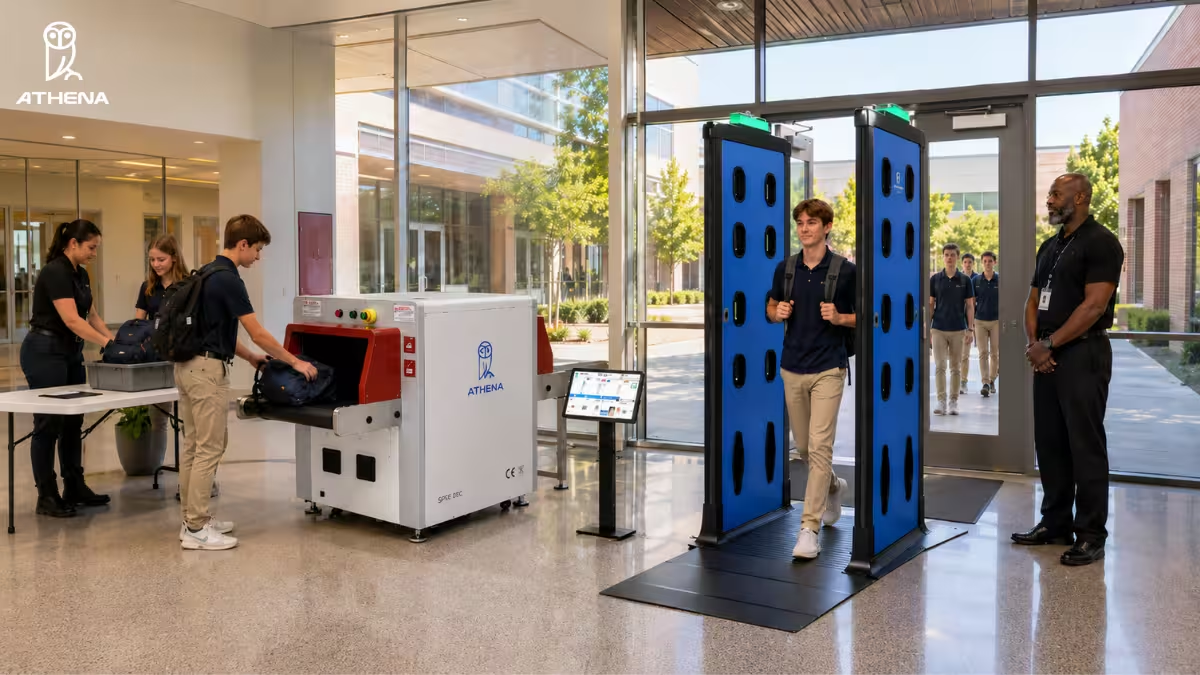
- Apollo 500 WDS screens the students.
- Athena AI X-ray baggage scanner screens the bag.
- iPad-based controls help staff review items faster.
- Dual-Energy X-ray helps staff review both shape and material makeup.
- Atomic number data helps identify what an item may be made of, not just what it looks like.
- Seven X-ray color categories give operators more material-level context during bag review.
- Three speed settings help schools adjust the flow.
- The fastest speed supports up to 2,000 bags per hour.
- WDS and X-ray can work in one connected workflow.
- Secondary screening helps resolve alerts.
- Training and 24/7 support help after rollout.
Athena Security has worked with schools, colleges, and security teams that need a safer, faster, and more organized entrance screening process. Athena systems have been deployed across several school districts, like Lamar Consolidated Independent School District (LCISD), Hosanna Christian Academy, and more.
Our team can assess your student volume, number of entrances, bag volume, staffing plan, and current security setup to help you decide where and how to deploy Apollo and AI X-ray baggage screening.
If your school is planning to deploy weapons detection, we can help you build the right setup from the start. Book a demo below or call us at +1-833-928-4362.

Frequently Asked Questions About Weapons Detection Systems and X-Ray Scanner Deployment at Schools
To make your decision easier, we answered the most common questions schools ask us during live demos.
1. How Much Does a Combined Weapons Detection and X-ray Screening Setup Cost for a Public School District?
The cost of a combined weapons detection and X-ray screening setup depends on the Apollo model, X-ray scanner size, scanner speed, and software features the school wants. The hardware pricing is generally comparable to other systems in the industry, but the total cost may increase if the school adds advanced software features, AI workflows, reporting, or support.
2. Could Schools Reduce False Alarms And Long Lines Through Better Calibration, Staffing, Or Operational Planning Without Needing To Add X-Ray Scanners?
Schools may reduce some false alarms and line delays through better calibration, staffing, and planning. But if they want to detect knives and small weapons reliably, X-ray bag screening is still the safer approach. Without X-ray, schools often create workarounds, such as asking students to carry laptops or binders around the system while walking through with bags. That may improve speed, but it also creates risk because weapons can be hidden inside items that are not being properly screened. For schools that want both faster entry and stronger detection, the better setup is to screen students with WDS and screen bags separately with X-ray.
3. What Happens During Peak Arrival Periods If Multiple Students Or Bags Are Flagged At The Same Time?
If the system flags multiple students or bags during peak arrival, schools should not stop the main entrance line. Staff should move flagged students or bags to a defined secondary screening area. The rest of the students continue entering the school.
The process should work like this:
- The WDS or X-ray scanner flags a student or bag.
- Staff direct that student or bag to secondary screening.
- The main line keeps moving.
- A trained staff member resolves the alert separately.
- The student returns to the normal flow once the alert is cleared.
The key rule is simple: do not hold the entire entrance line because one student or bag needs follow-up. A good WDS + X-ray workflow keeps screening moving while secondary checks happen off to the side.
Disclaimer: The images have been created using AI-based tools and are intended for illustrative purposes only. They may not accurately represent real individuals, locations, or situations. Any resemblance to real persons, living or dead, or actual events is purely coincidental.