Your security teams screen thousands of bags daily, but traditional X-ray systems miss threats or trigger constant false alarms. Athena Security’s AI-powered baggage screening technology detects concealed weapons, explosives, contraband, and prohibited items in real time.
Highlights:
AI detects threats traditional systems miss
Reduces false alarms
Processes bags at normal screening speed
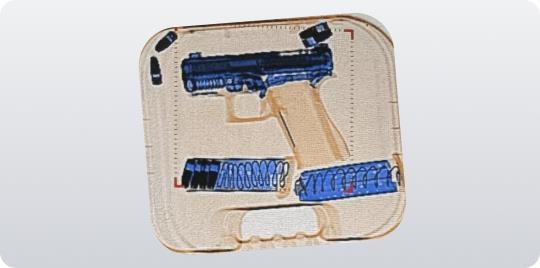
Athena Security has deployed AI-assisted X-ray solutions across airports, government facilities, and high-security venues since 2018. Our platform integrates with existing baggage screening operations and works with major X-ray hardware systems.
Unlike traditional X-ray scanners that require operators to manually identify every potential threat, our artificial intelligence analyzes each scan automatically. Your security personnel focus only on verified alerts, improving accuracy while reducing operator fatigue.
Our automated screening system uses artificial intelligence to analyze baggage X-ray images as bags pass through the scanner. The technology detects firearms, knives, ammunition, explosives, drugs, and contraband in real time.
The platform differentiates between organic and inorganic materials, identifying concealed objects that traditional systems miss. When a threat is detected, security staff receive visual information with the exact location highlighted. False alarms drop to 0.001 percent.
This solution runs the AI model directly on an Apple iPad Pro 13-inch tablet, eliminating cloud processing delays. The on-device system analyzes X-ray images locally, delivering threat alerts in milliseconds.
Local processing means your data stays on-site, addressing privacy and security concerns for classified or sensitive screening environments. The iPad integrates seamlessly with your existing X-ray scanner, adding AI capabilities without replacing hardware.
The Workforce Multiplier combines AI X-ray and weapons detection monitoring on a single operator console. One security staff member manages both baggage screening and walkthrough metal detection simultaneously.
Your operators monitor unified alerts from multiple security systems on one iPad display. The AI prioritizes threats automatically, so operators respond to the highest-risk situations first. Facilities typically reduce security personnel costs by 40 percent.
Second Look AI provides cloud-based secondary review of flagged X-ray images from a central operations center. Remote analysts verify threats detected by on-site systems, adding a second layer of accuracy.
The centralized system allows expert analysts to review questionable scans without delaying on-site screening. Bags continue moving through checkpoints while remote teams verify potential threats in parallel.
This specialized AI model identifies drone components and 3D-printed firearm parts in baggage and cargo. Traditional X-ray operators struggle to recognize these emerging threats because the objects lack standard weapon signatures.
The technology analyzes object shapes, densities, and configurations to flag potential drone batteries, motors, controllers, and polymer weapon components. Security teams receive alerts with highlighted visual markers showing exactly where suspicious items appear.
Athena delivers capabilities other security solutions cannot match. Our platform addresses real-world challenges security personnel face while helping organizations meet federal compliance requirements.
Most weapons detection vendors lock you into proprietary equipment. That means limited choices and potential vendor dependence for years. Athena’s platform works with Apollo 500, Apollo 650, CEIA Opengate, Garrett, and Metrasens Ultra systems. You select hardware that matches your throughput requirements, budget constraints, and facility layout.
Athena is the only platform designed specifically around Department of Homeland Security best practices for patron screening. The system digitizes and enforces guidelines including documentation requirements, testing protocols, and secondary screening procedures. When auditors arrive, you have complete documentation.
We pioneered and patented technology that detects visitors attempting to bypass screening entirely. Traditional metal detectors only monitor the portal itself. Our computer vision algorithms monitor the entire screening area continuously. When individuals attempt to evade detection, security staff receive instant notifications. This proactive threat detection catches attempts other gun detection systems miss completely.
While competitors offer point solutions, Athena integrates weapons detection with visitor management, AI X-ray screening, telepresence security, and augmented reality alert glasses. When the X-ray system detects a threat, it automatically alerts AR glasses and triggers personalized hologram instructions. That integration creates layered security measures traditional systems cannot provide.

Security leaders at Duke Health, Memorial Hermann, and Lamar Consolidated ISD trust Athena to protect their people. See why hospitals, schools, and government buildings choose our platform. Book a 30-minute demo and we’ll show you exactly what our concealed weapons detection system can do for your facility.
You schedule a consultation, and we listen. Our specialists respond within 24 hours to understand your facility’s specific baggage screening requirements and integration needs.
We evaluate your current X-ray systems, throughput requirements, and threat detection capabilities. Your screening operations continue without interruption during the assessment process.
You receive a detailed proposal showing how AI integration improves detection accuracy, reduces false alarms, and optimizes security staff deployment for your specific environment.
We integrate the AI platform with your existing X-ray hardware during scheduled maintenance windows. Our team configures the system to work seamlessly with your current baggage screening operations.
Your security personnel receive comprehensive training on threat alerts, verification procedures, and system monitoring. We provide 24/7 technical support and continuous AI model updates.
Traditional baggage screening creates operational bottlenecks while missing sophisticated concealed threats. X-ray operators face overwhelming image volumes that lead to fatigue and missed detections.
AI analyzes every scan automatically and alerts operators only to verified threats, reducing cognitive load by 90 percent.
Traditional systems flag harmless items constantly, requiring secondary inspections that create passenger delays and waste security resources.
Our artificial intelligence distinguishes between actual threats and everyday objects, cutting false alarms to 0.001 percent.
Operators trained on conventional weapons miss 3D-printed firearms, drone components, and novel explosive configurations that lack familiar signatures.
AI models dynamically adjust to recognize new threat patterns, detecting emerging dangers that traditional training doesn’t cover.
Facilities need multiple trained X-ray operators per checkpoint but face ongoing hiring shortages and high turnover in security positions.
Workforce Multiplier technology lets one operator monitor both X-ray and metal detection systems simultaneously.
Manual threat verification creates queues during busy periods as operators examine questionable scans while bags accumulate on conveyor systems.
Automated screening maintains constant processing speed, and belt stop technology pauses only when verified threats require inspection.
Detection accuracy varies by operator experience, shift timing, and individual attention levels, creating security gaps across different checkpoints.

Manual screening misses most concealed weapons. One undetected threat can lead to catastrophic incidents with average settlements exceeding $8 million. Your insurance premiums increase annually while coverage gaps widen.
TSA and DHS mandate advanced detection capabilities for regulated facilities. Operations without AI screening face compliance violations, federal funding restrictions, and operational shutdowns. Retrofit costs rise 30% annually.
Manual screening requires 2.5 times more security staff than AI-assisted operations. You're spending $180,000-$240,000 annually per checkpoint on salaries and training. Staff turnover hits 45% due to operator fatigue.
Organizations without documented AI capabilities face automatic disqualification from government contracts. Security-conscious clients demand verifiable detection standards, and competitors with advanced screening capture your market share.
[Hospital Security →]
[School Security →]
[Casino Security →]
[Courthouse Security →]
[Hospital Security →]
[Airport Security →]
[Warehouse Security →]
[Corporate Security →]
[Stadium Security →]
[Venue Security →]
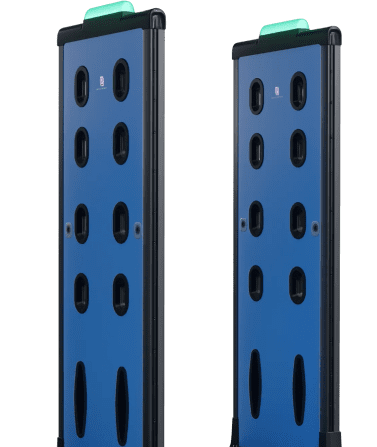
The device uses low-frequency electromagnetic technology, dynamic non-contact detection, and meets EMC electromagnetic radiation standards. It is safe for pregnant women, children, and other humans, as well as pacemakers and electronic devices.
EN 45502-2-1:2003. (Cardiac pacemakers)
EN 45502-2-2:2008. (Implantable defibrillators)
ISO 14117:2019. (Cardiac pacemakers, cardioverter defibrillators, cardiac resynchronization devices)
ISO 14708-1:2014 (Implants for surgery)
ISO 14708-2:2019 (Cardiac pacemakers)
ISO 14708-3:2017 (Implantable neurostimulators)
ISO 14708-4:2008 (Implantable infusion pumps) ISO 14708-5:2020 (Circulatory support devices) ISO 14708-6:2019 (Implantable tachyarrhythmia treatment devices) ISO 14708-7:2019 (Cochlear implants, auditory brainstem implant systems)
Athena protects 500+ facilities across the United States. Our AI-powered gun detection system helps security teams at leading organizations create safer environments.
Duke Health deployed our weapons detection platform across 21 screening locations. Memorial Hermann relies on our technology at facilities across Houston. Lamar Consolidated ISD installed 24 systems throughout their school district. Jefferson Regional Medical Center, Franciscan Health Olympia Fields, Indiana Regional Medical Center, and Parkwest Casino chose Athena for integrated entryway security.

We’ve deployed AI baggage threat detection systems in over 500 facilities across aviation, government, transportation, and high-security sectors nationwide.
Costs vary based on your facility size, daily screening volume, and integration requirements with existing X-ray hardware. We provide free security assessments to recommend the right solution for your budget. Most facilities achieve ROI within 18 months through reduced staffing costs, improved throughput, and eliminated compliance penalties.
Our platform integrates with your existing X-ray hardware rather than requiring complete system replacement, reducing implementation costs by 60 percent. We combine on-device processing with cloud-based centralized review, giving you flexibility for different security environments. The system is designed around DHS best practices and delivers NDAA-compliant solutions for federal facilities.
Yes, our AI platform integrates with major X-ray manufacturers including computed tomography and traditional ray scanners. The technology adds intelligent threat detection to your current hardware through iPad-based operator interfaces. Installation takes 2 to 4 hours per checkpoint with minimal operational disruption.
Typical deployment completes within 5 to 10 business days from assessment to full operation. We configure the AI system during scheduled maintenance windows to avoid screening disruptions. Complex multi-site installations with centralized monitoring may require 3 to 4 weeks depending on network infrastructure and integration scope.
Our system maintains 99.9 percent accuracy in controlled testing environments, detecting concealed weapons, explosives, and contraband that manual operators miss 12 to 18 percent of the time. False alarm rates drop to 0.001 percent compared to traditional screening. The AI continuously improves as it processes more images and learns new threat patterns.
Your security teams receive comprehensive training on threat alerts, verification procedures, and system monitoring protocols. We stay on-site for a minimum of two days post-installation to ensure proper configuration. Ongoing support includes 24/7 technical assistance, continuous AI model updates, and quarterly performance reviews.
Yes, our AI identifies 3D-printed firearms, drone components, liquid explosives, and concealed weapons that lack conventional metal signatures. The technology analyzes material density, object shape, and spatial relationships to flag threats regardless of composition. Traditional metal-focused screening misses these emerging dangers entirely.
The system analyzes every X-ray image automatically, alerting operators only when verified threats appear. Security personnel spend 90 percent less time examining harmless bags, focusing resources on actual threat verification and rapid response. Workforce Multiplier technology allows one operator to monitor both baggage screening and walkthrough detection simultaneously.
Our platform is designed specifically around Department of Homeland Security best practices for automated threat detection. The technology is NDAA compliant and meets federal requirements for AI-assisted screening in government facilities. We provide documentation supporting compliance audits and regulatory certifications.
No, automated screening maintains or increases processing speed compared to manual verification. The AI analyzes scans in milliseconds while bags continue moving through the checkpoint. Belt stop technology pauses only when verified threats require inspection, and parallel processing eliminates the screening bottlenecks created by manual review.
You need a platform that catches threats before they enter your facility. Athena’s AI-powered system works with the hardware you choose while adding intelligent oversight that traditional metal detectors lack. Our technology helps you meet DHS best practices, reduce staffing gaps, and document every screening for compliance auditing.