

A metal detector at the front door is not a security program. It is one piece of hardware doing one job. The moment a threat slips past it, gets handed off to a guard staring at a screen, or shows up in a part of the building the detector cannot see, the gap shows. Most competitors sell that piece of hardware and walk away.
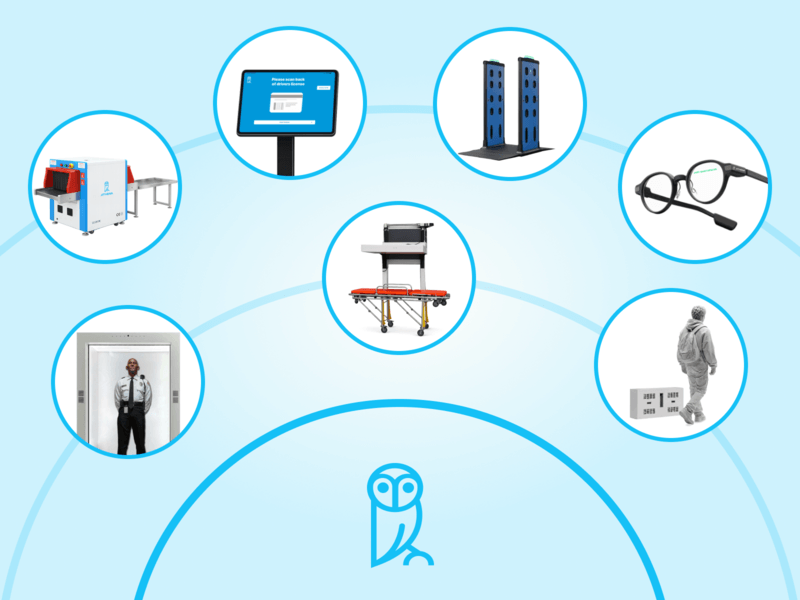
Athena built a platform instead. One software backbone that connects concealed weapons detection to detect firearms, Apollo 500 Weapons Detection System, AI Assisted X-Ray Baggage Scanner, Hospital Visitor Management System, Ambulance Bay WDS, Secondary Screening WDS, POI Search, Audit and compliance software based off Homeland security best practices, Telepresence Security Officer, and AR Alert Glasses into a single security ecosystem. When the front door detects a threat, every other system already knows about it.
That is what complete entryway control means for schools, hospitals, commerical buildings, government buildings, and businesses that need a multilayered security approach.
The Problem With Non-Integrated Entry Security Solutions
Walk into many facilities and you will find multiple entry security systems operating separately. The weapons detection system reports to one console. The visitor management system reports to another. Person of interest system reports to a different console. The X-ray system reports to a different console. Secondary screening is managed somewhere else. Entry-point solutions for areas like the ambulance bay may operate in yet another system.
Each tool may serve a purpose, but when they are not integrated, the security team is left managing fragments instead of one coordinated picture.
When violent threats happen, the response is fragmented. A scanner alerts, but the visitor management system may not connect that alert to the person who triggered it. The officer at the front door may not know what the X-ray operator saw. The supervisor may be looking across several different dashboards, trying to piece together what is happening in real time.
By the time the security team coordinates a response, critical seconds have passed. In the reality of active threats, those seconds can be the difference between stopping an attacker at the entry point and confronting them inside the facility.
Non-integrated security systems create blind spots. Athen’s platform closes them by connecting weapons detection, visitor management, X-ray screening, POI search, secondary screening, and entry-point response into one coordinated security solution.
What Athena Integrates Into One Security Ecosystem
Each Athena product is strong on its own. Together, they form a detection and response layer no point solution can match. The seamless integration is what makes the platform a true entryway security platform rather than a collection of tools.
Apollo 500 Concealed Weapons Detection. AI-powered weapons detection using active-wave metal detection with multiple frequencies, optical sensors, three NDAA compliant cameras, and on-device processing. Built for busy entry points where throughput and accuracy both matter. The system can identify concelaed guns and detect concealed weapons. AI Assisted X-Ray Baggage Scanner. Works with existing X-ray systems to identify concealed weapons, explosives, vapes and other prohibited items in real time. The belt optionality stops automatically on threats. Operators receive enhanced imaging on Apple iPad tablets, with real time alerts routed to the rest of the security ecosystem. Hospital Visitor Management (Entrance Pass). Purpose-built for healthcare facilities, Athena integrates with Epic, Cerner, and virtually any system with API access can be integrated into, while also supporting watchlist screening, badge printing, and offline operation during outages. Helps keep patients, staff, and visitors safe while reducing administrative burden at the door. Telepresence Security Officer. Life-sized holographic officers that let one operator cover multiple entry points across an entire campus. AI handles common questions. Voice activation connects visitors to a live operator when needed. Effective for parking lots, exterior doors, and after-hours coverage at schools and businesses. Athena Vision AR Alert Glasses. Officers receive threat alerts directly in their field of view, so they do not have to check a tablet or return to a console. The glasses are typically tied to the specific entry point or detection unit the officer is monitoring, helping them notice and respond the moment a threat is detected.
How The Integration Actually Works In Real Time
This is where Athena pulls away from vendors that claim integration because they expose an API. True integration means the systems share information automatically, without requiring the security team to enter the same data in multiple places.
When the Apollo 500 weapons detection system detects a concealed weapon and the threat is confirmed, that incident is connected to the visitor’s record. If the same person returns through weapons detection or checks in through visitor management, the officer can see relevant history on screen before deciding how to respond.
That context matters. A familiar visitor with no prior issues may call for a different response than someone with no history at the facility. A visitor with past security concerns may require a higher level of caution. The system helps security teams understand not just that an alert happened, but who triggered it and what relevant history may be connected to that person.
The same shared information can support other parts of the response. AR glasses tied to that entry point can notify the assigned officer when an alert occurs. The telepresence officer can adjust the interaction based on the event. Screening records can be flagged for review. Configured alerts can be sent to the right security personnel, administrators, or first responders based on the facility’s protocols.
One confirmed threat. One shared record. One coordinated response across the systems that need to know.
That is the difference between tools that sit next to each other and a platform that actually works together in real time.
A Multilayered Security Approach For Every Sector
The Athena platform is deployed across critical sectors that share one thing in common: a need to identify violent threats at the entry point before they reach the people inside.
Concealed Weapons Detection for K-12 School
K-12 and charter schools use Athena to strengthen entry security and support protocols that help keep students, staff, and visitors safe. The platform is built for complex school environments, including districts with multiple buildings, varied entry points, and security teams that need consistent visibility across campuses.
Athena works alongside school resource officers and onsite security personnel by connecting AI concealed weapons detection, visitor management, realtime alerts, and configured response protocols. Alerts can also be pushed into the video management systems schools already use, helping teams respond faster without forcing them to manage disconnected tools.
The goal is consistent: identify potential threats at the entry point, improve coordination across school security teams, and maintain a welcoming learning environment for students and families.
WDS and Visitor Management for Hospitals and Healthcare Facilities
Healthcare security teams use the platform to screen visitors, manage access to restricted areas, and integrate with Epic and Cerner for clinical workflows. The integration with hospital access control and hospital visitor management gives staff real-time situational awareness without slowing the patient experience.
Entryway Security for Government Buildings and Critical Infrastructure
The DHS-aligned compliance framework and AR alert capabilities support coordinated response across courthouses, agency offices, and public venues. AI concealed weapons detection at the door, combined with cloud-based reporting and audit trails, gives administrators the oversight regulators expect.
Corporate Campus Entry Security and Concealed Weapons Detection
Resident experience matters. The platform’s telepresence officers, access control integration, and multilayered approach allow business security teams to cover more entry points with fewer personnel while maintaining a professional environment that does not feel like an airport checkpoint.
In every sector, the platform sends consistent alerts, captures consistent data, and supports consistent response protocols. Future-proof by design.
It Also Plays Well With What You Already Own
Replacing every piece of security infrastructure is not realistic for most facilities. The Athena platform was built knowing that.
The system integrates with leading video management systems, third-party visitor management systems, access control platforms, and a growing list of existing systems already in production. Apollo 500 hardware is one option, but the platform also runs alongside CEIA Opengate, Garrett, and Metrasens Ultra detectors. Existing investments keep working. They just start working together inside one security ecosystem.
System integration is the product. The hardware is the delivery mechanism.
Why Security Leaders Standardize On The Platform
Across healthcare, education, government, critical infrastructure, and corporate environments, security-conscious facilities choose Athena to replace fragmented systems with one integrated platform for AI concealed weapons detection, audit and compliance reporting, hospital visitor management, and coordinated response.
A unified entryway security platform means:
- One vendor relationship for budgeting and procurement
- One 24/7 support line to contact when something needs attention
- One operator interface for security teams, school staff, and safety managers to learn
- One source of truth for screening events, compliance documentation, and incident review
- One product roadmap, where every new feature lands across the entire detection program at once
- One proactive measure that scales from a single entry to an entire campus
“Our patients absolutely feel safer coming in when they see that system in place.” Brian Douglas, Security Lead at Unity Health, described the visible piece of the platform. The reason it works is everything operating behind it.
See Complete Entryway Control For Yourself
Walking through the front door of a school, hospital, or government building should be one continuous, documented, intelligently monitored experience. Not a relay race between four vendors.
Book a 30-minute demo, and we will show you what it looks like when AI concealed weapons detection, AI-assisted X-ray baggage screening, hospital visitor management, telepresence security, AR alerts, and access control run as one platform. You will see how the platform sends real-time alerts the moment a threat is detected, how the system integrates with the security cameras and access control already on your campus, and how the seamless integration helps your team save lives without adding headcount.
While the system is designed to enhance security and improve threat detection, no technology can guarantee 100% accuracy or prevention of all incidents. It should be used as part of a broader, layered security approach that includes trained personnel and established safety protocols.