Your hospital needs advanced security that protects patients and staff without disrupting care operations. Workplace violence in healthcare occurs 12 times more frequently than other industries, making effective threat detection essential at every entry point.
Highlights:
AI detects threats in real time
Screens bags without slowing hospital operations
Integrates with existing security infrastructure
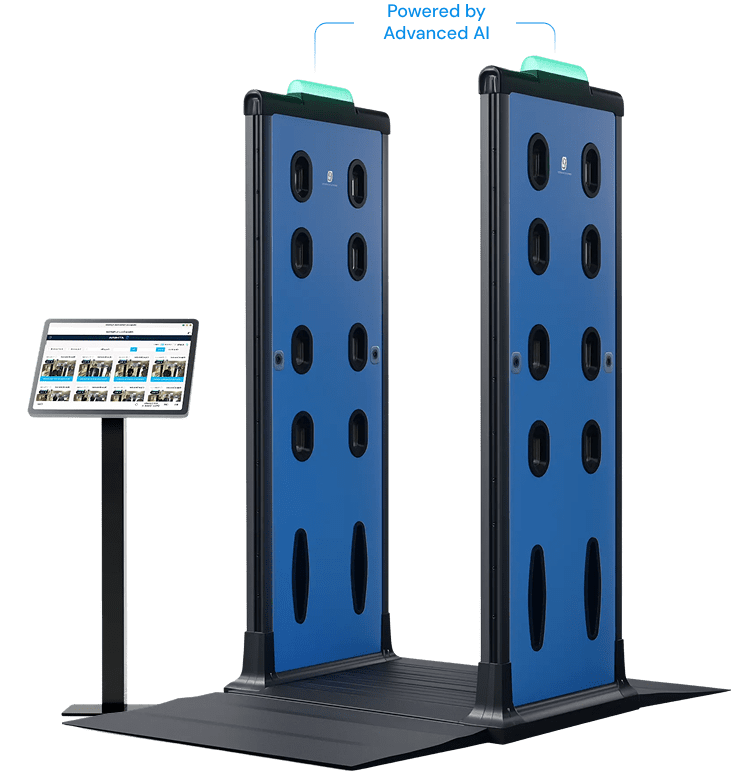

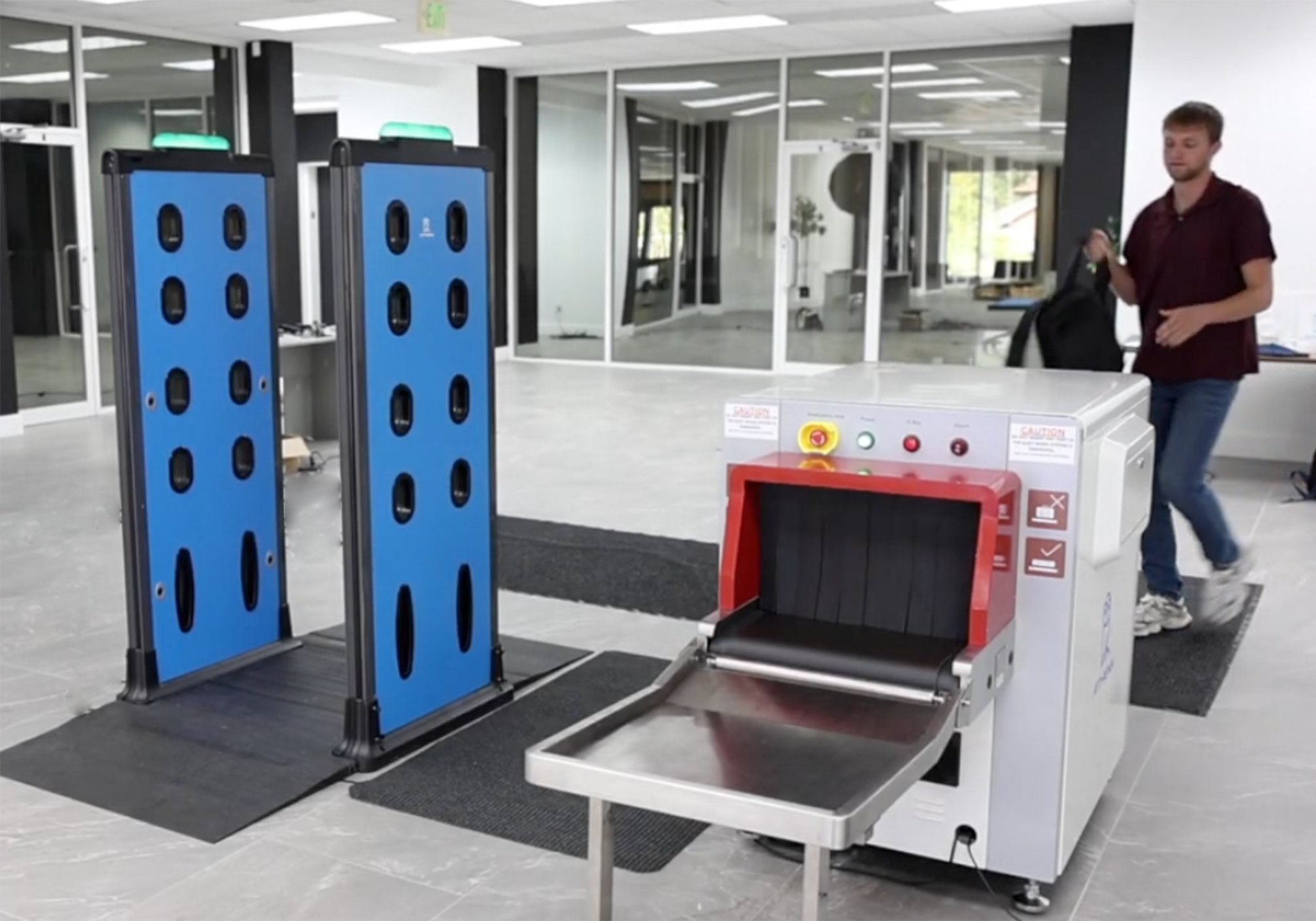
Athena Security has deployed x-ray baggage scanners in over 500 healthcare facilities nationwide since 2019. Our AI-powered technology is trusted by major hospital networks and has screened millions of visitors with proven reliability.
Unlike traditional x-ray scanners that rely solely on operator attention, our system continuously monitors every bag passing through checkpoints. The software identifies suspicious objects automatically and alerts security to genuine threats while filtering harmless items.
Our AI X-ray system screens patient belongings, visitor bags, hand luggage, and staff items as people enter your hospital at normal walking speed. The technology detects firearms, knives, ammunition, explosives, drugs, contraband, and emerging threats.
The system analyzes material composition in real time, distinguishing organic materials from inorganic materials based on atomic number and density. When suspicious items appear, operators receive instant alerts with high resolution imaging showing exactly where threats are located.
The Workforce Multiplier combines concealed weapons detection with AI-assisted x-ray screening on a single console. One security officer manages both systems simultaneously, reducing staffing requirements while improving detection accuracy.
The platform provides centralized monitoring across all hospital entry points from one command center. Security teams prioritize alerts based on threat level and respond to highest-risk situations first. Simple one key turn operation allows quick system activation.
Our AI X-ray system screens patient belongings, visitor bags, hand luggage, and staff items as people enter your hospital at normal walking speed. The technology detects firearms, knives, ammunition, explosives, drugs, contraband, and emerging threats.
The system analyzes material composition in real time, distinguishing organic materials from inorganic materials based on atomic number and density. When suspicious items appear, operators receive instant alerts with high resolution imaging showing exactly where threats are located.
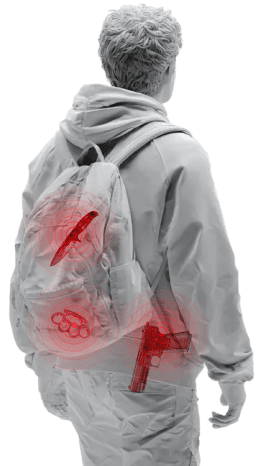
The Workforce Multiplier combines concealed weapons detection with AI-assisted x-ray screening on a single console. One security officer manages both systems simultaneously, reducing staffing requirements while improving detection accuracy.
The platform provides centralized monitoring across all hospital entry points from one command center. Security teams prioritize alerts based on threat level and respond to highest-risk situations first. Simple one key turn operation allows quick system activation.
Athena delivers capabilities other security solutions cannot match. Our platform addresses real-world challenges security personnel face while helping organizations meet federal compliance requirements.
Most weapons detection vendors lock you into proprietary equipment. That means limited choices and potential vendor dependence for years. Athena’s platform works with Apollo 500, Apollo 650, CEIA Opengate, Garrett, and Metrasens Ultra systems. You select hardware that matches your throughput requirements, budget constraints, and facility layout.
Athena is the only platform designed specifically around Department of Homeland Security best practices for patron screening. The system digitizes and enforces guidelines including documentation requirements, testing protocols, and secondary screening procedures. When auditors arrive, you have complete documentation.
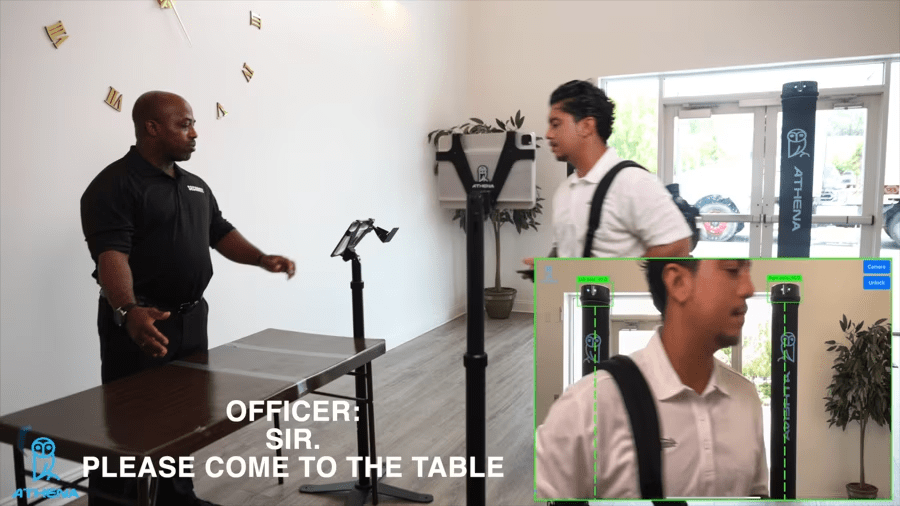
We pioneered and patented technology that detects visitors attempting to bypass screening entirely. Traditional metal detectors only monitor the portal itself. Our computer vision algorithms monitor the entire screening area continuously. When individuals attempt to evade detection, security staff receive instant notifications. This proactive threat detection catches attempts other gun detection systems miss completely.
While competitors offer point solutions, Athena integrates weapons detection with visitor management, AI X-ray screening, telepresence security, and augmented reality alert glasses. When the X-ray system detects a threat, it automatically alerts AR glasses and triggers personalized hologram instructions. That integration creates layered security measures traditional systems cannot provide.
Security leaders at Duke Health, Memorial Hermann, and Lamar Consolidated ISD trust Athena to protect their people. See why hospitals, schools, and government buildings choose our platform. Book a 30-minute demo and we’ll show you exactly what our concealed weapons detection system can do for your facility.
You schedule a consultation, and we listen. Our specialists respond within 24 hours to understand your facility’s specific security needs.
We visit your facility to assess entry points, traffic patterns, and system integration. Your operations continue without interruption.
You receive a detailed proposal with ROI projections, DHS compliance documentation, and answers to all your questions before you commit.
We install during off-hours so your facility stays fully operational. Our team integrates seamlessly with your existing security infrastructure.
Your security team gets comprehensive training on monitoring, alerts, and compliance procedures. We stay on-site for two days post-installation and provide 24/7 support.
Healthcare facilities face unique security requirements that balance patient safety with the need for open, accessible care environments. Traditional screening methods create delays that frustrate patients and families during already stressful situations.
Manual X-ray inspection misses concealed weapons in luggage, bags, and personal items during busy periods.
AI software automatically analyzes every scan, detecting dangerous items that human operators might miss during high-traffic periods with precision and reliability.
Hospitals struggle to maintain adequate security coverage across multiple entrances due to limited personnel budgets and ongoing hiring challenges.
Our integrated platform enables a single operator to monitor multiple screening stations, maximizing efficiency without compromising safety or detection capability across your facility.
Traditional security checkpoints create 10-15 minute wait times during visiting hours, causing frustration and delaying access to patients.
High-throughput screening processes 400 people per hour with zero queues, maintaining a welcoming environment while ensuring comprehensive security coverage and operational efficiency.
Manual security logs fail to provide the detailed records required for Joint Commission audits and state regulatory compliance.
Automated compliance logging creates complete audit trails with timestamps, operator actions, and threat detection records for every screening event and inspection.
Conveyor systems jam or fail when bags exceed the weight capacity, creating security gaps and operational delays at checkpoints.
Advanced conveyor max load sensors prevent overloading while maintaining optimal conveyor speed, ensuring continuous operation and preventing equipment damage or theft of unattended items.
Unmanned X-ray stations continue operating when operators step away, creating potential radiation exposure risks for visitors and staff.
Continuous Presence Monitoring automatically shuts down the system if the operator leaves the station, preventing unauthorized radiation exposure and ensuring power conservation.
Many hospital administrators delay security upgrades, hoping existing measures provide adequate protection or waiting for budget cycles to align. Every day without advanced screening exposes your facility to preventable risks, and the costs of inaction compound faster than you realize.

Healthcare facilities without modern screening face lawsuit settlements averaging $2-5 million per violent incident. Your insurance premiums climb annually while carriers exclude coverage for inadequate security, leaving your hospital financially exposed.
Nurses and physicians now evaluate workplace safety before accepting positions. Hospitals with security incidents see 23% higher turnover within 12 months, with replacement costs exceeding $52,000 per clinical role as word spreads.
Joint Commission and CMS strengthen security standards each cycle. Without documented threat detection, you risk accreditation delays, Medicare reimbursement cuts, and mandatory corrective action plans that drain resources.
Security incidents spread through your community within 48 hours. Competing hospitals with visible safety measures capture your referrals permanently as concerned families choose facilities where they feel protected during vulnerable moments.
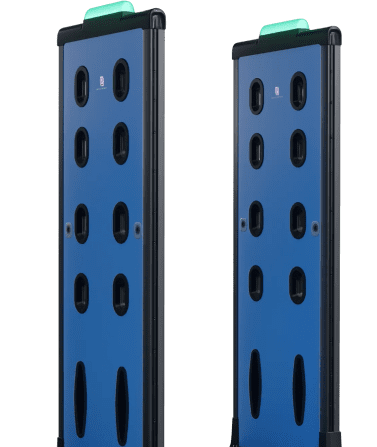
The device uses low-frequency electromagnetic technology, dynamic non-contact detection, and meets EMC electromagnetic radiation standards. It is safe for pregnant women, children, and other humans, as well as pacemakers and electronic devices.
EN 45502-2-1:2003. (Cardiac pacemakers)
EN 45502-2-2:2008. (Implantable defibrillators)
ISO 14117:2019. (Cardiac pacemakers, cardioverter defibrillators, cardiac resynchronization devices)
ISO 14708-1:2014 (Implants for surgery)
ISO 14708-2:2019 (Cardiac pacemakers)
ISO 14708-3:2017 (Implantable neurostimulators)
ISO 14708-4:2008 (Implantable infusion pumps) ISO 14708-5:2020 (Circulatory support devices) ISO 14708-6:2019 (Implantable tachyarrhythmia treatment devices) ISO 14708-7:2019 (Cochlear implants, auditory brainstem implant systems)
Athena protects 500+ facilities across the United States. Our AI-powered gun detection system helps security teams at leading organizations create safer environments.
Duke Health deployed our weapons detection platform across 21 screening locations. Memorial Hermann relies on our technology at facilities across Houston. Lamar Consolidated ISD installed 24 systems throughout their school district. Jefferson Regional Medical Center, Franciscan Health Olympia Fields, Indiana Regional Medical Center, and Parkwest Casino chose Athena for integrated entryway security.

Costs vary based on your facility size, number of entry points, and integration requirements with existing security infrastructure. We provide free security assessments to recommend the right solution for your budget and operational needs. Many hospitals see ROI within 18 months through reduced security staffing costs, improved risk management, and prevention of costly incidents that affect operations.
Our AI-powered platform continuously monitors every scan and automatically identifies threats that human operators might miss. Unlike traditional X-ray systems that rely solely on operator attention, our software provides real-time threat detection alerts and integrates with weapons detection systems for comprehensive entryway security. We’ve deployed in over 500 healthcare facilities across the country with proven results in reducing false alarms while maintaining detection precision.
Yes, our AI-assisted X-ray technology integrates seamlessly with video management systems, access control platforms, and security operation centers. The system connects with existing hospital IT infrastructure and can share data with other security solutions for security purposes. Integration typically completes during installation without disrupting daily operations or requiring extensive system modifications, giving users the ability to enhance security without replacing functional equipment.
Installation typically takes 2-3 days, depending on the number of entry points and integration complexity. We schedule installation during off-hours to minimize disruption to hospital operations and patient care. Your security team receives comprehensive training immediately following installation, and our specialists remain on-site for two days post-deployment to ensure smooth operation and address any questions from users and operators.
If your facility experiences high visitor traffic, has multiple unsecured entry points, or has faced security incidents involving contraband or weapons, advanced screening provides essential protection. Hospitals in states with mandatory security requirements, like California AB 2975, must implement weapons detection and baggage screening by specific deadlines. Generally, facilities screening more than 200 visitors daily benefit significantly from AI-powered systems that create efficient checkpoints and reduce risk.
Your security team receives comprehensive hands-on training covering system operation, alert response procedures, and compliance documentation requirements. We provide 24/7 technical support through our dedicated portal and maintain on-site presence for two days following installation. Ongoing training updates ensure your staff stays current with new features and best practices for threat detection efficiency, helping operators maximize the system’s ability to identify threats.
AI-powered analysis detects threats with accuracy while reducing false positives compared to manual inspection alone. The system analyzes material composition, object shapes, and suspicious patterns faster than human operators can process visual information. Operators receive alerts only for genuine threats, allowing them to focus attention on real security risks rather than reviewing hundreds of harmless items daily, which creates more efficient and reliable security operations.
Yes, advanced X-ray technology detects both ferrous and non-ferrous materials, including firearms, knives, explosives, drugs, and contraband, regardless of composition. The AI analyzes atomic number differences between organic materials and inorganic materials to identify threats with precision. High penetration X-rays pass through dense objects, while high-resolution imaging shows detailed object shapes for accurate threat identification across a wide range of different materials.
Our platform meets all HIPAA compliance requirements for protecting patient health information and personally identifiable data. The system operates on HIPAA-compliant infrastructure with encrypted data transmission and secure access controls. Patient privacy remains protected throughout the screening process, and audit logs maintain complete compliance documentation for regulatory inspections, ensuring your facility stays secure and compliant with government agencies.
Setup requires a simple one-key turn activation that brings the system online and ready for screening within seconds. Daily operation involves minimal operator intervention as the AI handles continuous monitoring and threat detection automatically. The system maintains optimal conveyor speed and power efficiency while processing hand luggage, bags, and cargo through security checkpoints. Users benefit from intuitive controls that require minimal training while delivering reliable performance for screening express mail, visitor belongings, and staff items throughout each shift.
Costs vary based on your facility size, number of entry points, and integration requirements with existing security infrastructure. We provide free security assessments to recommend the right solution for your budget and operational needs. Many hospitals see ROI within 18 months through reduced security staffing costs, improved risk management, and prevention of costly incidents that affect operations.
Our AI-powered platform continuously monitors every scan and automatically identifies threats that human operators might miss. Unlike traditional X-ray systems that rely solely on operator attention, our software provides real-time threat detection alerts and integrates with weapons detection systems for comprehensive entryway security. We’ve deployed in over 500 healthcare facilities across the country with proven results in reducing false alarms while maintaining detection precision.
Yes, our AI-assisted X-ray technology integrates seamlessly with video management systems, access control platforms, and security operation centers. The system connects with existing hospital IT infrastructure and can share data with other security solutions for security purposes. Integration typically completes during installation without disrupting daily operations or requiring extensive system modifications, giving users the ability to enhance security without replacing functional equipment.
Installation typically takes 2-3 days, depending on the number of entry points and integration complexity. We schedule installation during off-hours to minimize disruption to hospital operations and patient care. Your security team receives comprehensive training immediately following installation, and our specialists remain on-site for two days post-deployment to ensure smooth operation and address any questions from users and operators.
If your facility experiences high visitor traffic, has multiple unsecured entry points, or has faced security incidents involving contraband or weapons, advanced screening provides essential protection. Hospitals in states with mandatory security requirements, like California AB 2975, must implement weapons detection and baggage screening by specific deadlines. Generally, facilities screening more than 200 visitors daily benefit significantly from AI-powered systems that create efficient checkpoints and reduce risk.
Your security team receives comprehensive hands-on training covering system operation, alert response procedures, and compliance documentation requirements. We provide 24/7 technical support through our dedicated portal and maintain on-site presence for two days following installation. Ongoing training updates ensure your staff stays current with new features and best practices for threat detection efficiency, helping operators maximize the system’s ability to identify threats.
AI-powered analysis detects threats with 99.9 percent accuracy while reducing false positives by 99 percent compared to manual inspection alone. The system analyzes material composition, object shapes, and suspicious patterns faster than human operators can process visual information. Operators receive alerts only for genuine threats, allowing them to focus attention on real security risks rather than reviewing hundreds of harmless items daily, which creates more efficient and reliable security operations.
Yes, advanced X-ray technology detects both ferrous and non-ferrous materials, including firearms, knives, explosives, drugs, and contraband, regardless of composition. The AI analyzes atomic number differences between organic materials and inorganic materials to identify threats with precision. High penetration X-rays pass through dense objects, while high-resolution imaging shows detailed object shapes for accurate threat identification across a wide range of different materials.
Our platform meets all HIPAA compliance requirements for protecting patient health information and personally identifiable data. The system operates on HIPAA-compliant infrastructure with encrypted data transmission and secure access controls. Patient privacy remains protected throughout the screening process, and audit logs maintain complete compliance documentation for regulatory inspections, ensuring your facility stays secure and compliant with government agencies.
Setup requires a simple one-key turn activation that brings the system online and ready for screening within seconds. Daily operation involves minimal operator intervention as the AI handles continuous monitoring and threat detection automatically. The system maintains optimal conveyor speed and power efficiency while processing hand luggage, bags, and cargo through security checkpoints. Users benefit from intuitive controls that require minimal training while delivering reliable performance for screening express mail, visitor belongings, and staff items throughout each shift.
You need a platform that catches threats before they enter your facility. Athena’s AI-powered system works with the hardware you choose while adding intelligent oversight that traditional metal detectors lack. Our technology helps you meet DHS best practices, reduce staffing gaps, and document every screening for compliance auditing.