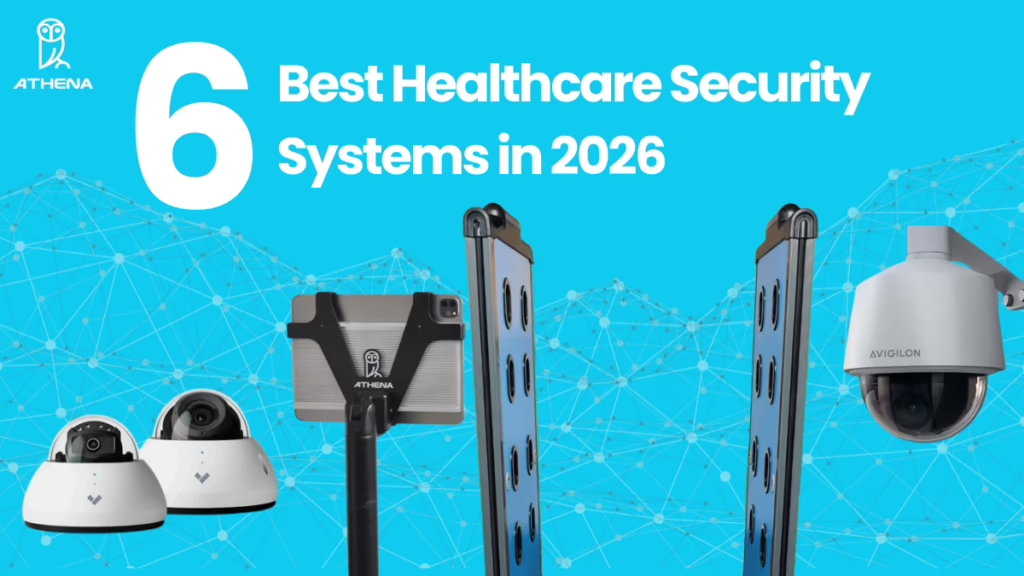

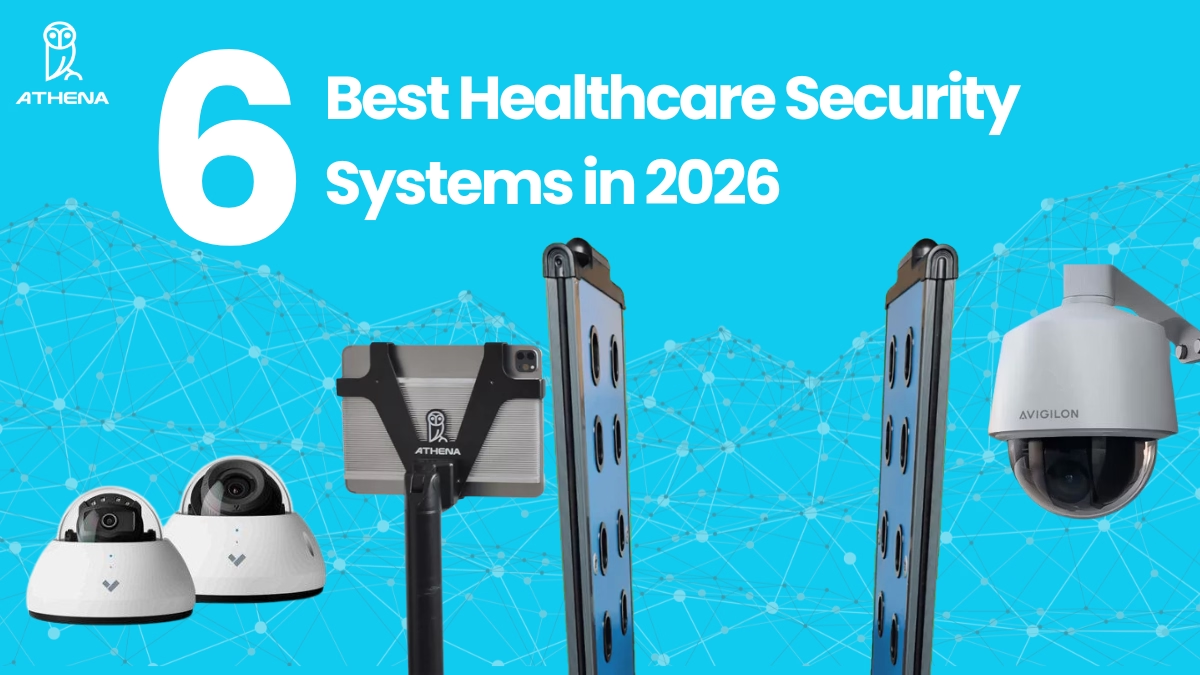
| Summary: This guide to the best healthcare security systems in 2026 breaks down how hospitals can protect staff, patients, and assets using AI-powered tools. It covers the biggest security challenges in healthcare and compares top solutions such as Athena Security, Avigilon, Ambient.ai, Verkada, Axon, and Coram AI. Learn what features matter most in modern hospital security systems, where they make the biggest impact, and how to choose an integrated, scalable platform that saves lives while preserving patient trust. |
Workplace violence against healthcare workers is a serious concern across healthcare settings. In one tertiary hospital study, 71.9% of reported workplace violence incidents were verbal, and 28.1% were physical, with outpatient clinics and emergency departments reporting the most cases.
Healthcare and social service workers are five times as likely to suffer a workplace violence injury as workers overall.
Modern AI-powered solutions detect threats in real time, protect staff and patients, and do it without disrupting care.
In this article, we break down the 6 best healthcare security systems of 2026—features, pricing, pros, and cons—so you can protect your facility with confidence.
Let’s dive in. But first, let’s look at the challenges healthcare facilities are facing today.
What are the Challenges Healthcare Facilities are Facing Today
From rising workplace violence to critical staff shortages, healthcare facilities are battling security threats on multiple fronts.
Here’s a closer look at the challenges demanding immediate attention.
- Rising Violence in Healthcare Settings
Workplace violence hits healthcare 5x harder than any other industry. Incidents like the Pennsylvania hospital shooting, the Arizona ER shooting, and the 2022 Tulsa mass shooting show how quickly situations can escalate inside medical facilities.
- Weapons Entering Facilities
Emergency department staff regularly encounter firearms, yet many healthcare facilities do not have metal detectors in place to screen for weapons at entry points.
- Visitor Flow and Access Control
Open facility designs make visitor screening difficult. Most hospitals skip ID or badge verification, and during peak hours, crowds easily overwhelm already weak entry points.
- Security Staff Shortages
Most hospital security teams are unarmed and understaffed. Facilities struggle to maintain affordable, round-the-clock coverage while lacking proper training in threat detection and de-escalation.
- Balancing Safety With Patient Experience
Aggressive screening measures can erode patient trust. Hospitals are caught between tightening security and maintaining a welcoming, non-intimidating environment.
- Broader Security Context
Cyber attacks can disrupt critical security systems, and undetected behavioral threats create additional risks, leaving healthcare facilities vulnerable from multiple angles.
These challenges aren’t going away. They’re only getting worse. And for healthcare facilities still relying on outdated or fragmented security, the risk of a serious incident grows every day.
So what does it take to address them? Let’s look at why advanced security systems have become essential for hospitals today.
Why Healthcare Facilities Today Need Advanced Healthcare Security Systems
The challenges are clear, but so are the solutions. Today’s advanced security systems are built specifically to tackle what traditional setups simply can’t handle.
Here’s how:
- Smart Weapon Detection: AI-powered weapon detection systems detect firearms at entrances in real time, without stopping patient flow or relying on armed guards.
- AI-Based X-Ray Baggage Scanners: Advanced X-ray baggage scanners identify concealed threats in bags while reducing manual checks and human error.
- Smart Real-Time Alerts: Instant alerts via AR glasses in the security staff’s field of view notify security teams the moment a threat is detected, enabling faster response and early de-escalation.
- Virtual Security Officer: A visible, always-on telepresence security officer that guides visitors, enforces entry rules, and deters threats, without adding staffing costs.
- Smart Visitor Management System: A smart visitor management system digitally verifies visitors, controls access, and tracks movement. It improves safety without slowing check-ins or disrupting care.
- Ambulance Bay Weapons Detection System: A system screens stretcher patients at ambulance bay entry using imaging radar and AI, detecting concealed weapons, generating audit-ready records, and closing security gaps without disrupting emergency department workflows.
These advanced healthcare security systems help smaller security teams cover more ground while reducing overtime and labor costs.
Now, let’s look at where the healthcare security system has the greatest impact.
Where Healthcare Security Systems Make the Biggest Impact
Not all hospital areas face the same risks. Advanced security systems deliver the most value in locations where safety, access control, and rapid response matter most.
- Emergency Room Entrances: High-risk, high-traffic areas where early weapon detection and fast alerts are critical.
- Main Hospital Lobbies: Smart screening and visitor management help control access without creating delays.
- Behavioral Health Units: Enhanced monitoring supports early intervention and safer de-escalation.
- Maternity Wards: Controlled access protects newborns, patients, and staff from unauthorized entry.
- Pharmacy Areas: Strong access control prevents theft, diversion, and unauthorized access.
- Staff-Only Zones: Restricted entry ensures only authorized personnel have access to sensitive areas.
By securing the areas that matter most, healthcare facilities can reduce risk, protect people, and create a safer environment, without compromising care or patient experience.
So what do you look for in the best healthcare security systems? Let’s find out.
What Healthcare Security Systems Must Deliver in 2026?
We’ve spent years working alongside healthcare as security needs have grown more complex and more urgent.
Our team has seen how rising workplace violence, expanding campuses, staffing shortages, and tighter budgets are forcing healthcare teams to rethink how security systems are chosen and deployed. We’ve also seen which solutions adapt and which fall behind as healthcare scales.
Based on that experience, we’ve defined a clear set of expectations for what healthcare security systems must deliver in 2026. These are the standards we apply when evaluating any system designed for hospital environments.
Here’s what we look for in modern healthcare security systems:
- Scalability Across Facilities: Can the system expand across multiple buildings, campuses, and regions without slowdowns at entry points?
- Ease of Implementation: How quickly can it be deployed, and can it go live without disrupting patient care?
- Integration with Existing Systems: Does it connect with current cameras, access control, and workflows, or require a rip-and-replace?
- Real-Time Threat Alerting: How quickly are threats detected, verified, and delivered to the right teams?
- Accuracy of Detection: Does it reliably identify real threats while minimizing false alarms in busy hospital environments?
- Operational Efficiency Impact: Does it reduce manual effort, investigation time, and staffing pressure?
- Support and Training Availability: Are teams trained effectively, and is ongoing support available as staff and facilities change?
- Pricing Transparency and Value: Are costs clear, predictable, and aligned with long-term ROI?
- Free Demo Availability: Can hospitals evaluate the system in real-world conditions before committing?
- Proven Hospital Deployments: Has the system been successfully deployed in active healthcare environments?
This framework reflects what hospitals need now, and what will matter most as healthcare security continues to evolve.
A Quick Overview of the Best Healthcare Security Systems
This overview helps you quickly compare how leading systems differ across the key criteria that matter most in healthcare environments.
| Product | Deployment fit | Integration fit | Alerting/response strength |
| Athena Security’s Weapons Detection System | Strong fit for emergency departments, main entrances, behavioral health units, and other high-traffic hospital checkpoints | Connects weapons detection screening, alerts, visitor workflows, AR glasses, X-ray screening, and other response tools in one connected system | Sends real-time alerts when a concealed weapon is detected and helps teams respond quickly with clear threat visibility |
| Avigilon Healthcare Security Solutions | Strong fit for large campuses and multi-facility health systems with mature security operations | Works with video management and access control environments and supports third-party system connections | Strong at video analytics, suspicious activity detection, and centralized monitoring |
| Ambient.ai Healthcare Security AI Platform | Good fit for hospitals that already have cameras and access control in place and want to layer AI on top | Works with existing surveillance cameras and door-access systems | Detects events in live video and sends prioritized alerts to reduce alarm fatigue |
| Verkada Healthcare Security Solutions | Good fit for organizations that want centralized cloud-based management across sites | Combines cameras, access control, alarms, panic buttons, and visitor management in one cloud platform | Sends mobile and platform alerts and supports fast response through a unified cloud setup |
| Axon Healthcare Security Solutions | Stronger fit for security teams that rely heavily on officer presence and incident response workflows | Connects body-worn cameras, TASER devices, evidence management, and dispatch-related workflows | Strong at live response support, incident documentation, and evidence management |
| Coram AI Hospital Security Cameras & AI Platform | Good fit for multi-site hospitals that want cloud-based AI monitoring without replacing current cameras | Works with existing IP cameras and access control systems | Sends alerts when AI detects firearms, loitering, tailgating, and other live security risks |
Disclaimer: This comparison is based on publicly available information, vendor resources, and our analysis as of 2026. Features, pricing, and availability may vary by plan, deployment scope, geography, or direct negotiation. Always confirm current details with each provider’s sales team before making a final decision.
6 Best Healthcare Security Systems of 2026
Based on the evaluation criteria we outlined earlier, these are the healthcare security systems that stand out as the strongest options for healthcare in 2026.
Each of these systems takes a different approach to healthcare security, helping hospitals balance safety, operational efficiency, integration, privacy, and the realities of modern clinical environments.
- Athena Security’s Weapons Detection System
- Avigilon’s Healthcare Security Solutions
- Ambient.ai’s Healthcare Security AI Platform
- Verkada’s Verkada Healthcare Security Solutions
- Axon’s Axon Healthcare Security Solutions
- Coram AI’s Hospital Security Cameras & AI Platform
Let’s start with a system built specifically for healthcare environments.
Athena Security’s Weapons Detection System: Built For Real-Time, Hands-Free Threat Response in Healthcare
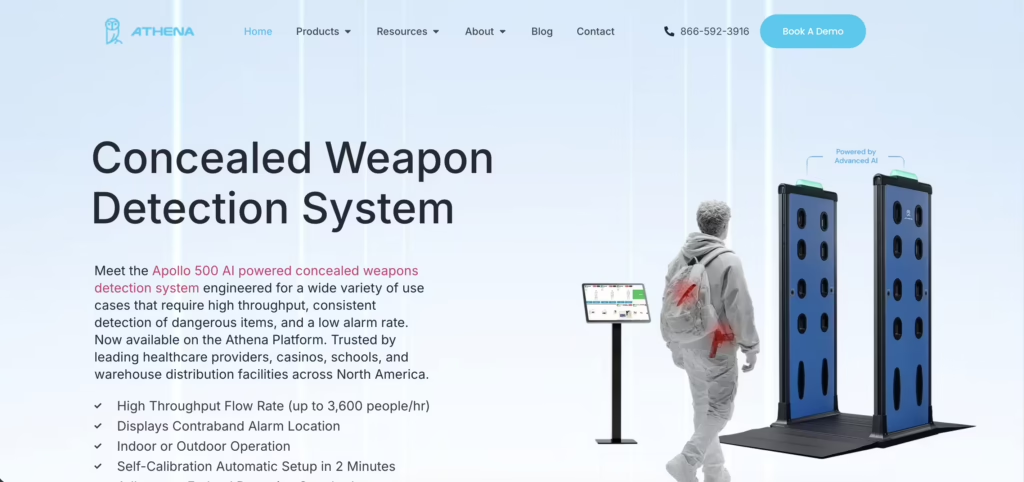
Athena Security delivers AI-powered weapons detection built specifically for the realities of healthcare environments. Designed to replace traditional metal detectors and manual screening, Athena enables fast, unobtrusive entry screening without disrupting patient care or visitor flow. Athena even just releaed a Ambulanace Bay Weapons Detection System to help cover threats entering on stretchers.
The system accurately detects real threats from everyday items like phones or keys, triggering real-time alerts only when a weapon is detected. Proven at scale across large healthcare networks, Athena can be deployed rapidly, even in emergency situations, and integrates seamlessly with existing security workflows. With hands-on training, analytics, and strong hospital partnerships, Athena helps healthcare facilities improve safety while reducing queues and operational friction.
How This Healthcare Security Solution Works
- Screens patients and visitors for concealed weapons upon entering hospital facilities.
- Uses AI to distinguish real threats from everyday items like phones or keys.
- Instantly alerts security teams when a gun or knife is detected.
- Detects and flags anyone attempting to bypass or avoid the screening process.
- Helps hospitals stop weapons early without slowing patient flow or care access.
Accuracy and Coverage
- Uses advanced AI to detect weapons with high accuracy and low false alarms.
- Differentiates between harmless metal objects and actual threats.
- Maintains accuracy during peak traffic periods.
- Covers both visible and concealed weapon threats in real time.
- Extremely low false alarm rate in busy environments.
Speed and Alerts
- Detects potential weapons instantly as people pass through screening points.
- Sends real-time alerts to security teams without delay.
- Alerts include clear threat details and location info.
- Can push notifications to dashboards, mobile apps, or AR glasses.
- Rapid detection helps security respond before incidents escalate.
- Designed to keep the screening flow fast so patients aren’t held up.
Integration and Deployment Fit
- Frontline weapon detection within a connected security system.
- Integrates with AI-Assisted X-ray scanners, visitor management, AR glasses for security officers, and virtual security officers.
- Open and documented APIs for third-party cameras and sensors.
- Real-time two-way data exchange across systems.
- Centralized monitoring from the hospital security operations center.
- EPIC-compatible deployment.
- Includes H-Shield DNS security as part of the platform.
Privacy, Compliance, and Patient Trust
- Designed to protect patient privacy with non-intrusive, walk-through screening.
- Uses encrypted data transmission across all connected security systems.
- Supports compliance with healthcare regulations and hospital security policies.
- Limits data access to authorized security personnel only.
- Supports secondary screening for people who bring in flagged items by mistake.
- Helps maintain a calm, respectful patient experience while improving safety.
Pricing
- Price starts from USD 100,000-120,000.
- Also available for rent at a monthly rate of USD 2000.
- Rental comes with an extra cost of USD 3400 for onsite training, 24/7 support, and maintenance.
- The organization can own the system after 4-5 years through a rent-to-own method.
Athena Security Healthcare Security System is Built For
- Emergency departments and behavioral health units.
- Main hospital entrances with high daily foot traffic.
- Facilities requiring non-invasive weapon screening.
- Security teams, who need visual confirmation of threats.
- Hospitals prioritizing safety without disrupting care.
May not be ideal if
- You are looking for a legacy metal detector that alerts on every metallic object.
- Your security approach prioritizes sensitivity over accuracy.
- You prefer generic screening tools rather than advanced systems designed for hospital workflows.
- Your team does not require visual confirmation to guide response decisions.
Healthcare Case Study Highlight
Jefferson Regional Medical Center implemented our healthcare security solutions to modernize its security operations. By connecting visitor check-in data with weapons screening, the system delivers real-time alerts when persons of interest enter the facility. This integrated approach reduced time, costs, and staffing demands, while giving the security team greater visibility into who is entering the hospital and what they may be carrying.
Watch this video to see the details of this partnership.
Here’s what our other clients are saying:
“It catches what the human eye cannot. It’s a force multiplier.”
—District Police Chief, Texas School District.
If you want to experience how our AI-powered healthcare security system can improve your hospital’s security, book a free demo with Athena Security or call +1-866-592-3922.

Avigilon’s Healthcare Security Solutions: Built For Large Hospital Networks
Avigilon’s healthcare security solution, part of Motorola Solutions, delivers a unified, AI-driven approach to protecting hospitals and medical campuses. The platform combines intelligent cameras, video management, and access control into a single, connected system designed for complex healthcare environments. Using advanced analytics and Appearance Search, security teams can quickly identify threats, locate missing patients, and respond to incidents in real time.

Source: avigilon.com/industry/healthcare
Features and Benefits
- AI-powered video monitoring detects unusual activity in real time.
- Unified video and access control in one security platform.
- Real-time alerts and lockdown controls improve emergency response.
- Integrates cloud or on-prem VMS, plug-and-play cameras.
- AI analytics provide real-time insights and alarms.
- Scales easily across multiple facilities and campuses.
- Comprehensive support via Avigilon training center and partners.
Pricing
- Custom, quote-based pricing depending on hospital size and requirements.
Avigilon Healthcare Security System is Built For
- Healthcare systems that can afford premium, enterprise-level security investments.
- Large hospital networks with security teams to manage complex deployments.
- Organizations comfortable with vendor-led pricing and custom sales engagements.
- Hospitals planning long-term, large-scale rollouts rather than quick, lightweight deployments.
May Not be Ideal If
- Budget flexibility is limited, or upfront pricing clarity is required.
- Quick, low-complexity deployment is a priority.
- Your Healthcare system lacks dedicated IT or security resources for ongoing system management.
- You need a process for handling permitted items safely.
Thus, Avigilon offers an enterprise security solution for large healthcare systems with the budget and resources to support it.
Ambient.ai’s Healthcare Security AI Platform: Built For Security Analytics
Ambient.ai is a healthcare-focused AI security analytics platform designed to enhance hospital safety without replacing existing infrastructure. It overlays current surveillance cameras and door-access systems, analyzing live video and access data to detect critical incidents such as unauthorized entry, loitering, patient falls, and other security risks in real time.

Source: ambient.ai/solutions/healthcare
Features and Benefits:
- Works with existing cameras and access control systems without hardware replacement.
- Detects security incidents in real time using AI.
- Reduces false alarms so staff can focus on real threats.
- Sends prioritized alerts for faster response.
- Scales easily across large hospital environments.
- Maintains privacy by not storing personally identifiable information.
Pricing
- Demo and pricing available upon request through sales.
Ambient.ai’s Healthcare Security System is Built For
- Healthcare facilities that want AI-driven security without replacing existing cameras.
- Healthcare facilities aiming to reduce false alarms and alarm fatigue.
- Organizations that can afford a high-cost healthcare security system.
- Large or multi-site healthcare organizations seeking scalable security analytics.
May not be Ideal if
- A hospital wants a low-cost, plug-and-play security solution.
- On-premise-only deployment is required.
- Public healthcare case studies are mandatory.
- Basic monitoring is sufficient without AI-driven analytics.
Ambient.ai is a capable AI security analytics platform for hospitals, but its value depends on budget, deployment preferences, and the need for publicly proven healthcare use cases.
Verkada’s Cloud-Based Healthcare Security: Built For Healthcare Security in the Cloud
Verkada is a cloud-based security platform designed for hospitals and healthcare facilities. It brings video cameras, access control, alarms, panic buttons, and visitor management into one easy-to-use system. Using AI, Verkada helps detect threats in real time, improve response times, and keep patients, staff, and visitors safe.

Source: verkada.com/solutions/healthcare/
Features and Benefits
- Unified cloud platform combining video, access control, and visitor management.
- AI-powered real-time alerts for faster threat detection and incident response.
- One-click nurse panic buttons to improve staff safety and emergency handling.
- Easy plug-and-play deployment with centralized monitoring.
- Built-in privacy controls and encrypted video to support healthcare compliance.
Pricing
- Cameras start from $599 per unit, and pricing may vary depending on features.
- Command Connectors start from $2999.
- Viewing station costs $499.
Read more here: verkada.com/pricing/
Verkada’s Healthcare Security System is Built For
- Healthcare facilities wanting fast, plug-and-play cloud security.
- Organizations comfortable with vendor lock-in and recurring subscription costs.
- Facilities needing standard AI features, not deep customization.
May Not be Ideal for
- Healthcare facilities requiring deep customization or open integrations.
- Organizations preferring on-prem or hybrid security control.
- Facilities sensitive to recurring cloud subscription costs.
Overall, Verkada is a capable cloud-first security solution, but its closed ecosystem, cloud dependence, and subscription-driven model may limit flexibility for healthcare organizations seeking more control and customization.
Axon’s Healthcare Security System: Built For Body-worn Cameras and Cloud Evidence Management
Axon (formerly TASER) offers a physical security operating system designed to protect frontline staff and patients in healthcare settings. Instead of traditional cameras, Axon focuses on active safety tools like TASER® 7 devices, body-worn cameras, and secure cloud evidence management.
Source: axon.com/industries/enterprise/healthcare
Features and Benefits
- TASER® devices and bodycams help de-escalate incidents and protect staff.
- Cloud evidence platform enables secure, compliant video storage and sharing.
- Real-time alerts and live streaming speed up emergency response.
- Scales easily across large hospital networks and multi-site deployments.
- Integrates with law enforcement systems and existing dispatch or radio communications.
Pricing
- Pricing depends on deployment size, hardware, and configuration.
Axon’s Healthcare Security System is Built For
- Security teams that are comfortable managing specialized hardware like bodycams and TASER® devices.
- Large health systems that can accommodate custom pricing, licensing, and long-term contracts.
- Facilities that rely heavily on security staff presence rather than automated threat detection.
May not be Ideal if
- You need proactive, AI-driven surveillance to detect threats before incidents escalate.
- Your healthcare facility prefers non-weaponized, passive security technologies.
- You want a unified video security platform beyond staff-worn devices.
- Your healthcare facility needs a secondary screening system.
Axon is a strong fit for hospitals focused on front-line response and incident documentation, but it lacks the proactive, AI-driven visibility needed for modern, prevention-first healthcare security.
Coram AI’s Healthcare Security System: Built For Cloud-based AI Security Without Replacing Existing Cameras
Coram AI is a cloud-based security platform designed specifically for hospitals and healthcare facilities. It works with existing IP cameras, so hospitals do not need to replace their current hardware. The system uses AI to monitor live video feeds and detect security risks such as intrusions, loitering, tailgating, and firearms in real time. Alerts are sent instantly to security teams for quick action.

Source: coram.ai/hospital-security-cameras
Features and Benefits
- Works with existing hospital IP cameras, avoiding expensive hardware replacement.
- Uses cloud-based AI to detect threats like intrusions, loitering, and firearms in real time.
- Sends instant alerts to security staff for faster incident response.
- AI-powered video search enables quick investigation using simple text queries.
- Scales easily across large hospital campuses with minimal setup and maintenance.
Pricing
- Custom pricing based on the number of cameras, locations, and features.
Coram AI’s Healthcare Security System is Built For
- Healthcare facilities that are comfortable relying heavily on cloud connectivity for security operations.
- Facilities seeking standard AI analytics over deeply customized controls.
- Teams prioritizing fast setup over complex hospital workflow integrations.
- Organizations willing to trade local control for cloud-managed surveillance.
May not be Ideal if
- You require on-premise processing with minimal cloud dependency.
- Your hospital needs highly customized, workflow-specific security integrations.
- Internet reliability is inconsistent across your facilities.
- You want deeper control over data handling and system configuration.
Overall, Coram AI offers a fast, cloud-centric security solution, but its heavy reliance on internet connectivity and standardized AI features may limit its suitability for hospitals that need greater control and customization.
Why Choose an Integrated Healthcare Security System?
We’ve worked with healthcare facilities long enough to see where security breaks down, not because tools fail, but because they don’t work together.
Healthcare facilities often rely on multiple vendors for weapons detection, cameras, access control, and alerting. In real incidents, that fragmentation slows security response, increases false alarms, and puts more pressure on already stretched teams.
That’s why we believe healthcare security works best as a unified, integrated ecosystem; one that connects physical and digital protection into a coordinated response.
Here’s why you should deploy an integrated healthcare security system:
- Single-Vendor Ecosystem: One platform replaces multiple point solutions, reducing vendor, system, and operational complexity.
- Detection Accuracy: It reliably identifies real threats in busy hospital environments without overwhelming staff with false positives.
- Unified Workflows: Detection, alerts, video context, and response actions operate within a single, connected workflow, rather than across separate systems.
- Real-Time Visibility: Teams can see and act on threats across entrances, corridors, and campuses from a single operational view.
- Scalability and Deployment: The system is designed to scale across facilities while enabling rapid deployment without impacting patient care.
This approach reflects how hospitals operate today and what it takes to protect them effectively, without adding complexity.
Choosing the Best Healthcare Security System Starts With Getting It Right
You’ve now seen what the top systems on the market bring to the table. But picking the best healthcare security system isn’t just about features and price tags. It’s about finding one that works the way your hospital actually operates, under real pressure, every single day.
Athena focuses on screening, alerting, and response in a way that fits hospital workflows. We help security teams spot threats faster by connecting detection and response tools. From the moment a threat enters your facility to the second it’s neutralized, every layer of our platform is designed to work together, seamlessly, without gaps.
Watch below how our Apollo 500 Weapon Detection works in real healthcare scenarios:
We’ve spent years inside healthcare environments, learning the rhythms, the bottlenecks, and the moments where security systems fail. That experience has helped Athena focus on the points where hospital security often breaks down.
So if you’re ready to see how the best healthcare security system looks in action, book a free live demo today. Let’s protect what matters most.
FAQs About the Best Healthcare Security Systems
Have questions about the best healthcare security systems for hospitals? We’ve answered some of the most common ones below to help you make informed, confident decisions about protecting your staff, patients, and facility.
If your question is not here, call us at +1-866-592-3916. We’re here to help.
1. How Do Healthcare Security Systems Impact Day-To-Day Operations?
Advanced healthcare security systems improve daily operations by reducing manual burden, streamlining visitor flow, and enabling faster threat detection, all without disrupting care.
Eric Sean Clay, Former President of the International Association for Healthcare Security and Safety, shared how Athena’s system transformed operational visibility and staff confidence:
“One of the things I really like about the Athena system is the ability to go in and really dig into the numbers. I can tell exactly how many people come into my facility at any given time. I think that this system also helps reduce the anxiety of caregivers. Being able to show them that we were able to stop X amount of weapons from coming into the facility allows them to really feel better protected and focus on providing quality care.”
Watch the full video below.
2. How Do These Systems Perform In Smaller Hospitals With Tight Budgets And Limited IT Staff?
Athena Security’s platform is designed to scale across both large networks and smaller hospitals. The system can be rapidly deployed without requiring a full rip-and-replace of existing infrastructure, and it integrates with current hospital workflows.
For facilities with limited IT staff, such advanced healthcare security systems include managed support, 24/7 assistance, and hands-on training as part of their rental or purchase plans. This flexibility allows smaller facilities to enhance security without overextending their resources or staff.
3. What Makes Athena Ideal For Healthcare?
Our team has spent years working with healthcare facilities and understanding how their security needs differ from other environments. We’ve spent years partnering closely with hospitals, learning firsthand the challenges they face, not just in physical security, but also in cybersecurity.
That’s why we’ve designed every aspect of our platform specifically for healthcare environments.
From AI-powered weapons detection, virtual security officers, to patient experience technology, every solution is built to protect patients and caregivers without disrupting care.
We’ve also gone a step further by developing H-Shield, our DNS security for healthcare platform, created to help hospitals strengthen their cybersecurity posture alongside physical protection.
4. What Are The Best Gate Security Solutions For Hospitals?
Two of the best gate security solutions designed for hospital environments are Athena Security and Metrasens Ultra. Athena Security combines AI-powered weapons detection with DNS-level cybersecurity through its H-Shield platform, providing hospitals with both physical and network protection. Metrasens Ultra, while focused on passive ferromagnetic detection, integrates with existing hospital infrastructure and supports secure screening in sensitive areas like behavioral health.
For more, read this article on 5 Best Gate Security Solutions for Hospitals.
5. What Are The Best Gun Detection Systems For Hospitals In 2026?
Two of the top-rated hospital-ready gun detection systems are Athena Security and Omnilert. Athena’s AI-driven system is built specifically for healthcare, detecting both visible and concealed weapons with real-time alerts and low false positives. Omnilert offers a budget-friendly option that detects visible firearms using existing CCTV infrastructure.
For more, read this article on 5 Best Gun Detection Systems for Hospitals.
6. How To Buy Athena Security’s Healthcare Security Systems?
The first step is to book a free demo. Our team will walk you through how the system works, assess your facility’s unique security needs, and guide you through deployment options tailored to your hospital environment.
Disclaimer: The information provided in this article is based solely on publicly available sources and is intended for general informational and guidance purposes only. It should not be relied upon as a final decision-making resource or as a substitute for professional advice. While we strive for accuracy and completeness, we make no representations or warranties regarding the correctness, reliability, or suitability of the content. If you believe any information should be updated, corrected, or removed, please contact our team for review.