
| Summary: The best school security measures combine prevention, detection, and emergency response. This guide explains how schools can assess campus risks, screen students and bags, detect concealed threats, improve arrival workflows, secure classrooms, respond to concerns before they escalate, and conduct emergency response training drills and active shooter training. |
“We recommend that every school district establish a baseline of conducting physical security assessments. That is the best place to start, and truly, it is the only place to start.”
This is what Jason Stoddard, Chair of the National Council of School Safety Directors, said on the Security Management Highlights podcast by ASIS International. As a leading company working in the physical security of schools, we completely agree.
Schools should not add security measures just because they look visible or sound advanced. They need measures that solve real campus risks.
The best school security measures are layered physical security technologies and protocols. They help schools control who enters, screen visitors and bags, detect concealed weapons, secure classrooms, communicate during emergencies, and respond without disrupting the learning environment.
To help you decide, we created this guide that explains the best school security measures for 2026. This is not a list of every security tool a school may use. We selected the measures that can have the greatest impact on identifying serious risks, preventing weapons from entering, protecting classrooms, and detecting threats before they escalate.
How Did We Choose The Best School Security Measures
We selected these measures based on four practical filters.
- They start with the school’s actual risk: Every school has a different layout, entrance flow, student population, arrival pattern, and threat.
- They address physical security gaps schools can actually control: Schools may not be able to predict every threat, but they can control how students or parents enter, how bags are screened, how classrooms are secured, and how staff respond during an incident.
- They reduce common rollout failures: Recent school screening pilots have shown that security measures can create long lines, false alarms, staffing gaps, and confusion if they are not planned around daily school operations.
- They cover detection, response, and prevention: Schools need to detect threats before they move deeper into campus, respond quickly when something happens, and give students a way to report concerns early.
In short, the best school security measures are the ones that match the school’s real risks and can work reliably on a normal school day.
What Are The Best School Security Measures For 2026
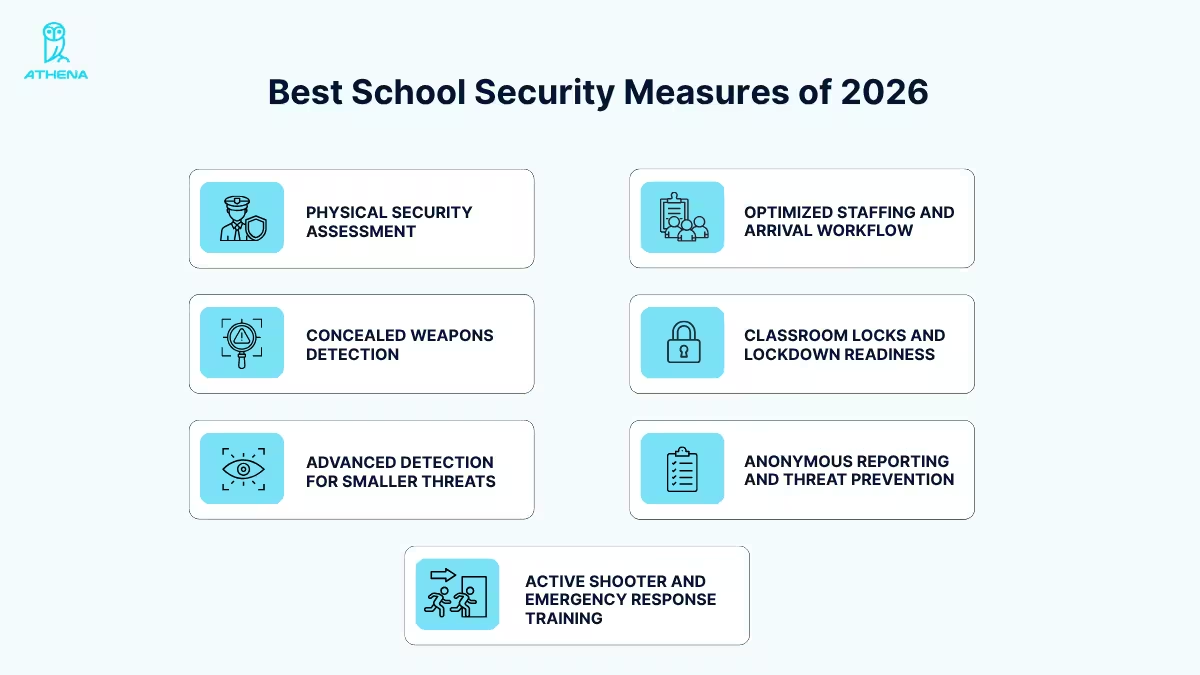
Based on our selection criteria, here are the 7 best school security measures schools should consider in 2026:
- Physical security assessment: School districts should start by identifying the actual risks in each building, including entrances, blind spots, arrival flow, and emergency response gaps.
- Weapons detection in school: Schools should use a screening setup that can check both students and bags without creating long lines or forcing staff to choose between speed and security.
- Advanced detection for small and concealed threats: Schools should plan for more than firearms by detecting pocketknives, razor blades, vapes, dense metal objects, and other items hidden inside normal school supplies.
- Optimized staffing and arrival workflow: School districts should define who routes students, who manages bags, who resolves alerts, and how the line keeps moving during peak arrival.
- Classroom locks and lockdown readiness: Schools should make sure classrooms can be secured quickly from inside, and that staff know what to do during a lockdown.
- Anonymous reporting and threat prevention: Schools should give students a safe way to report weapons, threats, bullying, or weird behavior before an incident escalates.
- Active Shooter and Emergency Response Training: Schools should conduct drills to teach students and staff how to respond to active shooters and other threats, like stabbings, suspicious packages, assaults, etc.
Each measure solves a different part of the school security problem, which is why schools should evaluate them together instead of treating one product or policy as the full solution.
Now, let’s dive into these security measures for schools one by one.
Measure 1: Physical Security Assessment
This is the first thing a school must do. Schools should start with a physical security assessment because every campus has different risks. A measure that works for one school may not work for another if the entrances, student flow, blind spots, staffing, and emergency routes are different.
The assessment should review:
- Entrances and exits: Which doors are used, which doors are monitored, and where unauthorized access could happen.
- Visitor entry points: How visitors, vendors, parents, volunteers, and late arrivals enter the building.
- Morning arrival flow: How students move from buses, parent drop-off, parking areas, and walking routes into the school.
- Campus blind spots: Areas around entrances, parking lots, athletic fields, hallways, stairwells, and common spaces where visibility may be weak.
- Classroom door readiness: Whether classrooms can be secured quickly during an emergency.
- Emergency access routes: How first responders, ambulances, fire crews, or law enforcement can reach the building during an incident.
- Existing security systems: How cameras, alarms, communication tools, and access-control systems currently work.
- Screening ease: Whether the school has enough space, power access, and staffing to support weapons screening or bag screening.
- Staff response gaps: Whether staff know who should respond when there is an alert, a student refusal, or a lockdown.
CISA’s School Security Assessment Tool also supports this approach by helping schools assess vulnerabilities for local school buildings and districts.
A physical security assessment gives schools a practical starting point, so the next security decision is based on the campus they actually operate every day.
Chris Ciabarra, CTO of Athena Security, recommends conducting these assessments at least twice a year. He explains:
“Student populations, staffing, and security needs can change a lot during such breaks. A quick review after summer and winter breaks allows schools to identify new vulnerabilities and update their security measures.”
Operational Requirements
The district needs access to building plans, arrival data, incident records, staff input, and a qualified team that can inspect the campus and prioritize the risks identified.

Measure 2: Weapons Detection In School
If your biggest concern is preventing weapons from entering the school, this measure is the most important one. Weapons detection helps schools identify threats before they move deeper into campus. But a basic walk-through metal detector alone may not be enough because students also carry backpacks, laptops, water bottles, lunch bags, sports equipment, and other daily items. A stronger setup screens the student via a concealed weapons detection system and bags in an AI X-ray baggage scanner.
Schools should plan for:
- Walk-through weapons detection to screen students as they enter.
- AI X-ray baggage screening to check backpacks, lunch bags, sports bags, and instrument cases.
- Secondary screening so alerts are resolved away from the main line.
This setup helps schools improve detection without creating long lines outside the entrance.
Operational Requirements
The school needs suitable entrance space, trained operators, defined student and bag-screening lanes, secondary screening procedures, and enough staff to keep arrival moving.
| Expert Recommendation From Athena Security: For high-volume school entrances, this setup is especially useful because it screens students and bags in separate lanes without forcing every item through the same process. |
Measure 3: Advanced Detection For Small And Concealed Threats
Schools should plan for more than firearms. Small knives, weapons, vapes, and dense metal objects can be hidden inside backpacks, lunch bags, pencil cases, sports bags, and other everyday school items.
This matters because small threats are already showing up on campuses. In April 2026, a Bourne High School student reportedly brought a folding pocketknife to school and allegedly pointed it at other students during verbal altercations.
Traditional screening can struggle when small items are mixed with laptops, chargers, books, water bottles, and other clutter. That is why schools that want to detect small weapons and vapes should consider a setup that combines weapons detection for students with X-ray screening for bags.
Operational Requirements
The school needs equipment capable of screening cluttered bags, trained staff who can interpret alerts, and clear procedures for reviewing suspicious items.
| Expert Recommendation From Athena Security: Our X-ray scanner gives staff material-level visibility, including atomic number data, so hidden items can be reviewed more clearly.
To learn more, read our guide on how to prevent knives and small weapons from entering schools. |
Measure 4: Optimized Staffing And Arrival Workflow
A school security measure is only effective if the right people are assigned to the right roles. During morning arrival, security staff should not be pulled into basic logistics like routing students, moving bags, or organizing the X-ray exit.
For high-volume entrances, schools can use a 2 security officer + 5 helper model:
- Security officers handle security decisions: They focus on doing secondary checks if the alarm goes off, checking checkpoints, and checking if someone tried to bypass security.
- Helpers manage movement: They handle front routing, bag placement, loose-item handling, post-screening direction, and bag return.
- The main line keeps moving: Helpers keep students and bags flowing while security officers stay focused on alerts.
- The checkpoint stays more consistent: Staff know where to stand, what to do, and when to escalate.
This structure keeps trained security personnel focused on the moments that require judgment, while helpers keep the checkpoint moving.
Operational Requirements
The district must assign enough trained staff for peak arrival, define each person’s role, and establish backup coverage for absences and lower-volume periods.
For a deeper staffing breakdown, read our guide on how to screen a large number of students quickly for weapons.
Measure 5: Classroom Locks And Lockdown Readiness
Classroom locks matter because not every threat is stopped at the entrance. If a threat is inside or near the building, staff need a fast, code-compliant way to secure students.
Based on PASS Safety and Security Guidelines for K-12 Schools, schools should review:
- Internal locking capability: Classroom doors should be lockable from inside by occupants, ideally without needing a key or extra device.
- Single-motion exit: Students and staff should always be able to exit from inside the room with one motion.
- First-responder access: Authorized personnel should still be able to unlock the door from the corridor side.
- Visual lock indicators: Staff should be able to confirm whether a door is locked without opening it.
- No unsafe barricades: Schools should avoid non-compliant barricades or secondary locking devices that may create fire, life safety, ADA, or responder-access risks.
- RFID student badges: Schools should implement smart ID cards with RFID technology so that students can check in electronically to school classrooms, labs, halls, buses, etc. This way, schools will know exactly in which room an individual is during an active threat, identify those closest to the threat, and prioritize their rescue.
Lockdown readiness should also include clear drills. PASS recommends using the term “lockdown drills,” avoiding violent simulations, and conducting drills at different times of day.
Operational Requirements
Schools need code-compliant door hardware, routine lock inspections, staff training, clear lockdown procedures, coordination with fire officials and first responders, and RFID student badges.
Measure 6: Anonymous Reporting And Threat Prevention
Anonymous reporting helps schools identify concerns before they become incidents. Students, parents, staff, and community members need a safe way to report weapons, threats, bullying, self-harm concerns, planned fights, suspicious behavior, or students talking about harming others.
PASS identifies anonymous reporting as a baseline practice and notes that reporting tools have helped prevent violence. It also recommends dedicated threat assessment teams, formal threat assessment protocols, and staff training.
Schools should focus on:
- Anonymous tip lines: Students and community members should be able to report concerns without fear of exposure.
- Threat assessment teams: A trained team should review reports and decide what action is needed.
- Clear reporting categories: Reports should cover weapons, threats, bullying, self-harm, planned fights, and concerning behavior.
- Staff training: Teachers and staff should know how to recognize warning signs and route concerns quickly.
- Social media monitoring: Schools should monitor social media for credible signs of escalating threats, planned violence, or any other concerning behavior.
Anonymous reporting works best when schools have people and protocols ready to act on the information.
Operational Requirements
The district needs a secure reporting channel, a trained threat assessment team, defined escalation timelines, and a process for documenting and following up on every credible report. The follow-up protocol must prioritize objective fact-finding to verify the threat before making any formal accusations or taking disciplinary action against a student.
Measure 7: Active Shooter and Emergency Response Training
An effective emergency response training prepares schools for all kinds of threats: active shooters, stabbings, suspicious packages, fires, etc. Schools must train staff and students to understand what actions to take based on the type and location of the emergency.
Schools should:
- Build an emergency operations plan (EOP): Schools must first create an EOP that lays down protocols regarding how students and staff must respond to different threats. For example, when to lockdown, evacuate, shelter, or seek medical assistance.
- Always announce drills: Schools should announce drills in advance to staff, students, and parents, along with a scheduled time frame (e.g., between 9 a.m. and noon). Surprise drills can cause unnecessary panic.
- Vary time and location: Schools should conduct drills at different times and in different areas of the campus. This trains students to respond correctly no matter where they are on campus.
- Avoid simulated violence: Schools must avoid violent, traumatizing simulations, such as gunshots or aggressive shouting.
It’s also important to tailor emergency response training to different student ages. For younger students, safety concepts are best taught through age-appropriate classroom lessons and guided discussions, rather than intensive physical drills.
Recommended read: How Do You Prepare For An Active Shooter Situation?
Operational Requirements
Schools need a documented emergency action plan, drill schedules, notices informing parents/students/staff, non-simulating drills, and age-appropriate student training.
How Do The Best School Security Measures Compare?
Each security measure addresses a different risk. Schools should compare them based on the problem they need to solve, the resources required, and how quickly the measure can be implemented.
| Security Measure | You Need This Measure If… | Implementation Efforts | Limitations |
| Physical security assessment | You do not know which campus vulnerabilities require immediate attention | Low | Identifies risks but does not correct them |
| Weapons detection | You want to prevent concealed weapons from entering your school | Moderate to high | Can create delays if the arrival workflow is poorly planned |
| Advanced detection for small threats | You need to detect knives, vapes, and other prohibited items hidden inside bags | Moderate to high | Requires additional space, staffing, and bag-handling procedures |
| Optimized staffing and arrival workflow | Your screening process creates long lines, confusion, or inconsistent security checks | Moderate | Depends on staff availability and consistent execution |
| Classroom locks and lockdown readiness | Your classrooms cannot be secured quickly when a threat is inside or near the building | Moderate | Cannot prevent a threat from entering the campus |
| Anonymous reporting and threat prevention | Students or staff may know about threats before school leaders do | Low to moderate | Reports only help when the school investigates and acts on them |
| Active shooter and emergency response training | You need students and staff to know how to respond when an active threat or any emergency occurs | Moderate | Training cannot prevent every incident and should be updated regularly as threats evolve |
Schools should not choose one measure as a replacement for all the others. A physical security assessment can help the district identify which risks require immediate attention and which measures should be introduced later as part of a layered security plan.
How Can Athena Security Help Schools Implement School Security Measures?
While this article mentions the best school security measures, the success of those measures, at the end of the day, boils down to how well the implementation was done.
And for that, schools need a technology partner who can help them understand which measures fit their campus, where screening should happen, how students and bags should move, and what the setup will look like once implemented.
Athena Security is one of those leading experts. We have worked with several schools, including Lamar Consolidated Independent School District (LCISD) and Hosanna Christian Academy, and helped them secure entryways against concealed weapons and other prohibited items. Our team also participated in FASRO 2026, where we connected with school resource officers, law enforcement professionals, and education leaders working on real campus security challenges.
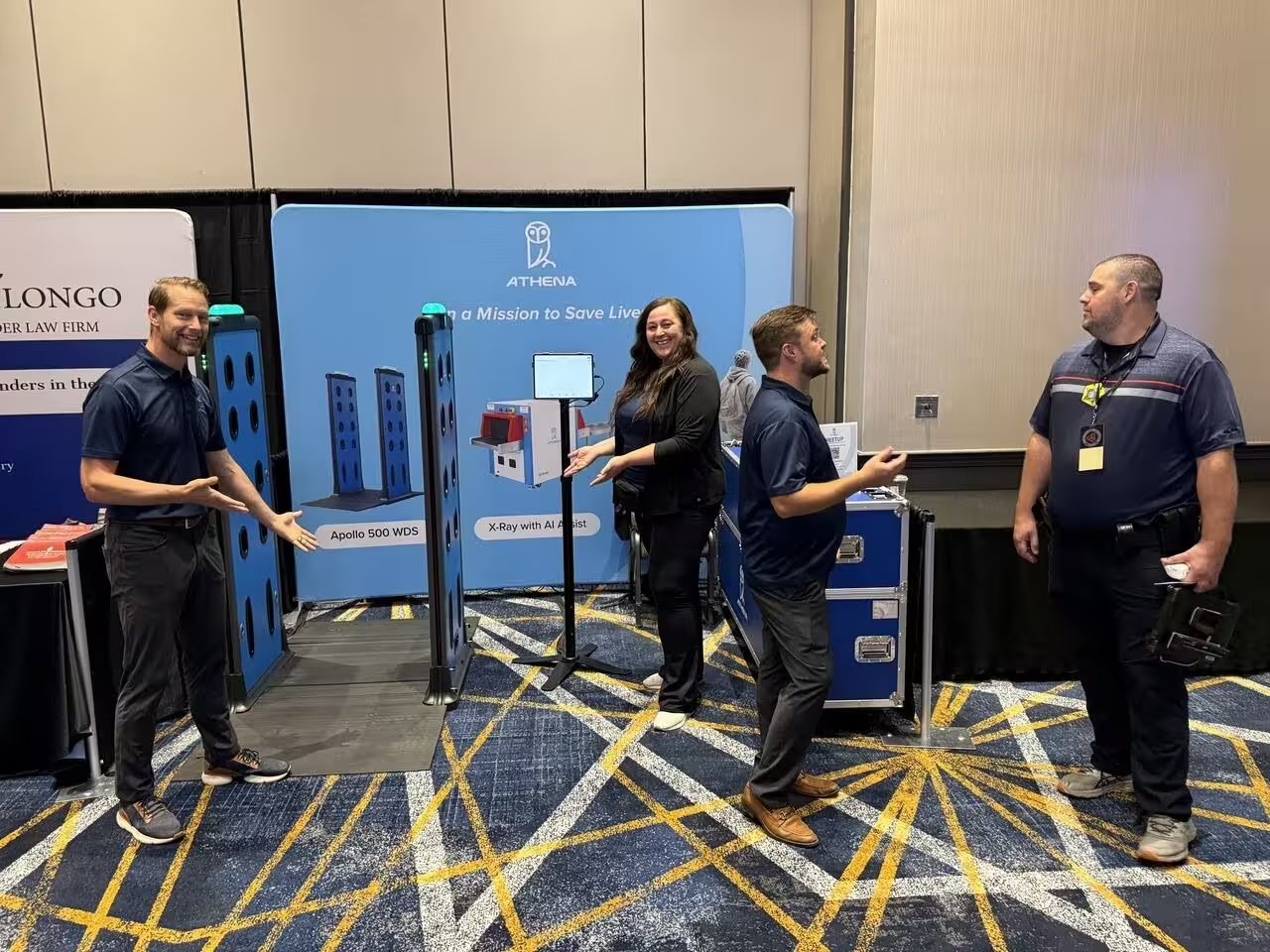
Athena Security’s team at FASRO 2026, Jacksonville, Florida
If you are evaluating school security measures for your campus, book a demo with Athena Security and see how our entryway screening solutions can work for your school.
Frequently Asked Questions About The Best School Security Measures
While evaluating the best school security measures for your campus, you may still have a few practical questions. Below, our experts have answered the questions we often hear from school leaders during security discussions and product demos.
1. What Is The Most Common Security Measure Used By Schools?
The most common school security measures are controlled building access and security cameras. Most schools already use these to limit entry during the school day and monitor activity across campus.
However, these measures are not enough on their own to prevent weapons from entering schools. That is why weapons detection is becoming a more important security measure, especially for schools concerned about firearms, small knives, and other concealed weapons. Many schools have already started deploying weapons detection systems as part of a broader entry security plan.
2. What Type Of Security Is Most Needed For Schools?
Schools need physical security first because it controls how students or people enter, move through, and respond inside the campus. This can include entryway weapons screening, access control, bag scans using X-ray scanners, and clear response procedures.
3. What Are The 4 Pillars Of School Safety?
The four pillars of school safety are physical security, cybersecurity, prevention, and social-emotional support. A strong school safety plan should not rely only on cameras or detectors. It should also protect digital systems, address student behavior concerns early, and support student well-being.
4. How To Make School Security Better?
Schools can improve security by starting with a physical security assessment, then strengthening the areas where the risk is highest. This may include better entryway concealed weapons screening, trained staff, improved lighting, controlled access, and clear emergency procedures.
5. What Are The Biggest Safety Issues In Schools?
The biggest school safety issues include students bringing concealed weapons, small knives, vapes, and other prohibited items onto campus. These risks matter because once a weapon is inside the school, staff have much less time to prevent an incident. Small knives and other compact weapons can be easy to hide in pockets, backpacks, pencil cases, or lunch bags. Vapes are also a growing concern because students can carry them into bathrooms, locker rooms, and other low-supervision areas.
| Expert Recommendation From Athena Security: Our concealed weapons detection system and AI X-ray baggage scanner can be used together to help schools detect vapes and other smoking devices at the entryway. Vaping has become a serious school safety and discipline problem, so schools should not treat vape detection as separate from entry security.
To learn more, read our guide on how to detect vapes in schools. |
6. What Security Measures Can Schools Put In Place on a Limited Budget?
Even with a tight budget, a physical security risk assessment is non-negotiable. It helps the school identify its most urgent vulnerabilities and avoid spending limited funds on measures that do not address its actual risks.
After the assessment, the school should address the highest-risk vulnerability first. If weapons entering through predictable entry points are a major concern, a weapons detection system should be one of the first technologies considered.
Schools with limited budgets can start with these two measures and expand their security program over time.
For guidance on choosing the right setup, contact Athena Security at +1-833-928-4362.
Disclaimer: The images have been created using AI-based tools and are intended for illustrative purposes only. They may not accurately represent real individuals, locations, or situations. Any resemblance to real persons, living or dead, or actual events is purely coincidental.