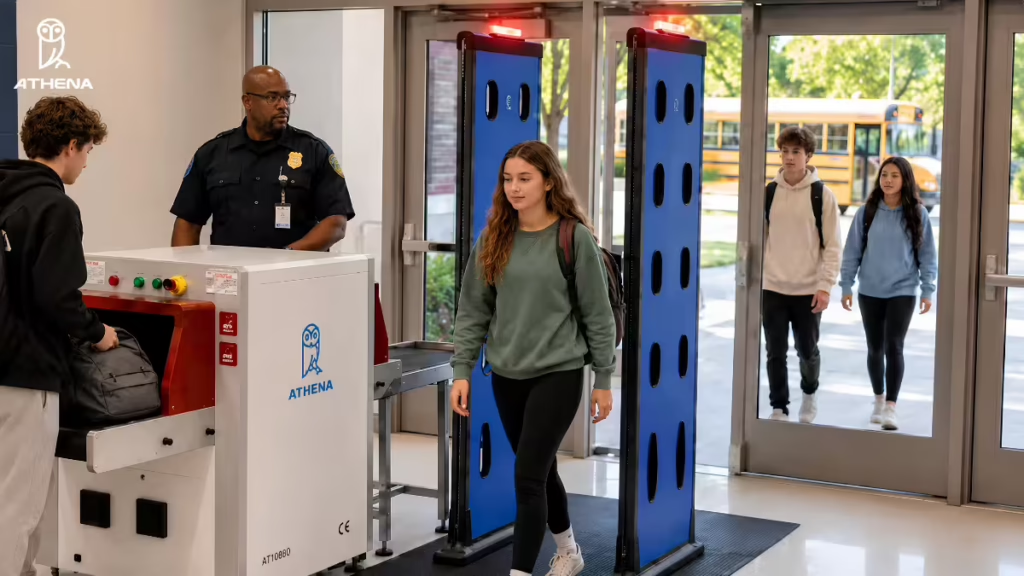


| Summary: To detect vapes in schools, security teams should screen bags at entry using an AI-assisted X-ray baggage scanner. Vapes are often hidden inside backpacks, lunch bags, sports bags, pencil cases, or among books and electronics. A scanner that uses Dual-Energy X-ray, material density, atomic number data, and material type can help staff identify vapes more reliably than visual bag checks or shape-based review alone. |
At Marietta City Schools in Georgia, the superintendent called vaping “the biggest issue” administrators and teachers are facing. The U.S. Surgeon General has also called youth vaping an ongoing “epidemic.”
Schools are under pressure to stop vape devices before they reach classrooms, bathrooms, locker rooms, and other low-supervision areas. But the problem is that vapes are small and easy to hide. That is why schools cannot rely only on manual checks, hallway monitoring, bathroom checks, or staff observation.
In this article, we’ll explain how to detect vapes in schools, so you can build an entryway screening process that helps prevent vape devices from entering your school.
What Are The Signs Students Are Vaping In School
Students may be vaping in school if staff notice a pattern of physical, behavioral, social, or nicotine-related signs. One sign alone does not prove vaping, but repeated signs across different categories may warrant a closer look.
Physical Signs of Vaping at School
- Sweet, fruity, minty, candy-like, or chemical smells on clothing, bags, or belongings
- Frequent coughing or throat clearing
- Dry mouth or increased thirst
- Nosebleeds caused by possible irritation
- Red or irritated eyes
- Shortness of breath during physical activity
- Headaches or dizziness
As a student speaks about these signs in a Reddit post, “I’m a student so I want to throw my two cents in, every time I walk into the bathroom there are at least 1-2 kids vaping, or it smells fruity or like cotton candy.”
Behavioral Signs of Vaping at School
- Frequent trips to the restroom between classes
- Asking to leave class more often than usual
- Spending extended time in bathroom stalls, locker rooms, stairwells, or secluded areas
- Carrying unfamiliar USB-like devices, disposable pens, cartridges, chargers, or small pods
- Increased secrecy around backpacks, pockets, phone cases, pencil cases, or hoodie sleeves
- Using excessive perfume, body spray, gum, or mints
- Declining attention in class or reduced academic performance
Emotional Or Nicotine-Related Signs of Vaping at School
- Irritability or anxiety, especially when the student cannot leave class
- Difficulty concentrating
- Strong cravings between class periods
- Trouble sitting through exams, assemblies, or longer school activities
- Mood changes that appear to improve after a restroom break or time away from class
Social Signs of Vaping at School
- Hanging out with a new group known to vape
- Avoiding teachers, staff, or supervised areas
- Coordinating bathroom breaks with friends
- Talking about vape brands, flavors, “hits,” “puffs,” or “pods”
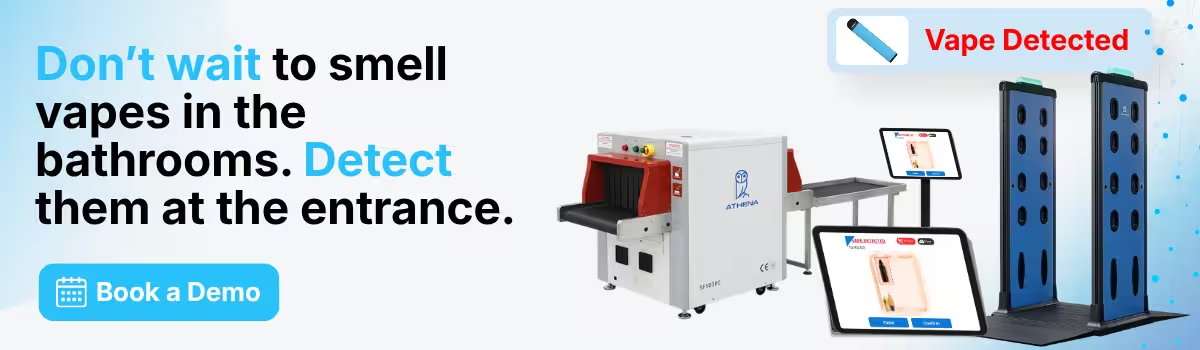
School-Specific Warning Signs
Teachers and school staff may also notice:
- Groups of students gathering in restrooms without a clear reason
- Disposable vape packaging, empty pods, or cartridges found in trash cans or bathrooms
- Students covering, damaging, or tampering with restroom sensors
- Students using oversized hoodies, sleeves, bags, or accessories
Important Notes: These signs are not definitive proof that a student is vaping. Many symptoms, such as coughing, headaches, irritability, or frequent restroom use, can have unrelated medical or personal causes. Schools should look for patterns, document concerns, and respond through a clear policy instead of relying on assumptions.
But noticing the signs is only the first step. If schools want to stop vapes before they reach bathrooms, classrooms, or locker rooms, they need a way to detect vape devices when students enter the building.
What is the Best Way To Detect Vapes In Schools
The best way to detect vapes in schools is to screen students’ bags at entry using an AI-assisted X-ray baggage scanner.
Vapes are often hidden inside backpacks, lunch bags, sports bags, pencil cases, clothing, electronics pouches, or among everyday school supplies. If schools rely only on visual checks or staff observation, many devices can be missed because vapes may look like pens, markers, USB drives, chargers, or small tech accessories.
A practical entryway vape detection workflow looks like this:
- Students place backpacks, lunch bags, sports bags, and other carried items on the X-ray scanner.
- The X-ray scanner screens the bag separately from the student.
- The system helps staff identify vape devices hidden among books, electronics, chargers, pencil cases, clothing, or school supplies.
- If a possible vape is flagged, the bag moves to secondary screening.
- The main student entry line keeps moving.
For example, Athena’s AI X-ray baggage scanner can help detect vapes because it analyzes the material makeup of objects inside the bag, not just their shape.
How Does Athena AI X-Ray Baggage Scanner Detect Vapes
A vape is not just one simple object. It may include a lithium battery, metallic heating coil, plastic or metal casing, and vape liquid. Because Athena’s AI reviews material type, density, and composition, it can help distinguish a hidden vape from harmless items that may look similar, such as pens, markers, or charging cables.
Watch this play out in a real school:
Here’s how it works:
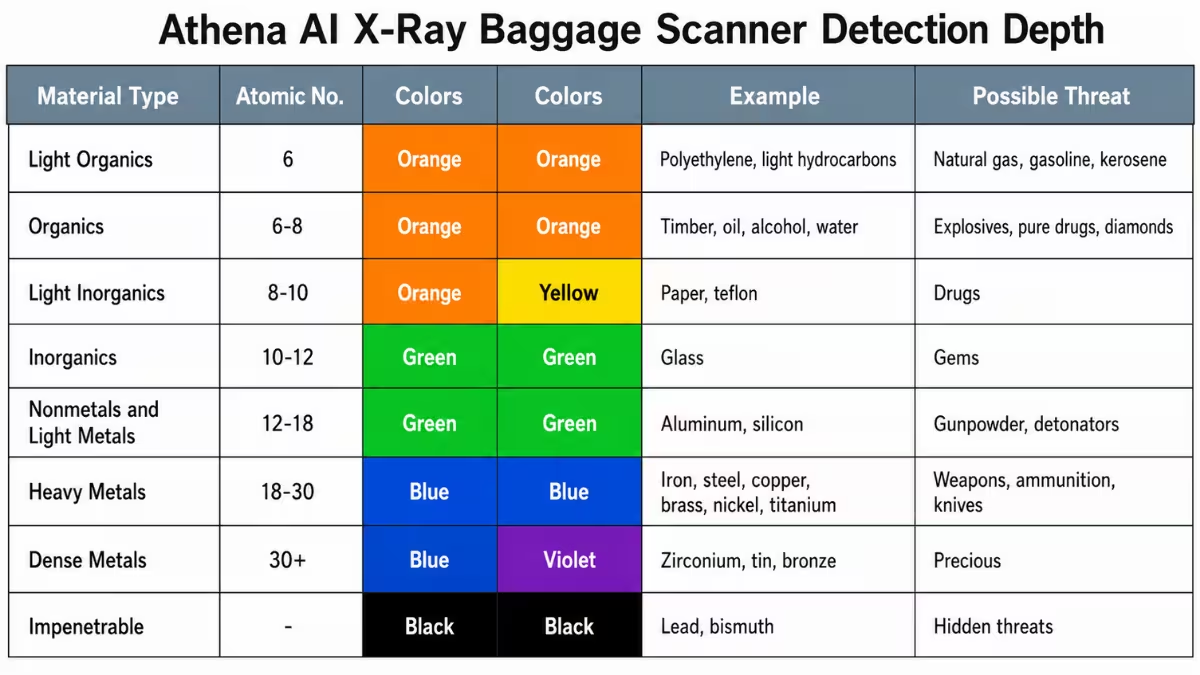
Dual-Energy X-ray imaging: The scanner helps operators understand whether the item looks like metal, plastic, liquid, glass, or another material type, which is useful because vapes often contain mixed parts.
Atomic number data: This helps the system understand what an object may be made of, not just what shape it has. That matters because a vape may look like a pen, marker, or charger, but its material makeup can be different.
Seven-color material view: Athena’s scanner shows materials in more color categories than a standard X-ray view. This makes it easier for operators to separate ordinary school items from objects that need a closer look.
Density and composition review: The system helps operators see whether an item appears dense, metallic, non-metallic, organic, or inorganic. This is useful because a vape may include a battery, heating coil, casing, and liquid in one small device.
Dedicated vape detection: Athena supports vape detection for schools, so the system is not only looking for weapons or large prohibited items. It can also help flag vape devices hidden inside bags.
Custom detection updates: Schools can also work with Athena to adjust detection needs as students start hiding or carrying prohibited items in new ways.
In an ideal entryway security setup at a school, the student walks through the concealed weapons detection system, while the bag is screened by X-ray. That gives staff a clearer way to detect vapes without opening every bag manually or stopping the full arrival line.
For more details on this type of entry setup, read our guide on Why Schools Need Both a Weapons Detection System and an X-Ray Scanner.
Where Should Vape Detectors Be Installed In A School
Schools should install vape detectors or X-ray baggage scanners at the entrances where students bring bags into the building.
The best placement areas include:
- Main student entrances: These are usually the highest-volume entry points during morning arrival.
- Morning arrival checkpoints: Schools should place scanners where students naturally enter and line up before the bell.
- Athletic or activities entrances: These matter because students may carry sports bags, equipment bags, and after-school items. Athena’s X-ray baggage scanner can also help detect drones and other prohibited items that someone may try to bring into football games, school events, or activity areas.
- Event entry points: Schools may need screening at games, assemblies, dances, or events where students bring bags.
Schools should not place vape detection randomly. The scanner should be part of the same entry workflow used for bag screening, weapons detection, and secondary checks. That way, staff can screen bags before students move deeper into classrooms, bathrooms, locker rooms, or other low-supervision areas.
For a broader entryway planning checklist, read our guide: Buying Weapon Detection System for Schools? Read This First.
Are Vape Detectors Legal, And Do They Violate Student Privacy
Vape detectors can be legal in schools, but privacy depends on how the system is deployed, what information it collects, where it is installed, and whether the school has a clear policy before rollout.
This matters because vape products are already restricted by federal age rules. Under the FDA’s Tobacco 21 law and related sales restrictions, retailers cannot sell tobacco products, including e-cigarettes and e-liquids, to anyone under 21 years of age.
That is why student privacy guidance from the U.S. Department of Education and school safety guidance from organizations like the National Center on Safe Supportive Learning Environments emphasize clear policies, data safeguards, and communication before schools introduce new security technologies.
For entryway X-ray screening, schools should keep the process clear, limited, and policy-driven because the system screens bags at entry, not students inside bathrooms. Schools should follow some safeguards.
Safeguards for Deploying Technologies to Detect Vapes in Schools
- Create a written bag screening policy: Explain when bags are screened, which entrances are covered, who reviews alerts, and what happens if a possible vape is found.
- Tell families and students before launch: Explain what the screening process will look like before students arrive at school. Parents and students should know whether bags will be screened, where screening will happen, and what students should expect at entry.
- Train staff on secondary screening: Staff should know what they can and cannot do when a bag is flagged.
- Protect student data: If the system stores images, logs, or incident records, the school should define who can access that information, how long it is kept, and how it will be protected.
- Avoid random or unclear searches: Secondary screening should follow the school’s written policy and should happen when a bag is flagged, not based on inconsistent judgment from staff.
- Review legal requirements before rollout: District leaders should check district policy, state law, and legal counsel before deploying vape detection technology. School security technology should be aligned with applicable laws before it goes live.
The safest approach is to treat vape detection as a formal entryway screening process.
Once the policy and privacy rules are clear, the next step is planning how vape detection will actually work at the school entrance.
What Should Schools Plan Before Deploying Vape Detection At Entry
Schools should plan the full entry workflow before installing a vape detection system. The goal is to detect vapes without creating long lines, confusion, or unclear secondary checks.
Before deployment, schools should answer these questions:
| Question | Why Ask? |
| How many students arrive during the busiest 15 to 30 minutes? | This helps the school understand how much screening capacity it needs during peak arrival. |
| How many students carry bags? | Vape detection at entry depends on bag screening, so schools need to estimate backpack, lunch bag, sports bag, and instrument volume. |
| Which entrances need screening? | Schools should identify the main student entrances, secondary entrances, athletic entrances, and event entry points where students bring bags. |
| Where will the X-ray scanner be placed? | The scanner should be placed where students can naturally place bags, walk through the entry process, and collect bags without blocking the line. |
| Who reviews X-ray images? | Staff should know who is watching the scanner, who receives alerts, and who decides whether a bag needs secondary screening. |
| Where will secondary screening happen? | Flagged bags should move to a separate screening area so the main student entry line can keep moving. |
| Who communicates the policy to families? | Students and families should know what the screening process looks like before the first day of rollout. |
| What happens if a vape is found? | Schools should define the response process, including who handles the item, who contacts administrators, and how parents are notified. |
| How will incidents be documented? | The school should decide how flagged items, staff actions, and outcomes will be logged. |
| How will staff be trained? | Staff should know how to guide students, review alerts, handle secondary checks, and follow district policy. |
Even the best vape detection system can fail if the school does not plan the entry workflow around real student arrival behavior.
If planning the right vape detection workflow feels overwhelming, you do not have to figure out the scanner placement, student flow, secondary screening process, staff training, and support plan alone.
Athena Security can help you assess your entry points, understand your bag-screening needs, and set up a vape detection workflow that fits your school.
How Can Athena Security Help Schools Detect Vapes At Entry
Athena Security helps schools detect vapes at entry using an AI-assisted X-ray baggage scanner designed to screen backpacks, lunch bags, sports bags, and other carried items before students move deeper into campus.
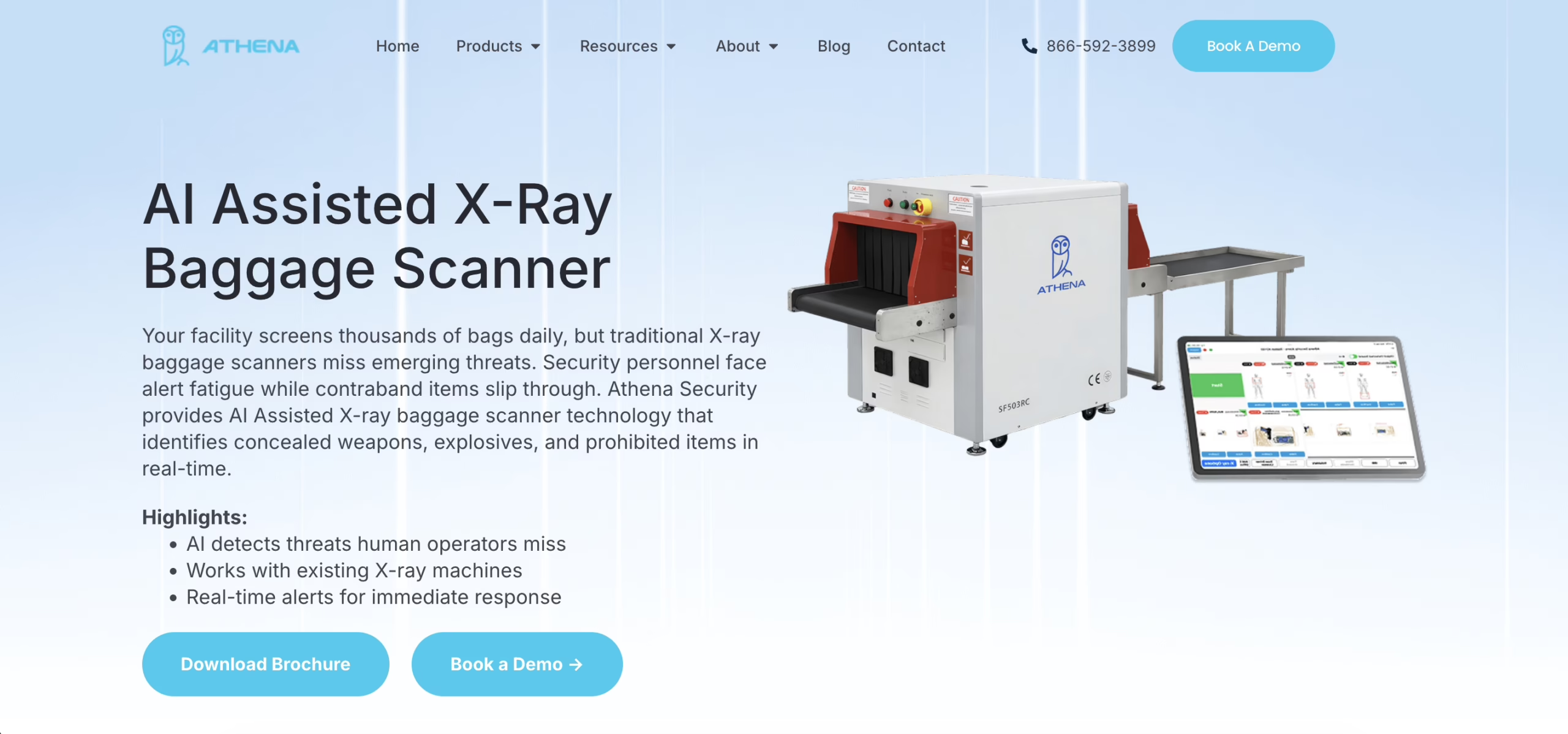
Athena’s AI X-ray baggage scanner supports:
- AI-assisted vape detection for schools
- Dual-Energy X-ray screening
- Atomic number data
- Material density and material type analysis
- iPad-based controls
- Fastest speed of 2,000 bags per hour
- Custom detection modifications based on school needs
- Integration with weapons detection workflows
- Staff training and 24/7 support
If your school wants to detect vapes before they enter campus, we can help you design an entryway screening workflow that screens bags quickly, supports secondary checks, and keeps student arrival moving.
Athena Security has worked with schools, colleges, and security teams that need a safer, faster, and more organized entrance screening process. Our systems have been deployed across several school districts, like Hosanna Christian Academy, and more.
Book a demo with our experts to see how our AI X-ray baggage screening can help you detect vapes in your school, or call +1-833-928-4362.
FAQs About Vape Detection Systems For Schools
While you assess how you will detect vapes in your school, here are a few common questions school security teams ask us when evaluating different methods, technologies, and vendors.
1. Is X-Ray Better Than Manual Bag Checks For Vape Detection?
X-ray is usually better for entryway vape detection because it lets staff screen bags without opening every bag manually. Manual checks are slower, more inconsistent, and harder to scale during morning arrival. If schools try to check each bag manually, they risk creating long lines outside gates, which is a major security concern.
2. Can A Vape Detection System For Schools Also Detect Other Prohibited Items?
Yes. An X-ray baggage scanner for schools can also help identify other prohibited items inside bags, including knives, small weapons, dense metal objects, suspicious electronics, and other items the school wants to flag.
This is useful because the same bag-screening workflow that helps detect vapes can also help staff review backpacks, lunch bags, sports bags, and carried items for broader safety concerns before students enter the building.
For more details, read this article: How to Prevent Knives and Small Weapons From Entering Schools.
3. Should Schools Use Bathroom Vape Sensors Or Entryway X-Ray Screening?
Schools may use both, but they solve different problems. Bathroom vape sensors help detect vaping after it happens. Entryway X-ray screening helps detect vape devices before they move deeper into campus. We recommend implementing a solution that stops the vaping devices from entering the school itself.
Learn more about it here: K-12 School Security: How Layered Security Helps Schools Detect Weapons and Vapes
4. How Much Do School Vape Detectors Cost?
The cost of school vape detection depends on the type of system, number of entry points, bag volume, scanner size, software features, and support requirements.
Bathroom vape sensors are usually priced differently from entryway screening systems. Entryway X-ray screening cost depends on the scanner model, speed, software, and number of lanes.
Schools should price the system based on how many students and bags they need to screen during peak arrival. You will need a quote or demo because each school’s layout and volume are different.
5. How Can I Get Help From Athena Security To Detect Vapes In My School?
You can contact our team directly to discuss your specific needs and receive a customized quote. You can email us at [email protected] or call us at +1-866-592-3922.
If you’d like to see the system in action, you can request a free demo below.

References:
National Library of Medicine: https://pmc.ncbi.nlm.nih.gov/articles/PMC8055041/
Association of Texas Professional Educators: https://www.atpe.org/News-Media/Magazine/ATPE-News-Archive/ATPE-News-Winter-2019/Warning-Our-Schools-Contain-Vaping
U.S. Department of Education: https://www.ed.gov/about/ed-offices/opepd/student-privacy-policy-office
American Institutes for Research: https://www.air.org/centers/national-center-safe-supportive-learning-environments-ncssle
Disclaimer: The images have been created using AI-based tools and are intended for illustrative purposes only. They may not accurately represent real individuals, locations, or situations. Any resemblance to real persons, living or dead, or actual events is purely coincidental.