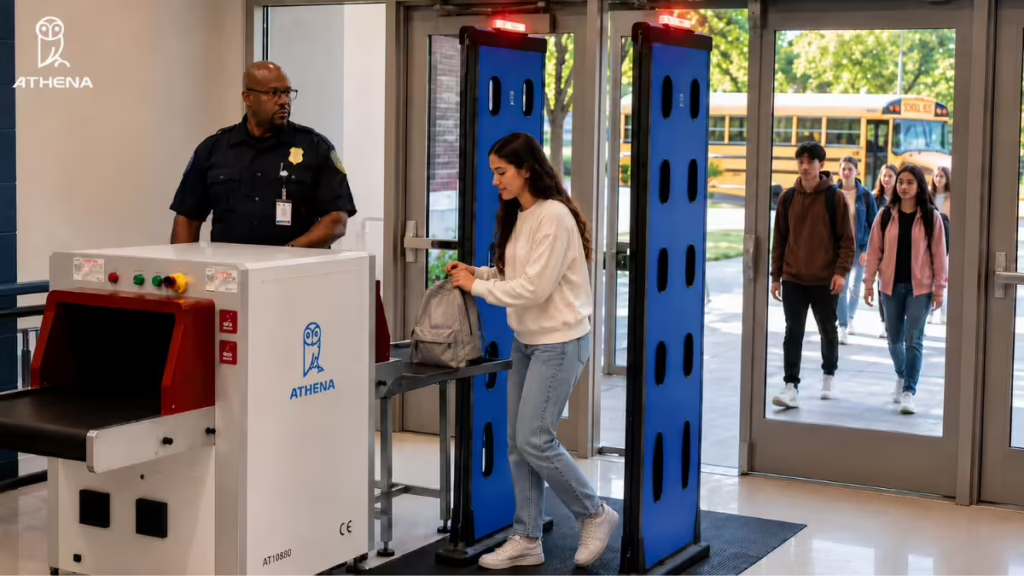

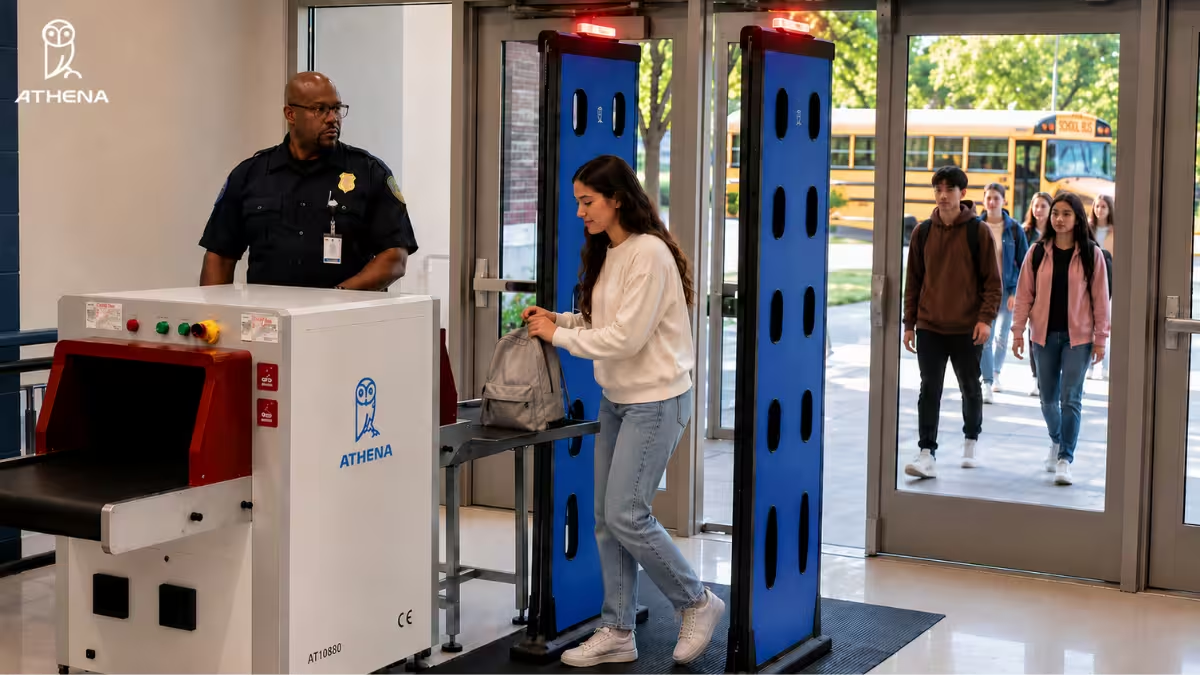
| Summary: To screen a large number of students quickly for weapons, schools need to separate security decisions from logistics work. Security officers should handle alarms, secondary screening, and oversight, while trained helpers manage routing, bag placement, X-ray flow, and bag return. The recommended model for a fast one-hour morning intake is 2 security officers + 5 trained helpers using Apollo 500 for student screening and AI-assisted X-ray for bag screening. |
If you are wondering how to screen a large number of students quickly for weapons, you are not alone. Many schools have tried, and the rollout has not always gone smoothly.
In April 2026, Pinellas County Schools paused a weapon detector pilot after launch. The reported problems were long lines and frequent false alarms from everyday items like laptops, scissors, and metal water bottles. Broward County Public Schools faced a similar issue in August 2024. After walk-through metal detectors were installed across high schools, some students reportedly waited in hour-long lines on the first day of school.
These examples show the real challenge. Schools do not just need weapons screening. They need a way to screen students quickly during a short morning arrival window without creating unsafe lines outside the entrance.
This guide explains how schools can screen a large number of students quickly for concealed weapons by using the right staffing model, lane flow, bag screening process, and secondary screening workflow.
What Roles Do Security Officers And Helpers Play In Fast Student Screening
Security officers and helpers should play different roles in a fast school screening setup. Officer should handle the decisions that require security judgment, while trained helpers should manage student flow, bag movement, and checkpoint logistics.
Security officers should focus on:
- Resolving alarms
- Performing secondary screening
- Watching for bypass attempts
- Responding when something looks wrong
- Maintaining the integrity of the screening process
Helpers should handle the tasks that keep the line moving, such as:
- Greeting students before they reach the checkpoint
- Sending students without bags to the weapon detection lane
- Sending students with bags to the X-ray lane
- Helping bags enter the X-ray scanner correctly
- Directing cleared students toward entry or bag pickup
- Removing and organizing bags at the X-ray exit
This split matters because a school cannot screen a large number of students quickly if security officers are also managing bags, giving basic directions, and fixing lane flow. Those jobs are important, but they do not always require a trained security officer.
Before you read our recommendation, read this article to understand how the entire screening setup will look: Why Schools Need Both a Weapons Detection System and an X-Ray Scanner
Here is the recommended role breakdown for a fast one-hour school morning screening operation:
Recommended Staffing Roles For Fast Student Screening
| Position | Staff | Primary Responsibility |
| Secondary Screening | 1 Security Officer | Resolve alarms and perform the most security-critical screening function. |
| Overall Oversight | 1 Security Officer | Observe the full operation, identify bypass or process failures, and respond where needed. |
| Front Greeter / Router | 1 Helper | No bag → Walk-Through Weapons Detection System. Bag → X-ray lane. |
| Walk-Through Weapons Detection System Pass-Around | 1 Helper | Handle approved loose laptops or similar items that should not travel loose on the X-ray belt. |
| X-ray Infeed | 1 Helper | Place bags flat and correctly; prevent jams and poor spacing. |
| Post-Walk-Through Weapons Detection System Router | 1 Helper | Alarm → secondary screening. Clear → bag pickup or entry. |
| X-ray Exit / Bag Return | 1 Helper | Remove and organize bags quickly so the X-ray exit does not become a bottleneck. |
The main rule is simple: Security officers should make security decisions, and helpers should keep the checkpoint moving. That is what allows a school to screen students quickly without weakening the screening process.
Once those roles are clear, the next question is where the security officers should actually be placed during the morning rush.
How Many Guards Do Schools Need, And Where Should They Be Placed
Schools should use two security officers for a fast, high-volume student screening setup.
Each officer should have a clear role:
Officer 1: Secondary Screening
This officer resolves alarms from the walk-through weapons detection system or the X-ray scanner. This is the highest-priority security post because it is where the school decides whether a student or item is cleared.
Officer 2: Overall Checkpoint Oversight
This officer watches the full operation. They look for bypass attempts, process failures, crowding, confusion, or anything that suggests the screening flow is breaking down.
If only one security officer is available, place that officer at secondary screening. Helpers can manage routing, bag movement, and lane flow. However, they should not clear alarms or make security decisions.
This two-officer model works because it keeps security judgment in the right places. One officer resolves alerts. The other watches the full checkpoint. Meanwhile, trained helpers keep students and bags moving.
Next, let’s look at what the full screening flow looks like from entry to exit.
What Does The Full Screening Flow Look Like From Entry To Exit
A fast school weapons screening flow should split students into two lanes at the start: one lane for students without bags and one lane for students carrying bags.
This keeps the weapons detection system focused on student screening and the AI-assisted X-ray focused on bag screening.
Ideal Full Screening Security Workflow
The full flow works like this:
- Students arrive at the checkpoint.
- The front router separates students by bag status.
- No bag → Walk-Through Weapons Detection System lane
- Bag → X-ray lane
- Students without bags walk through the Walk-Through Weapons Detection System.
- Students with bags place bags on the X-ray scanner.
- The X-ray infeed helper keeps bags flat, spaced, and moving.
- The post-weapons detection router directs students after screening.
- Alarm → secondary screening
- Clear → bag pickup or school entry
- The X-ray exit helper removes and organizes bags quickly.
- The secondary screening officer resolves alarms.
- The oversight officer watches the full operation for bypass attempts, process failures, or crowding.
- Cleared students enter the school.
The flow chart below shows how the two-lane setup works during a fast one-hour morning intake. It also shows where each helper and security officer should be positioned.
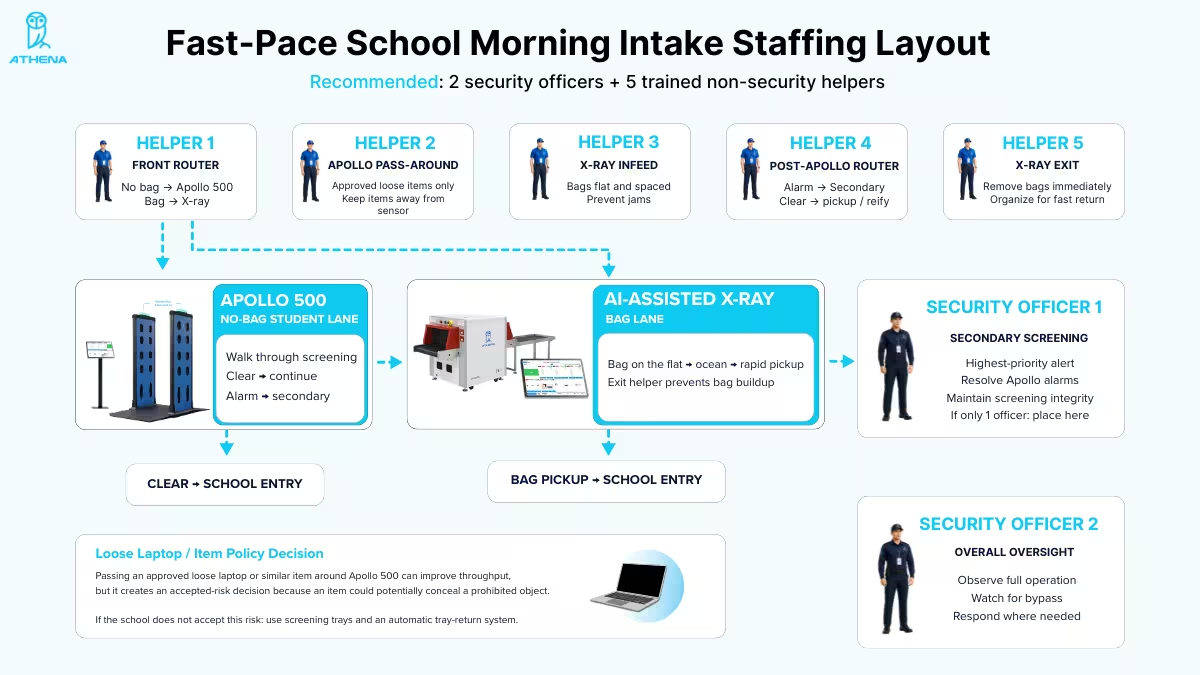
In this flow, students are either cleared to enter or moved to secondary screening. The main line should keep moving because helpers handle routing, bag placement, and bag return, while security officers stay focused on alarms and oversight.
That is what makes high-volume screening possible during a short morning arrival window.
This setup is also useful for screening small knives and other concealed weapons because it separates the student from the bag and gives staff a clear process for resolving alerts.
For more details, read our guide on How to Prevent Knives and Small Weapons From Entering Schools.
Next, schools need to decide how they will handle loose items like laptops, because that choice can affect both speed and security.
What Is The Right Way To Handle Loose Items Like Laptops During Fast Screening
Schools should decide how loose items, such as laptops, tablets, or similar approved items, will move through the checkpoint before the screening process goes live.
Loose items can slow down the line if staff decide what to do with them in the moment. To avoid that, schools should use one of two approaches:
Option 1: Use A Weapons Detection Pass-Around Helper
A trained helper can receive an approved loose item, carry it around the walk-through weapons detection system, and return it after the student clears screening.
If the school uses this approach:
- Keep the item far enough away from the walk-through weapons detection system so it does not trigger an unnecessary alarm.
- Only allow pre-approved loose items to be passed around.
- Make sure the helper returns the item to the correct student.
- Train the helper to keep the line moving without interrupting the security officer.
Disclaimer: This approach is not recommended as a standard screening workflow, as it creates a security gap. Schools should treat this only as a limited exception for pre-approved items and should prefer X-ray baggage screening whenever possible.
Recommended read: Why schools should use X-ray scanners for bags and laptops instead of allowing students to bypass metal detectors.
Option 2: Screen Loose Items In Trays
If the school does not want loose items passed around the system, it should screen them through trays instead.
This approach is safer because the item still goes through screening. However, schools should use a tray process that does not slow down the full line. An automatic tray-return system can help prevent trays from becoming another bottleneck.
What Policy Decision Schools Need To Make
Passing loose items around a walk-through weapons detection system may improve speed, but it also creates an accepted-risk decision. A prohibited item could potentially be hidden inside the object being passed around.
That is why schools should not leave this decision to staff during morning arrival. They should decide in advance:
- Which loose items are allowed
- Whether those items can be passed around or must go through X-ray
- Who handles the item
- How the item is returned
- What happens if the item looks suspicious
The best approach is the one the school can apply consistently every morning without slowing the line or weakening the screening process.
Once schools decide how loose items will move through the checkpoint, they can choose the staffing model that gives them enough security coverage without overstaffing the entrance.
What Staffing Model Should A School Use, And What Should They Confirm First
Schools should choose their staffing model based on student volume, bag volume, available security personnel, and the level of assurance they want during morning arrival.
There is no single staffing number that fits every school. However, most fast student screening setups fall into three practical models.
The table below shows the common staffing options schools can use when planning a walk-through weapons detection system + AI-assisted X-ray entry workflow.
Staffing Models For Fast School Weapons Screening
| Model | Security | Helpers | Use Case |
| Preferred | 2 | 5 | Best balance of security oversight and maximum throughput. |
| Minimum Security | 1 | 5 | Security officer at secondary screening; helpers maintain flow. |
| Higher Assurance | 2+ | 5 | Add security based on alarm rate, threat profile, and number of secondary stations. |
Before locking in a staffing number, schools should validate the plan against six factors:
- Student volume: How many students need to enter during the busiest arrival window?
- Bag percentage: How many students carry backpacks, lunch bags, sports bags, laptops, or instruments?
- Expected alarm rate: How often will students or bags need secondary screening?
- Entry width: Is there enough physical space for student flow, bag flow, and secondary screening?
- Number of X-ray lanes: Will the school run one bag-screening lane or multiple lanes?
- Loose-item policy: Will laptops and similar items be passed around Apollo 500 or screened through trays?
The right staffing model is the one that matches the school’s real morning traffic, not a generic staffing average. If the line slows down, bags pile up, or security officers get pulled into logistics work, the model needs to be adjusted before launch.
And if you are wondering if this setup will be able to detect objects like vapes, check out this article: How To Detect Vapes In Schools With AI X-Ray Baggage Scanner.
How Can Athena Security Help Schools Screen A Large Number Of Students Quickly
Screening hundreds of students in a short morning window is not just a technology decision. It is a workflow decision. Athena Security has helped schools like Lamar Consolidated Independent School District (LCISD) and Hosanna Christian Academy plan faster, safer entry screening.
If planning the staffing model, lane flow, bag process, loose-item policy, and rollout timeline feels difficult, our team can help you map it clearly.
Here is what one of our clients has to say:
Book a demo below, or call +1-833-928-4362, and we’ll walk you through the workflow, staffing needs, project timeline, and setup details.
Frequently Asked Questions About Screening A Large Number Of Students Quickly For Weapons
If you are planning a fast school entry screening workflow, these are some of the questions schools often ask about staffing, student flow, bag screening, secondary checks, and keeping the morning line moving.
If you have a specific question about your campus layout or arrival volume, you can also call us at +1-833-928-4362.
1. Should The Security Officers In This Model Be Armed Or Unarmed?
That depends on the school’s policy, risk level, and local security requirements. In many school screening setups, one trained security officer may be armed while the rest of the team supports the workflow as unarmed helpers. The armed officer handles security decisions, alert response, and escalation. Helpers should focus on movement, bag handling, line flow, and returning approved items
2. What Threshold Should Move A School From Preferred To Higher Assurance Staffing?
Schools should move from Preferred to Higher Assurance staffing when the entrance needs to screen 200 or more people per hour. At that volume, one lean team may struggle to manage alerts, bags, line movement, and secondary screening without slowing arrival. A larger staffing model gives the school enough people to separate security decisions from helper tasks and keep the checkpoint moving. Schools should also consider Higher Assurance staffing if alarm rates are high, bag volume is heavy, or the entrance has a higher threat profile.
3. When A School Runs More Than One X-Ray Lane, Does The Helper Count Double Per Lane?
Not always. Some oversight and secondary screening roles can stay centralized across two X-ray lanes. One trained oversight person can usually monitor up to two lanes at once, depending on where they are positioned and how clearly they can see both workflows.
Schools should not stretch that role beyond two lanes because alert review, bag movement, and secondary screening can become harder to control. Helpers may still need to increase by lane, but oversight does not need to double automatically.
4. What Metrics Should Schools Track After Deployment To Know If Screening Is Improving Security?
Schools should track whether more people are entering safely with fewer unnecessary secondary searches.
The most useful metrics include:
- Number of people screened each day.
- Number of weapons or prohibited items found.
- Number of secondary searches.
- False alarm rate.
- Average time to clear an alert.
- Arrival line speed during peak periods.
If the school is finding more real threats while reducing unnecessary searches and keeping arrival moving, the screening process is improving.
Disclaimer: The images have been created using AI-based tools and are intended for illustrative purposes only. They may not accurately represent real individuals, locations, or situations. Any resemblance to real persons, living or dead, or actual events is purely coincidental.