
| Summary: This guide reviews five X-ray baggage scanners for hospitals, comparing AI-powered, dual-energy, and operator-driven systems from Athena Security, Smiths Detection, Astrophysics, Rapiscan, and LINEV Systems. Learn how to choose the right hospital security X-ray scanner based on your facility size, evaluate key features like automatic threat detection and dual-energy imaging, and understand procurement considerations, including regulatory compliance, service support, and workflow integration. Find recommendations for small hospitals, mid-size medical centers, and large healthcare centers. |
If you’re evaluating the best X-ray baggage scanners for a hospital, the real challenge isn’t deciding whether you need one. It’s about determining which scanner works best in a healthcare environment.
Many scanners were built for airports or logistics hubs. When deployed in hospitals, they often slow entry, depend too much on operator judgment, and still miss concealed threats.
New-age AI-assisted X-ray baggage scanners take a different approach. They help security teams identify real threats faster, reduce false alarms, and maintain patient flow at busy entrances.
To help you choose the right fit, we’ve compared five X-ray baggage scanners that hospitals may consider, based on factors such as deployment fit, imaging capabilities, operator workflow, and screening needs.
You can jump straight to the X-ray baggage scanner (it appears after the next three sections), but we recommend taking a moment to explore the context first.
What to Look for When Choosing an X-Ray Baggage Scanner for Hospitals
The decision to choose the right X-ray baggage scanner has several potential implications. This decision should not be just about picking the most powerful machine. It should also be about matching the system to how hospitals actually operate day-to-day.
Use the criteria below to evaluate X-ray baggage scanners objectively:
1. Tunnel Size and Throughput
Start with what you need to screen most often.
Small to medium tunnels (600–650 mm) are typically sufficient for backpacks, purses, personal bags, and medical kits. These work well at visitor entrances and outpatient lobbies.
Larger tunnels (800 mm and above) are better suited for service entrances, cartloads, supply trays, or mailroom screening, but they require more space and often slower workflows.
For most public hospital entrances, medium tunnel sizes paired with efficient throughput deliver the best balance between speed and footprint.
2. Dual-Energy Imaging
Dual-energy imaging uses different X-ray energies to improve the visibility of items with varying densities and thicknesses. In hospital screening environments, this helps operators inspect bag contents more clearly, especially when items overlap or are densely packed.
While many scanners offer dual-energy imaging, image interpretation still depends on operator training and screen clarity. Systems that present images more clearly can help staff make faster, more consistent screening decisions across shifts.
Aja Chavez, Executive Director at Mission Prep Healthcare, says, “At Mission Prep, our X-ray scanners need to catch threats without invading our teens’ privacy. The system we chose had fewer false alarms with medications, which made a real difference in cutting down their anxiety. Using the same system everywhere also keeps operations running much more easily. I’d focus on tech that’s reliable and not invasive. It helps keep the space feeling supportive for everyone.”
3. Automatic Threat Detection and Algorithms
Advanced systems use threat-detection algorithms to highlight potential weapons or prohibited items directly on the screen for closer operator review. This assists the operator by reducing cognitive load, improving consistency, and helping maintain screening quality during busy periods.
These tools are designed to support trained personnel, not replace them. Final screening decisions still depend on operator judgment, established protocols, and secondary inspection when needed.
4. Radiation Safety and Regulatory Compliance
Hospitals should confirm that any X-ray baggage scanner is installed, operated, and maintained in accordance with applicable radiation safety requirements, manufacturer guidance, and facility policies. Under FDA requirement 21 CFR 1020.40, cabinet X-ray systems, including baggage scanners, must meet core safety requirements, such as shielding that limits radiation leakage to no more than 0.5 mR/hr at 5 cm, as well as safety interlocks and automatic low-dose operating controls.
These requirements are especially important in patient-facing hospital environments, where scanners must support routine screening without introducing unnecessary exposure risk.
From a workplace safety perspective, hospitals should also account for OSHA’s ionizing radiation standard under 29 CFR 1910.1096. This standard covers worker protection requirements such as exposure limits, monitoring, training, signage, and radiation surveys where applicable. During procurement, hospitals should request documentation covering installation requirements, shielding, operator training, maintenance procedures, and safe day-to-day operation.
5. Service, Maintenance, and U.S. Support
Even the best scanner is only effective if it stays operational.
Prioritize vendors with:
- Established U.S.-based service and support.
- Readily available replacement parts.
- Clear maintenance and service-level agreements.
Equally important is how quickly technical issues are found and resolved, especially in 24/7 hospital environments.
Dr. Cameron Rokhsar, Founder and Medical Director at New York Cosmetic Skin & Laser Surgery Center, says, “In our Manhattan practice, we treat safety like clinical quality. When we look at an X-ray baggage scanner, I want proof before promises. I request validated detection metrics and real false-alarm rates, not demos. Image clarity matters. So does speed at peak times. I also look for simple controls because turnover is real, even in hospitals. Then I get practical. A strong vendor demonstrates local service coverage, stocked parts, and a written uptime target with response-time targets. I want preventive maintenance spelled out. I ask how software updates work and who owns the data. Finally, I like vendors who can point to published performance.”
6. Workflow Integration and Operational Visibility
Beyond hardware, consider how the scanner fits into your broader security workflow. Systems that integrate screening data, alerts, and operational metrics into a single platform make it easier to:
- Manage multiple entrances.
- Optimize staffing during peak hours.
- Demonstrate effectiveness to hospital leadership.
This is an area where newer, hospital-focused platforms tend to outperform standalone scanners designed for airports or government facilities.
Next, we give you a quick, side-by-side view before we break each option down in detail.
A Quick Comparison of The Best X-Ray Baggage Scanners
This snapshot will help you quickly see how leading systems differ across core criteria that matter in healthcare environments.
| Product | Keyboard Needed | Imaging Type | AI / Automation | Staffing Impact | Ease of Deployment | Ability for Operator Movement |
| Athena Security AI-Powered X-Ray Baggage Scanner | No. The Apple iPad controls everything. | Single and Dual View as well as Dual Energy | Built-in AI-assisted detection and auto-labeling | Low – single-operator workflows. Intuitive, little training required since running on iPad. | Easy. Developed for hospitals. All deployed on Apple iPad. | Yes |
| Smiths Detection HI-SCAN 6040 Series | Yes | Single-view / Dual-view | Operator-driven | Medium – relies on trained operators. | Medium. Requires keyboard. | No |
| Astrophysics Inc. XIS-6040 | Yes | Single-view X-ray | Optional add-ons | Medium – manual image interpretation | Medium. Requires keyboard. Standalone. | No |
| Rapiscan Systems Orion® 920DX | Yes | Dual-view, 4-color imaging | Automated explosives/narcotics marking | High – complex system, dedicated staff | Medium. Large footprint. Requires keyboard. | No |
| LINEV Systems BV 6045DV | Yes | Dual-view X-ray | Optional AI module | Medium to High – add-on dependent | Medium. Requires space and planning. Requires keyboard. | No |
5 Best X-Ray Baggage Scanners for Hospitals
Healthcare facilities are high-stakes environments. Entry points are unpredictable, traffic fluctuates by the hour, and security teams have to make fast, defensible decisions. The right X-ray baggage scanner should support that reality.
To find such X-Ray Baggage Scanners, we went beyond spec sheets. We’ve reviewed these five X-ray baggage scanners based on how they perform in real hospital environments.
Each system takes a different approach to threat detection, operator support, and workflow efficiency. But they all address a core need: improving hospital entrances without slowing patient care, overwhelming staff, or disrupting visitor flow.
If you’re evaluating scanners for a healthcare facility, these are the solutions worth considering.
Here are the 5 best X-ray baggage scanners of 2026:
- Athena Security AI-Powered X-Ray Baggage Scanner
- Smiths Detection HI-SCAN 6040 Series
- Astrophysics Inc. XIS-6040
- Rapiscan Systems Orion® 920DX
- LINEV Systems BV 6045DV
Let’s start with the one that’s redefining how hospitals use X-ray screening: Athena Security.
AI-Powered X-Ray Baggage Scanner by Athena Security
For hospitals that need AI-assisted screening and unified hospital security.
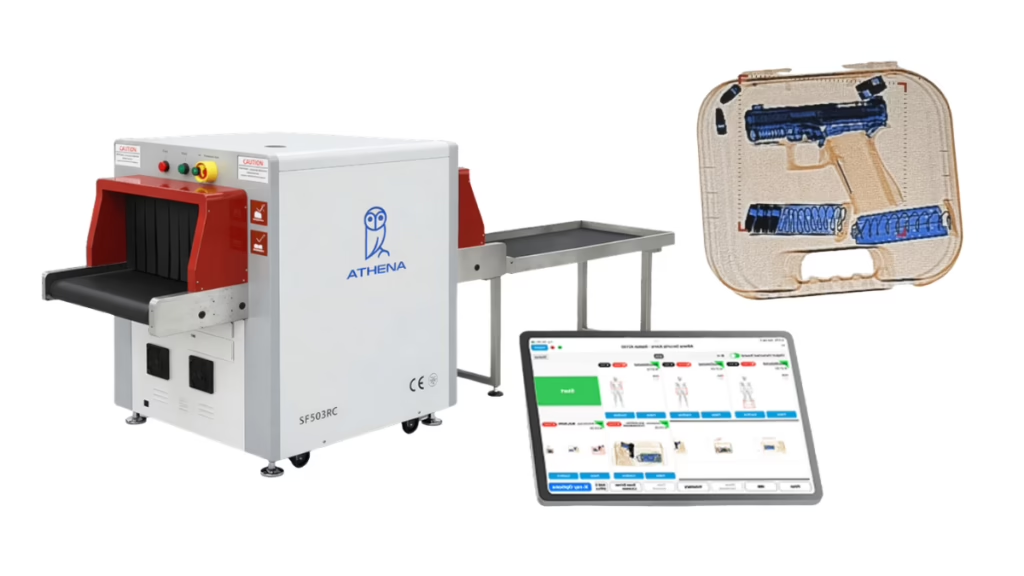
Our AI-Powered X-Ray Baggage Scanner is built for hospital entry points where speed, consistency, and accuracy matter more than raw imaging power. Instead of relying only on staff to interpret every bag manually, the system combines dual-energy X-ray imaging with AI-assisted threat detection to help operators identify firearms, knives, and other concealed weapons in bags in real time.
Unlike traditional X-ray baggage scanners that rely on a keyboard-based console, Athena runs on an Apple iPad. That makes the interface intuitive for hospital security teams and keeps training short, with staff able to learn the system in about five minutes. Athena also offers Dual Energy imaging, which helps operators inspect dense or overlapping items more clearly and make faster screening decisions.
You can deploy it practically anywhere in your hospital: ER lobbies, main entrances, and visitor checkpoints. The scanner supports high-traffic hospital workflows while reducing the burden on security staff. Its compact footprint and single-operator model make it deployable in space-constrained vestibules without disrupting patient or visitor flow.
What This X-Ray Baggage Scanner Offers
- AI-assisted threat detection : Highlights potential weapons or areas of concern inside bags to support operator review and reduce reliance on manual image interpretation alone.
- Automatic Threat Localization and Belt Stoppage: Stops the conveyor when a threat is detected, keeping flagged bags in the tunnel for review.
- Dual-energy X-ray imaging: Uses different X-ray energy levels to improve visibility through items with varying thickness and density.
- Unified screening interface : Enables one operator to monitor X-ray scanning and walk-through detection from a single screen.
- Always-on operation: Supports 24/7 hospital screening with no warm-up delays.
- Apple iPad-based controls: Remove the need for a traditional keyboard setup and give staff an intuitive interface.
Baggage Scanner Deployment Capability
Athena’s X-Ray Baggage Scanner scales from small hospitals to large trauma centers. Smaller facilities benefit from the single-operator model and compact footprint, while larger systems can deploy multiple units with one place to monitor multiple entrances.
The scanner integrates with our broader security platforms–weapon detection, visitor management, AR Glasses for security officers, hologram telepresence officer–creating a unified and powerful hospital security platform. This makes it suitable for health systems operating multiple campuses or high-risk departments within the same hospital.
Reporting and Operational Visibility
Athena gives hospitals more than threat detection. It also helps security teams track how entrances are performing.
Through centralized reporting, security teams can monitor and analyze:
- Alarm rates and screening throughput, helping teams understand how efficiently entrances are operating.
- Visitor volumes by location and time, which supports smarter staffing decisions across shifts and departments.
- Staff response metrics, allowing leadership to evaluate how quickly and consistently alerts are handled.
- Threat detection trends, helping identify patterns and adjust screening protocols proactively.
Hospitals have used Athena’s analytics to optimize staffing during peak hours, improving both security coverage and entry flow. Others have leveraged reporting data to clearly demonstrate ROI and operational impact to executive leadership.
Watch Eric Sean Clay, Former President of International Association for Healthcare Security (IAHSS), explain how our data-driven security system provides powerful insights that go beyond just protection.
Scalability, Support, and Long-Term Value
We support phased deployments, remote diagnostics, and local service coverage, which makes it easier to expand over time. While pricing is positioned at the premium end and provided via custom quotes, the long-term ROI of our systems is driven by reduced staffing requirements, faster screening, and improved consistency at hospital entry points.
For hospitals prioritizing AI-assisted screening, streamlined staffing, and patient-friendly throughput, our X-ray baggage scanner is a strong fit.
Real-World Use and User Reviews
Healthcare leaders using Athena’s security solutions often praise its reliability and workflow improvement. A Chief Nursing Officer at Franciscan Alliance stated that staff could “give a collective sigh of relief that Athena Security is always on, always looking out to keep us protected.”
Here’s how Duke Health is utilizing our hospital security systems:
Athena Security X-Ray Baggage Scanner Overview
| Factor | Details |
| Year of Launch | Introduced around 2024; ongoing software updates announced through 2025. |
| Primary Focus | Hospitals and other high-risk public venues. |
| Core Technology | Dual-energy X-ray imaging with AI-assisted detection support and automatic threat localization. |
| Tunnel Size / Footprint | Approx. 19.8″ W × 11.85″ H tunnel; compact footprint suited for hospital vestibules. |
| Throughput | Up to ~600 bags/hour; operator- and alarm-dependent in practice |
| Weapon Detection Capability | AI-assisted detection of firearms, metal and ceramic knives, and other weapons. |
| Customer Support | 24/7 remote diagnostics; local service support; phased deployment support. |
| Pricing | Custom pricing; typically sold as hardware with AI software licensing. |
| Maintenance / SLA | Service contracts available; details provided during procurement. |
Check out how our X-ray baggage scanner prevents accidental radiation exposure:
Want to see how it would work at your hospital? Call 866-592-3918 or request a free demo below and evaluate the system in a real-world hospital entrance.

HI-SCAN 6040 Series by Smiths Detection
For hospitals that want airport-grade X-ray screening.
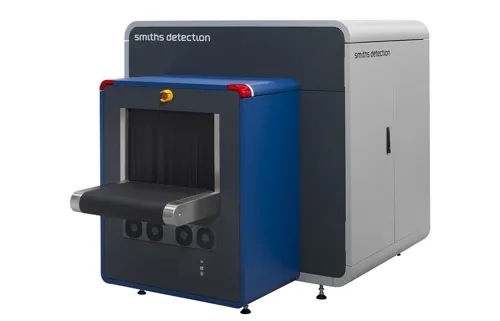
Smiths Detection’s HI-SCAN 6040 series is a well-established X-ray baggage scanner used across public buildings worldwide, including hospitals, courthouses, and government facilities. In hospital settings, the 6040 series is most commonly deployed at main entrances, visitor checkpoints, and high-traffic lobbies, where consistent throughput and clear image quality are priorities. These scanners bring airport-grade screening to hospital front doors, with a strong focus on reliability and operator-controlled inspection.
 Source: smithsdetection.com/insights/hi-scan-6040-ctix-official-launch-confirmed
What This X-Ray Baggage Scanner Offers
- High-resolution X-ray imaging: Produces sharp, high-contrast images that make it easier for operators to identify weapons and contraband.
- Material discrimination: Color-coded imaging helps operators interpret bag contents more clearly during screening.
- Proven checkpoint design: Built for continuous use at public building entrances with consistent performance.
- Upgradeable software options : Supports add-ons like threat image projection and image enhancement tools.
Baggage Scanner Deployment Capability
The HI-SCAN 6040 series is best suited for medium to large hospitals with steady daily visitor traffic. A typical mid-size hospital may deploy one or two units at the main lobby, while larger trauma centers often run multiple lanes in parallel to manage peak visiting hours.
Smiths scanners integrate with broader security infrastructure, such as walk-through metal detectors and centralized monitoring platforms. However, they operate primarily as standalone X-ray systems, with screening decisions driven by trained operators rather than automated threat classification.
Reporting and Operational Visibility
The HI-SCAN 6040 series focuses on image quality and screening reliability rather than advanced analytics. Operational visibility is largely dependent on operator workflows, training, and optional software modules.
While centralized monitoring is available through Smiths’ broader checkpoint platforms, reporting is generally limited to system status and operational use rather than detailed analytics on alarms, staffing efficiency, or threat trends.
Scalability, Support, and Long-Term Value
One of the strongest advantages of the HI-SCAN 6040 series is its long service life and global support footprint. Smiths Detection has an extensive U.S. service network, established maintenance programs, and a reputation for high system uptime.
While the upfront cost can be higher, especially for dual-view models, hospitals often choose the 6040 series for its predictability, durability, and ease of long-term maintenance.
Real-World Use and User Reviews
Smiths reports that more than 1,000 units have been deployed globally and describes the system as “proven” through large-scale international use, with positive operator feedback in high-volume checkpoints. Global trials (e.g., in India) are said to have given positive operator feedback, and the system complies with strict aviation screening standards.
Smiths Detection X-Ray Baggage Scanner Overview:
| Factor | Details |
| Year of Launch | 6040C launched in 2015; dual-view variants introduced earlier. |
| Primary Focus | Public buildings, including hospitals and government facilities. |
| Core Technology | Single-view or dual-view X-ray imaging with material discrimination. |
| Tunnel Size / Footprint | Approx. 24.4″ W × 16.5″ H tunnel. |
| Throughput | ~300–550 bags/hour, depending on configuration and operator pace. |
| Weapon Detection Capability | Operator-driven detection supported by image enhancement tools. |
| Customer Support | Strong U.S. service network and global support. |
| Pricing | Approx. $28K–$60K per unit, depending on model and configuration. |
| Maintenance / SLA | Service contracts and spare parts widely available. |
XIS-6040 X-Ray Inspection System by Astrophysics Inc.
For hospitals that need a basic X-Ray Baggage Scanner and can rely on operator judgment.
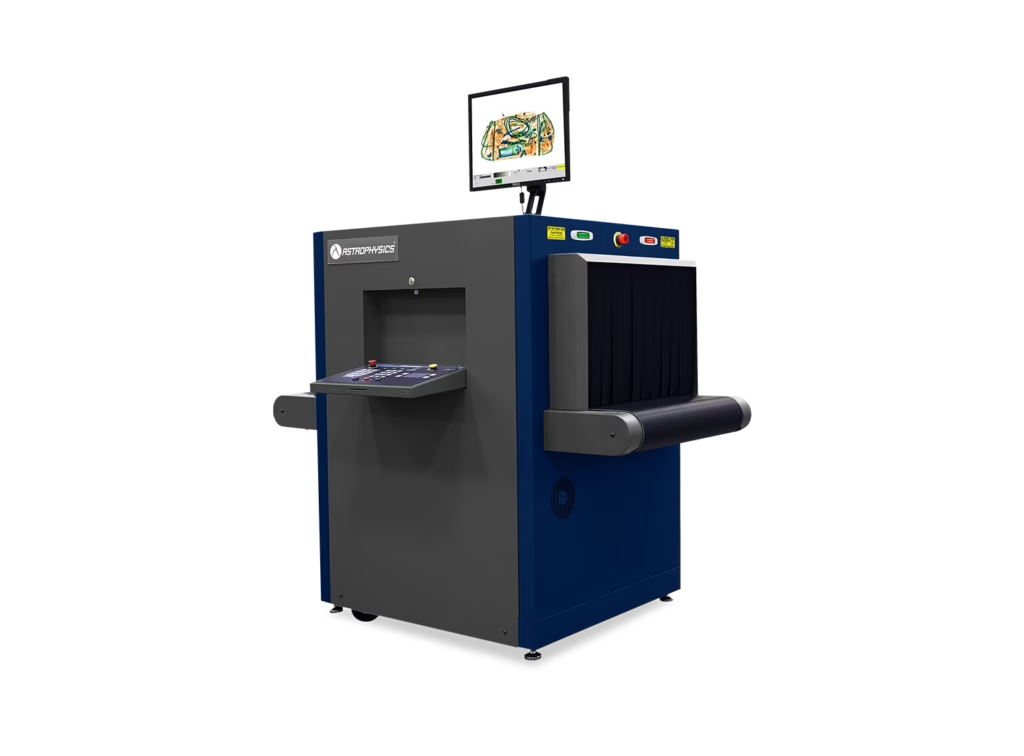
Astrophysics’ XIS-6040 is an X-ray baggage inspection system that has been widely deployed in government buildings, courthouses, and smaller public venues. It is a first-generation design that has remained largely unchanged in form over the years, with incremental software and hardware updates layered on top of the original platform.
 Source: astrophysicsinc.com/product/xis-6040
What This X-Ray Baggage Scanner Offers
- High-resolution single-view imaging: Produces clear X-ray images with strong material discrimination, supporting manual threat identification by operators.
- Compact 6040 tunnel format: Suitable for backpacks, purses, parcels, and personal bags commonly carried into hospitals.
- Operator-driven detection model: Screening decisions are made visually by staff rather than automated threat classification.
- Real-time system diagnostics: Monitors system health to help reduce downtime and maintenance surprises.
While these features make the XIS-6040 dependable, they also highlight its core limitation: performance and accuracy depend largely on operator focus, training, and workload.
Baggage Scanner Deployment Capability
The XIS-6040 is best suited for small to mid-sized hospitals or secondary entrances where traffic volumes are moderate. Larger hospitals often deploy multiple units across entrances to maintain throughput, which increases staffing and space requirements.
Although the system is network-capable, it functions primarily as a standalone X-ray baggage scanner. It does not natively integrate into a unified hospital security platform. As a result, screening workflows tend to remain siloed rather than consolidated.
Reporting and Operational Visibility
Operational visibility with the XIS-6040 is limited compared to modern AI-assisted platforms. Reporting typically focuses on system status and image review rather than actionable security analytics. There is no built-in framework for analyzing visitor volumes, response times, or threat trends across entrances, which makes it harder to optimize staffing or demonstrate ROI to leadership without additional tools.
Scalability, Support, and Long-Term Value
Astrophysics benefits from long-term field reliability and relatively low upfront cost. The XIS-6040 is one of the more affordable scanners in its class, with pricing generally in the mid-$20K range depending on configuration and options.
However, long-term value is closely tied to staffing. Because detection is operator-driven and analytics are limited, hospitals may need more personnel per checkpoint as traffic increases. Over time, these staffing costs can outweigh the initial savings of the hardware.
Real-World Use and User Reviews
The scanner is widely used across government buildings, hotels, prisons, and mailroom environments, where durability and consistent performance are required. As per users, it could fit hospital entrances or mailrooms.
Astrophysics X-Ray Baggage Scanner Overview
| Factor | Details |
| Year of Launch | Original design mid-2000s; incremental updates through the 2010s. |
| Primary Focus | Courthouses, government buildings, small public venues, and hospitals. |
| Core Technology | Single-view X-ray imaging with material discrimination. |
| Tunnel Size / Footprint | 600 × 400 mm (23.6″ × 15.8″); compact floor unit. |
| Throughput | ~300–500 bags/hour in real-world hospital use. |
| Weapon Detection Capability | Primarily operator-driven; AI detection optional. |
| Customer Support | Established service network; standard warranty. |
| Pricing | Typically mid-$20K range depending on configuration. |
| Maintenance / SLA | Standard service contracts are available. |
Orion® 920DX Dual-View X-Ray Baggage Scanner by Rapiscan Systems
For very large hospitals that need maximum screening power over simplicity.
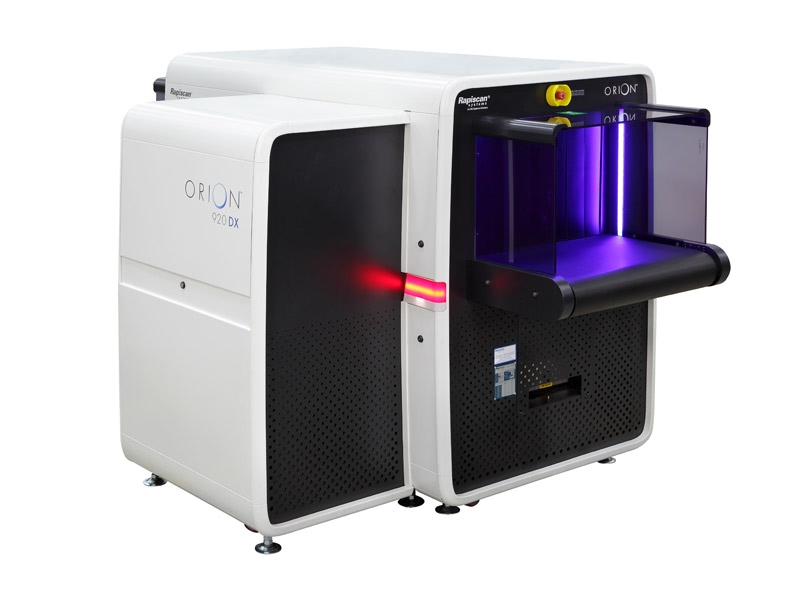
Rapiscan’s Orion® 920DX is a dual-view X-ray baggage scanner designed for high-security, high-traffic screening environments. It is part of Rapiscan’s Orion series and represents a newer generation of checkpoint scanners built for aviation, border control, and large public venues. The 920DX is most often considered by large urban hospitals, trauma centers, or facilities with massive threat concerns.
 Source: rapiscansystems.com/en/products/orion-920dx
What This X-Ray Baggage Scanner Offers
- Dual-view X-ray imaging: Captures two perpendicular images of each bag in a single scan, reducing blind spots compared to single-view systems.
- Spectrum 4-color imaging: Uses four color categories to help operators distinguish organic, inorganic, and mixed materials.
- Built-in explosives and narcotics algorithms: Target™ and NARCScan™ software automatically flag potential threats directly on the image.
- High steel penetration and resolution: Designed to improve visibility when screening dense or complex bag contents.
- Robust, airport-grade construction: Built for continuous operation in demanding security environments.
These capabilities make the 920DX powerful, but they also reflect its aviation-first design philosophy rather than hospital-specific construction.
Baggage Scanner Deployment Capability
The Orion 920DX is best suited for large hospitals with ample space and dedicated security staffing. Its physical footprint and weight are significantly larger than those of single-view scanners, which can make installation challenging in glass lobbies or crowded hospital entrances
Hospitals deploying the 920DX often dedicate an entire screening lane to the system, including queuing space, operator consoles, and secondary screening areas. While the scanner supports networking and centralized image review, it typically operates as a standalone checkpoint system, rather than part of a unified hospital security platform.
Reporting and Operational Visibility
Rapiscan emphasizes detection performance and compliance over operational analytics. While the 920DX supports system networking and image archiving, reporting is focused on screening activity rather than hospital-specific insights. For hospital security leaders, this means operational visibility depends largely on manual processes and supervisor oversight, rather than built-in analytics designed to support healthcare workflows or executive reporting.
Scalability, Support, and Long-Term Value
The Orion 920DX is a premium system, with pricing typically higher than traditional single-view scanners. Long-term ownership costs can increase due to space requirements, installation complexity, and staffing needs.
While the system offers advanced detection capabilities, hospitals may find that its aviation-grade features exceed what is required for most visitor screening scenarios, making it less practical for widespread deployment across multiple entrances.
Real-World Use and User Reviews
The Orion® 920DX is largely in use in aviation and public security deployments. Vendor and reseller materials emphasize strong image quality, rapid screening, and compliance with strict international screening standards.
Rapiscan Systems X-Ray Baggage Scanner Overview
| Factor | Details |
| Year of Launch | 2018-2019 |
| Primary Focus | Aviation, border control, and large public venues. |
| Core Technology | Dual-view X-ray imaging with Spectrum 4-color discrimination. |
| Tunnel Size / Footprint | 640 × 430 mm (25.2″ × 16.9″); large floor unit. |
| Throughput | Designed for very high-traffic screening. |
| Weapon Detection Capability | Automated explosives and narcotics detection; operator-assisted weapon identification. |
| Customer Support | Global service network. |
| Pricing | Premium; typically higher than single-view scanners. |
| Maintenance / SLA | Service contracts available. |
BV 6045DV Dual-View X-Ray Baggage Scanner by LINEV Systems
For hospitals that want dual-view screening.
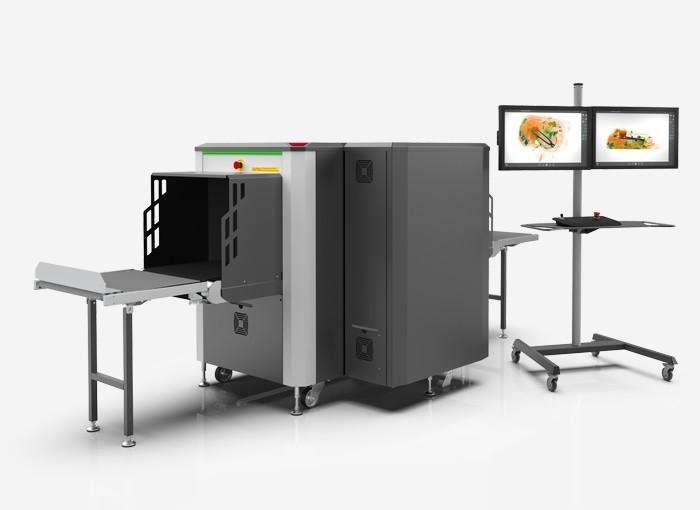
The LINEV Systems BV 6045DV is a dual-view X-ray baggage and parcel scanner. It is designed for high-volume screening environments such as government buildings, mailrooms, and controlled public facilities. In hospitals, the BV 6045DV can be deployed at main lobbies, emergency department entrances, or mailroom screening, where higher image certainty is desired, and space allows for a larger, more complex scanner.
 Source: linevsystems.com/products/security-x-ray-screening/parcel-and-baggage-inspection/bv-6045dv
What This X-Ray Baggage Scanner Offers
- Dual-view X-ray imaging: Captures two orthogonal images per bag, reducing blind spots and minimizing the need for rescans.
- Optional AI-assisted threat detection: LINEV offers an AI module (NeuralGuard) that automatically flags potential hazardous materials and contraband.
- Advanced material discrimination: Supports multiple color palettes to help operators distinguish organic and inorganic materials.
- Heavy-duty construction: Built for continuous operation in demanding security environments.
These features make the BV 6045DV technically capable. However, many advanced capabilities depend on optional software modules rather than being standard.
Baggage Scanner Deployment Capability
The BV 6045DV is best suited for mid-to-large hospitals with dedicated security lanes and sufficient floor space. Its physical footprint and weight require deliberate planning, particularly in glass lobbies or vestibules.
While the scanner supports network connectivity and remote consoles, it functions primarily as a standalone screening system. It does not natively integrate into a broader, unified hospital security platform that combines weapons detection, visitor screening, analytics, and alerting under one interface.
Reporting and Operational Visibility
LINEV focuses on detection performance over operational analytics. While the system supports image archiving and networked review, reporting capabilities are largely technical rather than operational. Hospitals using the BV 6045DV would need external tools or manual processes to analyze visitor flow, staffing efficiency, or response trends. As a result, leadership visibility and ROI reporting depend more on internal tracking than built-in analytics.
Scalability, Support, and Long-Term Value
The BV 6045DV is priced competitively for a dual-view scanner and offers strong hardware value for organizations that need image clarity and detection depth. However, long-term ownership costs can increase due to optional AI licensing, staffing needs, and the lack of centralized analytics. For hospitals planning to scale security operations across multiple entrances, the absence of a unified platform can make consistency and oversight more difficult over time.
Real-World Use and User Reviews
The BV 6045DV is used in mailrooms, government buildings, and high-security facilities. Vendor materials emphasize its dual-view imaging, clean image quality, and optional AI module, which reportedly flags hazardous materials with high accuracy.
LINEV Systems X-Ray Baggage Scanner Overview
| Factor | Details |
| Year of Launch | 2017–2018 |
| Primary Focus | Government facilities, mailrooms, public venues. |
| Core Technology | Dual-view X-ray imaging with optional AI detection. |
| Tunnel Size / Footprint | 600 × 450 mm; large floor unit. |
| Throughput | Designed for high-volume screening. |
| Weapon Detection Capability | Operator-assisted; AI optional. |
| Customer Support | Regional distributors and service partners. |
| Pricing | Mid-range for dual-view systems. |
| Maintenance / SLA | Standard service contracts available. |
X-Ray Baggage Scanners For Different Hospital Sizes
Hospital size directly influences entry volume, staffing models, and how much operational complexity a security team can practically manage. Instead of looking for a single “best” scanner, it’s more useful to understand which type of system aligns with your hospital’s scale and constraints.
Small Hospitals and Community Medical Centers
(One to two public entrances, lean security teams)
In smaller facilities, the most common challenge is limited staffing capacity. Security teams often rely on one officer per checkpoint, which makes systems that demand constant manual image interpretation harder to sustain over time.
What to prioritize
- Simple operation with minimal training overhead.
- Consistent detection, even during busy periods.
- Compact footprint that fits existing entry layouts
Baggage scanners that tend to fit
- AI-assisted X-ray scanners, which reduce dependence on operator judgment.
- Compact single-view scanners that are easy to deploy in tight spaces.
In this category, platforms like Athena Security’s AI-powered X-ray scanner are often considered the best fit as they combine automation with a hospital-oriented deployment model. Traditional compact scanners, such as the Astrophysics XIS-6040, may also be useful where budgets are tighter and screening volumes are predictable.
Mid-Size Hospitals and Regional Medical Centers
(Multiple entrances, variable daily traffic)
Mid-size hospitals experience fluctuating visitor volumes and often need to standardize screening across more than one entry point. Here, systems that work well in isolation can start to show limitations.
What to prioritize
- Ability to maintain throughput during peak hours.
- Consistency across entrances and shifts.
- Room to scale without redesigning workflows.
Baggage scanners that tend to fit
- AI-assisted scanners that support faster decision-making.
- Dual-view systems where higher image certainty is required.
Hospitals in this range often compare solutions like Athena Security, which focuses on operational consistency, with more traditional systems such as Smiths Detection HI-SCAN 6040 or Rapiscan Orion® 920DX, depending on space availability and staffing models.
Large Hospitals and Trauma Centers
(High traffic, elevated risk, complex operations)
At larger facilities, the challenge shifts from detection capability to coordination and oversight. Managing multiple standalone scanners across entrances can make it difficult to understand overall performance or respond consistently.
What to prioritize
- Central visibility across entrances.
- Reduced staffing pressure per checkpoint.
- Systems that support long-term operational planning.
Baggage scanners that tend to fit
- Platform-based solutions designed for multi-entrance environments.
- High-capacity scanners.
- Scanners that integrate with other hospital security systems.
In these environments, platforms like Athena Security are often evaluated alongside high-powered, aviation-grade scanners such as Rapiscan or LINEV, with the final decision depending on how much emphasis is placed on workflow integration versus raw imaging capability.
Procurement Tips for X-Ray Baggage Scanners
Procuring an X-ray baggage scanner in the U.S. involves more than choosing the right model. Hospitals must balance security needs with regulatory compliance, procurement policies, and long-term operational support.
The tips below can help streamline the process and avoid common setbacks.
Evaluation Checklist
- Engage Vendors and Integrators Early
Hospitals typically procure security equipment through direct vendor engagement or authorized security integrators. Most purchases require formal bids, service agreements, and documented training plans. Engaging vendors early helps clarify lead times, installation requirements, and ongoing support expectations before the RFP stage.
Whenever possible, ask vendors about:
- Experience working with U.S. hospitals.
- Availability of local or regional service teams.
- Integration with existing security infrastructure.
- Request Demonstrations or Trial Deployments
X-ray baggage scanners can look similar on paper but behave very differently in real hospital environments. Requesting a live demonstration or pilot deployment allows security teams to evaluate image clarity, throughput, operator usability, and how the system fits within existing entry layouts. Demos are especially valuable for confirming whether tunnel size and conveyor speed align with actual visitor bag profiles and traffic patterns.
To request a demo for our X-ray baggage scanner, click below.
- Verify Installation, Training, and Certification
Ensure installation is handled by the manufacturer or a certified security integrator familiar with healthcare environments. Proper setup, calibration, and shielding are critical for both performance and compliance.
Training should cover:
- Daily operation and image interpretation.
- Safety protocols.
- Basic troubleshooting and escalation procedures.
Well-documented training reduces reliance on individual operator experience and improves consistency across shifts.
- Review Warranty, Parts, and Service Terms Properly
Hospitals operate around the clock, so downtime matters.
Before finalizing a purchase, review:
- Warranty duration and coverage.
- Availability of replacement parts in the U.S.
- Response times for on-site or remote service.
- Preventive maintenance requirements.
Strong service and support terms are often more important than small differences in upfront pricing.
Why Hospitals Are Upgrading to AI-Powered X-Ray Baggage Scanners
Most hospitals and healthcare facilities never expect a weapon to come through a bag. But as incidents continue to rise across healthcare facilities nationwide, relying on assumptions is no longer safe.
Proactive X-ray screening is becoming part of how hospitals protect the people they serve. That’s why X-ray baggage scanners are no longer just an operational upgrade. They’re part of how hospitals uphold trust, safety, and continuity of care, without turning entrances into intimidating checkpoints.
At Athena Security, we’ve built our AI-powered X-ray baggage scanner with this reality in mind.
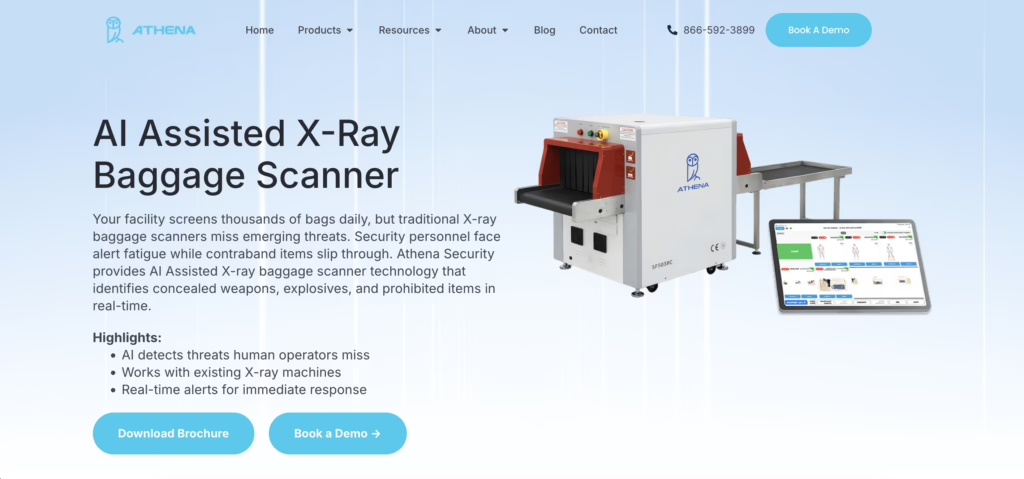
Our X-ray scanner is designed to support hospital workflows and integrate with broader hospital security systems. It reduces staff burden and keeps security decisions consistent during the moments that matter most.
Our mission? To help #SaveLives.
If you’re evaluating how to strengthen screening at your hospital entrances, we’d welcome the conversation.
Book a free demo below or call +1-866-592-3899 to see how we can support safer, smarter hospital security.
Frequently Asked Questions About X-Ray Baggage Scanners for Hospitals
As hospitals face rising security risks and increasing regulatory scrutiny, understanding how an X-ray baggage scanner fits into your broader hospital security strategy is critical.
Below, we answer the most common questions hospital security leaders ask when evaluating X-ray baggage scanners for patient-facing environments.
If you don’t see your question answered here, feel free to call us at 866-592-3918 to speak with a hospital security specialist.
1. What Is An X-Ray Baggage Scanner?
An X-ray baggage scanner is a security device that uses low-dose X-rays to see inside luggage and bags. It creates images that help security personnel detect prohibited items such as weapons, explosives, and drugs without opening the bags. It is commonly used in airports, train stations, and government buildings.
For example, our AI-Assisted Baggage X-Ray Scanner provides a detailed scan of all contents in a fraction of the time, reducing reliance on physical searches and allowing operators to focus attention where potential threats are identified.
2. How Does An X-Ray Baggage Scanner Work?
An X-ray baggage scanner works by sending X-rays through luggage as it moves along a conveyor belt. Different items absorb X-rays differently based on their composition and thickness, allowing the system to generate an image that helps operators inspect bag contents and identify areas that need closer review.
In practice, Athena Security’s X-ray baggage scanner builds on this process by combining high-resolution imaging with detection-assist technology, which helps highlight the position of potential threats on the screen for operator review. You can configure the system to pause the conveyor belt when a threat threshold is reached, helping operators focus on specific bags while maintaining faster visitor screening overall.
3. Are Security X-Ray Machines Safe For Human Exposure?
Yes—security X-ray baggage scanners are generally considered safe for their intended use when properly installed, operated, and maintained. These systems are built to screen bags and parcels, with safety controls designed to limit radiation leakage and support routine operation in environments like hospitals.
For a closer look at the applicable safety requirements hospitals should consider, refer to the Radiation Safety and Regulatory Compliance section above.
4. How Can One Ensure The Optimal Performance Of A Security X-Ray Machine?
An X-ray machine should be regularly maintained and properly calibrated. This is especially important because detection-assist features are intended to support operator decision-making, not replace trained human review.
The holistic security effectiveness of such machines is also influenced by how well they fit into daily security workflows.
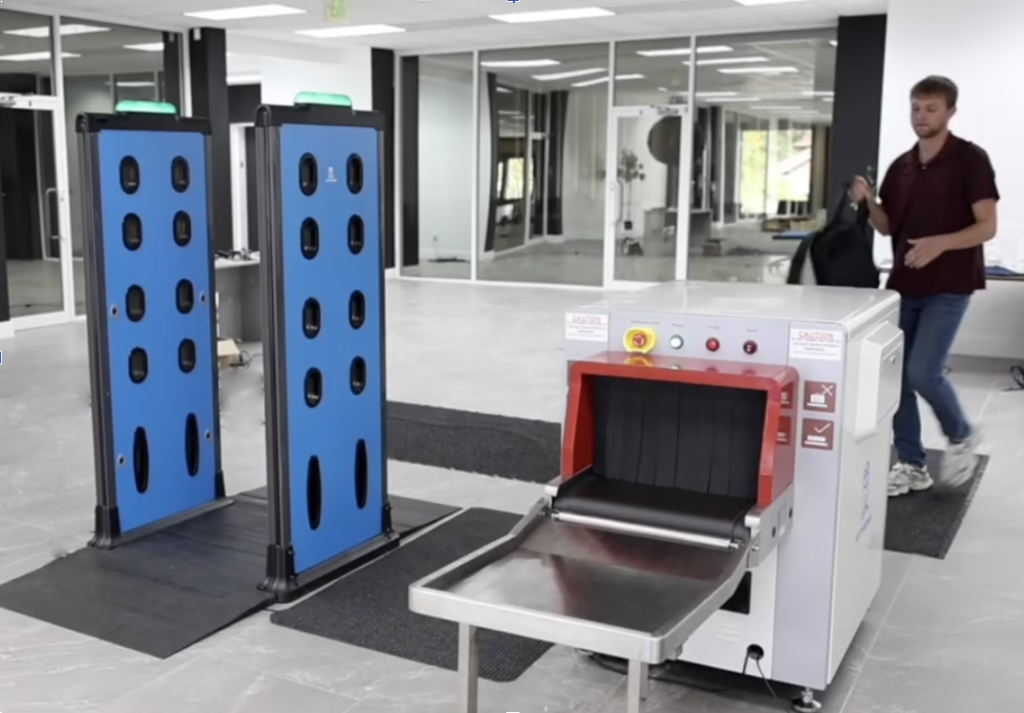
For example, when an X-ray baggage scanner is integrated with other hospital security systems, such as walk-through metal detectors, overall security effectiveness improves.
In Athena Security deployments, integrating the X-ray baggage scanner with complementary entrance screening systems helps security teams operate more consistently and respond more effectively across hospital entry points.
Shown below is our X-ray baggage scanner deployed in integration with our walk-through metal detector.
5. What Is The Cost Of The Best X-Ray Baggage Scanners?
The cost of an X-ray baggage scanner typically depends on tunnel size, imaging capability, level of automation, and service support. Pricing for baggage scanners commonly falls in the $16,000 to $30,000 range, with higher-end systems reflecting added capabilities like advanced imaging or automated threat detection. Final costs can also vary depending on installation, training, and service agreements.
For example, our X-ray scanner is within this general pricing range, with costs determined by configuration and deployment requirements for hospital environments.
6. What Is The Benefit Of A Virtual Security Officer At A Hospital?
A virtual security officer helps hospitals maintain continuous, scalable security coverage while reducing reliance on on-site staffing. A virtual security officer projects a life-size, interactive presence at hospital entry points, allowing one trained remote operator to monitor and manage up to four locations simultaneously.
This approach provides 24/7 coverage, supports multilingual visitor engagement, delivers consistent instructions, and enables immediate escalation to live operators when potential threats arise.
7. Does Athena Security Offer Any Other Hospital-Centric Solutions?
Yes. In addition to hospital security systems, Athena Security offers hologram-based patient experience technology designed specifically for healthcare environments.
This technology uses life-sized holographic projections to act as virtual receptionists, patient service representatives, or security officers at hospital entry points. The system integrates with a hospital’s visitor management system to deliver personalized greetings, directions, and instructions in real time, supports multilingual communication, and can escalate interactions to live staff when needed.
8. What Other Aspects Of Hospital Security Should Security Leaders Focus On?
Beyond physical screening at entrances, hospital security leaders should focus on cybersecurity at the DNS layer, which acts as the digital front door for healthcare systems.
DNS security for healthcare helps prevent attackers from mapping internal networks, redirecting users to malicious sites, exfiltrating sensitive data, or disrupting critical clinical systems. DNS is one of the most exploited yet undersecured layers in healthcare, and failures at this level can interrupt diagnostics, delay patient care, and expose protected health information.
Athena Security addresses this risk with H-Shield, a DNS security platform purpose-built for healthcare that applies zero-trust enforcement, isolates internal and external DNS traffic, and helps hospitals protect digital access points alongside their physical security systems.
9. What Are The Best Walk-Through Metal Detectors?
The best walk-through metal detectors for hospitals include Athena Security’s AI-powered Weapons Detection System, Garrett PD 6500i, and CEIA HI-PE Plus. Many hospitals use these systems in high-security environments and evaluate them based on detection accuracy, throughput, ADA compliance, and reliability in real-world hospital operations.
If you want to read more and are evaluating walk-through metal detectors, check out these best walk-through metal detectors.
10. What Are The Top Hospital Security Companies I Can Partner With?
Two widely recognized hospital security companies in the U.S. are Athena Security and Allied Universal.
Athena Security focuses on unified, AI-powered security technology designed specifically for healthcare environments, including weapons detection, visitor management, AI-assisted X-ray screening, and telepresence officers. We work with hospital systems such as Duke Health to deliver integrated entryway security that combines technology and operational visibility rather than relying solely on guard staffing.
Allied Universal is known for large-scale on-site guarding programs, providing armed and unarmed security officers, patrol services, and incident response support across healthcare systems.
If you are looking for more vendors, check out these top 5 hospital security companies.
Disclaimer : The information provided in this article is based solely on publicly available sources and is intended for general informational and guidance purposes only. It should not be relied upon as a final decision-making resource or as a substitute for professional advice. While we strive for accuracy and completeness, we make no representations or warranties regarding the correctness, reliability, or suitability of the content. If you believe any information should be updated, corrected, or removed, please contact our team for review.