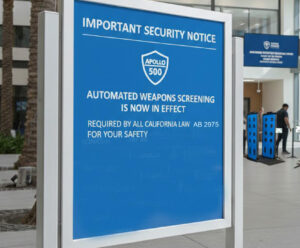

This isn’t just a recommendation; it’s a legal requirement with serious implications for compliance, patient flow, and staff safety. Let’s break down what hospitals need to know, and why proactive planning is essential.
The Mandate: What’s Required by 2027?
Gone are the days when a simple metal detector or security guard with a wand would suffice. AB 2975 demands a more sophisticated approach to security:
- Automated Screening is Key: Hospitals must install weapons detection systems that can “automatically screen a person’s body” for weapons. Think advanced, AI-driven walk-through sensors, not just handheld wands. Wands are only permissible as a secondary check or in specific, documented scenarios where space constraints prevent a larger system.
- Critical Entrances: The law targets the highest-traffic public access points:
- The Main Public Entrance
- The Emergency Department Entrance
- Any Labor and Delivery Entrance that offers separate public access.
- Dedicated, Trained Personnel: This isn’t a task for nurses or doctors. The screening systems must be monitored by non-clinical staff – typically security personnel. These individuals must complete a minimum of 8 hours of specialized training covering:
- Operation of the detection device and response protocols.
- De-escalation techniques to manage potentially volatile situations.
- Implicit bias awareness to ensure fair and equitable screening practices.
- Clear Public Notice: Signage must be prominently displayed at all screened entrances, informing the public of the security measures.
Beyond the System: Staffing, Training, and Patient Rights
Implementing the technology is only one piece of the puzzle. Hospitals must also address the operational and ethical considerations:
- Staffing Challenges: The requirement for dedicated, trained, non-clinical personnel means hospitals will need to assess and potentially expand their security teams to ensure continuous monitoring at all designated entry points for visitors.
- The Right to Leave: Patient right,. If a weapon is detected, the individual must be allowed to leave the facility with the object and return without it. They cannot be permanently banned or denied care solely for initially possessing a weapon, unless other criminal factors are present.
- EMTALA Compliance: Hospitals know they must comply with EMTALA, which guarantees emergency care. AB 2975 aims to mitigate this by requiring clear signage stating that weapons screening will not interfere with a patient’s right to receive emergency medical treatment.
Why This Matters NOW
While 2027 might seem distant, the clock is ticking on AB2975.
- Compliance is Non-Negotiable: Failure to meet these standards will result in Cal OSHA violations, fines, and potential legal repercussions. This is an enforceable workplace safety standard, not a suggestion hospitals must comply.
- Enhanced Safety: Implementing these systems is a proactive step towards creating safer environments. The primary goal is to protect both patients and healthcare workers, who face alarmingly high rates of workplace violence.
- Budget and Procurement: Automated Weapons detection systems require significant capital investment. Hospitals need to budget for these purchases in their upcoming fiscal cycles (e.g., 2026/2027). Waiting until the last minute could lead to supply chain delays as facilities across the state rush to comply.
- Operational Integration: Integrating new security protocols seamlessly into existing hospital workflows will require careful planning, staff training, and possibly pilot programs to identify and resolve any unforeseen issues.
Looking Ahead
California hospitals have a clear directive. Proactive engagement with security vendors, facility planners, HR, and legal teams is essential. By understanding the nuances of AB 2975 and starting the implementation process now, hospitals can ensure compliance, enhance safety, and maintain their focus on delivering exceptional patient care.
#AB2975 #AssembleBill2975