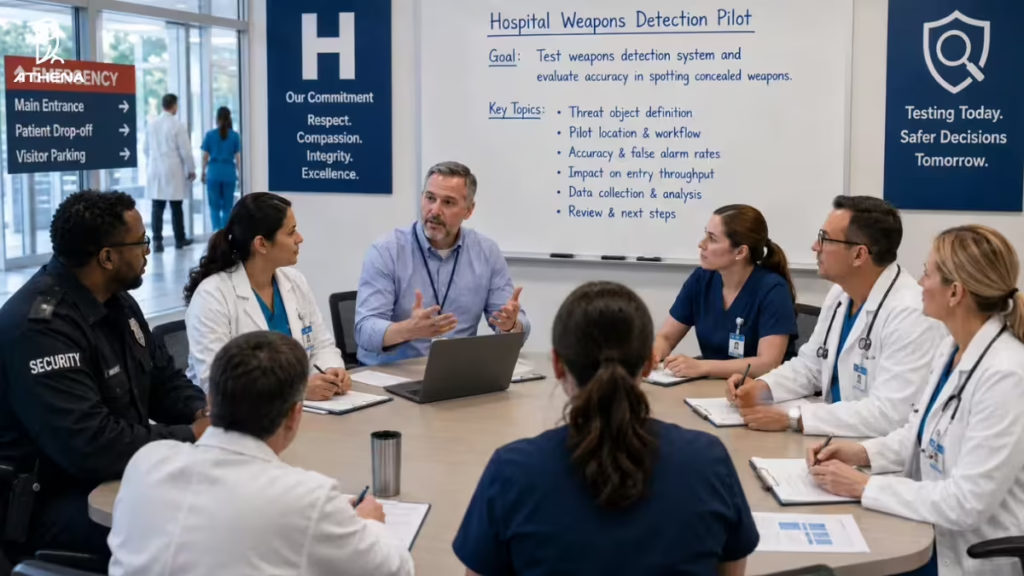

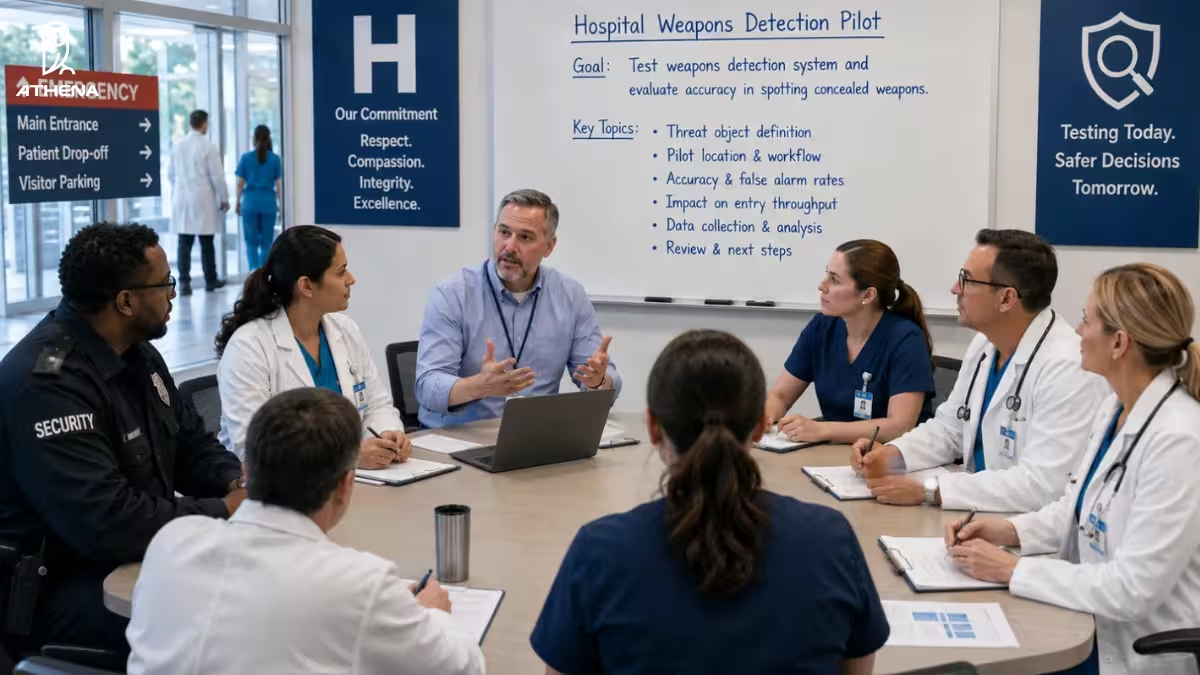
| Summary: To run a successful weapons screening pilot at a hospital, define threat objects, choose a real entrance, assign staff, train teams, set alert protocols, use X-ray bag screening where needed, collect pilot data, and scale only after the workflow proves it can work. |
In May 2026, Hazel Hawkins Memorial Hospital in California launched a pilot weapons-screening program at its ED lobby entrance. The hospital framed the pilot as preparation for California’s AB 2975 weapons-detection requirements and as a way to understand how screening would fit into normal hospital operations.
Hazel Hawkins is doing exactly what we recommend to hospital security teams: do not wait until the compliance deadline gets closer. Waiting too long can force rushed decisions and impact compliance with the law.
If you are wondering how to run a weapons screening pilot at a hospital, you are in the right place. This guide explains how to choose the pilot location, define success, train staff, collect data, avoid common mistakes, and decide what to do after the pilot ends.
Why Should Hospitals Run A Weapons Screening Pilot Before Scaling
Hospitals should run a weapons screening pilot before scaling because a system can look good in a demo but still fail at a real hospital entrance. A pilot will help them test operational workflows, evaluate false alarm rates, and prevent care bottlenecks.
A 2025 scoping review in the Journal of Racial and Ethnic Health Disparities found that evidence on hospital weapons screening programs is still limited and highly context-dependent. In other words, what works at one hospital may not work the same way at another.
That is why a pilot matters. A good pilot should confirm:
- Whether the system detects the right threat objects: If the system is not set up for the objects the hospital cares about, the results can be misleading.
- Whether staff can reduce secondary searches: The goal is to find more real threats while reducing unnecessary manual checks.
- Whether the setup works in real traffic: The pilot should account for patients, visitors, staff, vendors, bags, mobility devices, and urgent arrivals.
- Whether leadership has enough data to decide: Executives and clinical leaders need evidence on detection, false alarms, staffing needs, patient flow, and operational impact.
A good pilot should give the hospital a clear answer: scale, redesign, extend, or stop.
To get that answer, the hospital needs to have the right checklist before the equipment ever reaches the entrance.
What Should Hospitals Prepare For Before The Pilot (A Checklist)
Before a weapons screening pilot starts, hospitals should prepare the decisions, people, protocols, and physical setup that will shape the pilot results.
The checklist should include:
- Threat objects: Define what the hospital wants to detect, such as firearms, small knives, contraband, or other high-risk objects. They should also evaluate the detector’s efficiency using certified test pieces.
- Workplace violence prevention team: The team should include security, clinical leadership, nursing, facilities, IT, administration, and legal or compliance stakeholders. The Joint Commission recommends forming a multidisciplinary workplace violence prevention team.
- Pilot location: Choose a real entry point, such as the Emergency Department entrance, main lobby, or another high-volume public entrance.
- Equipment needs: Decide whether the entrance needs only walk-through screening or a combination of walk-through screening and X-ray bag screening.
- Success metrics: Agree on what success means before installation, including objects found, false alarms, secondary searches, wait times, and staff feedback.
- Written alert protocols: OSHA recommends written workplace violence prevention procedures, including staff responsibilities, incident response, reporting, training, and ongoing evaluation.
- Fire and egress review: Confirm that the system placement does not block emergency exits, patient flow, or fire-code requirements of NFPA.
- Data collection plan: Prepare a simple template to track alerts, objects found, false positives, secondary searches, queue length, and operational issues.
- Pilot timeline: Decide how long the pilot will run and when leadership will review the results.
This checklist gives the hospital a practical baseline before the pilot moves into real entryway testing.
Once the checklist is clear, the next step is to turn it into a pilot roadmap that assigns owners, locations, metrics, training, and data collection.
How Should Hospitals Plan A Weapons Screening Pilot
Hospitals should plan a weapons screening pilot as a real entryway test, and not as a product demo. The pilot should show whether the setup can detect the right objects, reduce unnecessary searches, and work during normal hospital traffic.
Hospitals must follow the following steps to ensure their weapons screening pilot program is a success:
- Define The Threat Objects Before Choosing Equipment
- Match Equipment To Doorway Volume And Bag Volume
- Form The Workplace Violence Prevention Team
- Choose A Real Entry Point For The Pilot
- Define Success Before Installation
- Train Staff And Write Alert Protocols
- Run The Pilot Under Real Hospital Conditions
- Evaluate Compliance and Privacy Safeguards
Let’s dive deeper into these.
Step 1: Define The Threat Objects Before Choosing Equipment
Start by deciding what the hospital needs to detect. This may include:
- Firearms: Handguns or other weapons carried by patients, caregivers, visitors, vendors, or staff.
- Small knives: Compact weapons that may be hidden on the body or inside bags.
- Contraband: Items the hospital’s workplace violence or security team wants to keep out.
If the system is not configured for the right object, the pilot can produce misleading results.
It’s also important to use certified test pieces to evaluate the system against the same detection standard. Avoid relying on vendor-supplied test objects, as they might be customized to work better on the vendor’s system. Instead, use test pieces like AM7 (for medium-size weapons) or AM5 (for compact weapons).
Step 2: Match Equipment To Doorway Volume And Bag Volume
Next, review how many people and bags move through the pilot entrance. A low-volume entrance may need a simpler setup (but that is rarely the case in any hospital). A high-volume entrance with many bags usually needs both people screening and bag screening.
As Chris Ciabarra, CTO of Athena Security, says, “The only way to have proper security is to have an X-ray.”
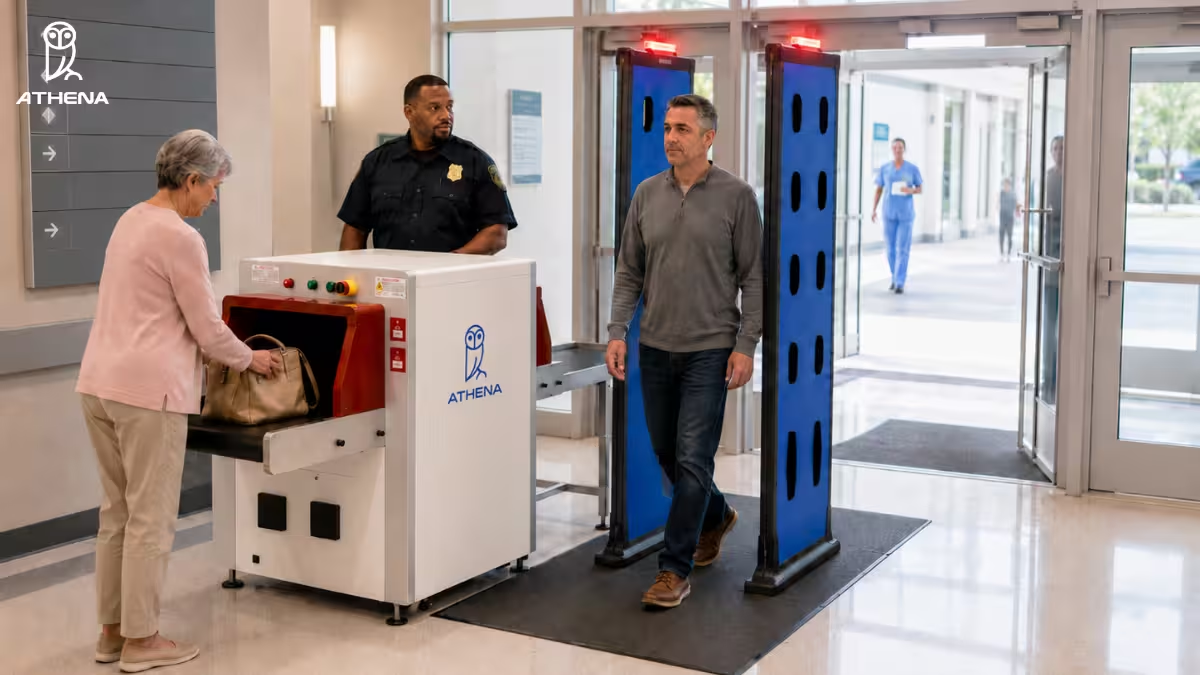
That matters because manual bag checks are often too rushed to be reliable at busy hospital entrances. And reliable screening of concealed weapons in a hospital environment requires a weapon detection system + X-ray setup.
Recommended read: Why X-Ray Baggage Scanners Are Important for Hospital Security
Step 3: Build the Workplace Violence Prevention Team
Build the workplace violence prevention team before the equipment arrives. The team should include:
- Chief Security Officer or Director of Public Safety: Owns alerts, secondary screening, and incident response.
- Emergency Department Director or Nurse Manager: Protects patient flow and urgent-care movement.
- Patient Access Manager: Helps manage intake, visitor flow, and front-desk coordination.
- Facilities Director: Reviews placement, power, egress, and fire-safety concerns.
- Compliance Officer or Legal Counsel: Reviews signage, patient-rights language, ADA, and policy risks.
- IT or Security Operations Manager: Supports integrations, alerts, or reporting.
- Hospital Administrator or Operations Leader: Defines the pilot timeline, budget path, and post-pilot decision process.
- Procurement Lead: Helps clarify vendor requirements, rental terms, pilot costs, and rollout approval steps.
Include any other members of your hospital’s workplace violence prevention committee who are not already mentioned above. This keeps the pilot grounded in real hospital operations, not only security requirements.
Step 4: Choose A Real Entry Point For The Pilot
Do not run the pilot in a staged hallway. Run it at a real entrance. Good pilot locations could include these 2 simple entryways:
- Main visitor lobby: Useful for testing broad patient, visitor, vendor, and staff flow.
- Any high-volume public entrance: Useful for testing queue behavior and staffing needs.
The system should sit as close to the true perimeter as possible. If screening is too far inside, the threat has already entered the facility.
Step 5: Define Success Before Installation
Define success based on what the hospital already has today and quantify it.
If the hospital has no screening process, track:
- How many weapons the system finds.
- What types of weapons it finds.
- How many alerts need secondary screening.
If the hospital already has screening, compare the pilot against the current process:
- Are you finding more real weapons?
- Are false alarms going down?
- Are officers doing fewer secondary searches?
Hospitals should also evaluate the quality of the alert. A system that shows only location may not tell staff whether the item is a knife, gun, pliers, or something harmless. Object composition gives officers more data, so they can make a better decision before escalating.
For example, Athena AI-assisted X-ray baggage scanner checks item composition at atomic levels.
At the end, the goal should be to create a report that answers three questions:
- Did the pilot find real threats?
- Did it reduce unnecessary secondary searches?
- Did it keep the entrance moving?
If the weapons screening setup is installed and run correctly, these are the numbers hospital leaders need to decide whether the selected weapons screening vendor is the right fit and whether the program is ready to scale
Step 6: Train Staff And Write Alert Protocols
Do not start the pilot until your staff knows exactly what to do. For the pilot to be successful, proper training is a must.
Training should cover:
- Device operation: How to run the system and read alerts.
- Pre-shift checks: How to confirm the system is ready before traffic begins.
- Alert response: Who approaches the person or bag.
- Secondary screening: When staff uses manual bag checks, wanding, or follow-up screening.
- Weapon discovery: Who escalates to security leadership, administration, or law enforcement.
- Human verification: How staff confirms an alert before acting.
- De-escalation: How staff handles tense patient or visitor interactions.
- Documentation: How incidents, refusals, and confirmed items are recorded.
The pilot should test the people and protocols, not only the equipment.
Step 7: Run The Pilot Under Real Hospital Conditions
You can only analyze the effectiveness of your weapons screening pilot if you test it in a real hospital environment. This includes real patients, visitors, vendors, staff, bag, and mobility-device traffic.
The pilot should include:
- Low-volume periods: To understand baseline staffing needs.
- High-volume periods: To see whether the entrance needs more operators.
- Urgent arrivals: To test how screening works when speed matters.
- Mobility-device cases: To confirm the process works for wheelchairs, walkers, and medical devices.
- Bag-heavy traffic: To see whether X-ray screening is needed.
A week’s time is usually enough to understand the workflow if the pilot is set up correctly. Some hospitals may still run 30- 60-day pilots because freight, installation, rental cost, and internal approvals make a longer trial practical.
Chris recalls one incident, saying, “You want to put it in for at least a few days to get the results. At one of the hospitals, we found a weapon within ten minutes. This depends on different hospitals and states, of course. Especially in Texas, Florida, you’re going to find weapons quickly if you have the right system.”
Step 8: Evaluate Compliance and Privacy Safeguards
Even a highly accurate screening process becomes a major liability if it fails to comply with legal mandates or exposes the hospital to data security breaches.
Hospitals must evaluate three core compliance areas during the pilot phase:
- HIPAA and PHI Security: While weapons detection software is typically not designed to collect patient medical records, any open text field in the system creates a high risk of accidental PHI entry. For example, a security operator types in clinical details like “the schizophrenic patient threw a chair” into an alert log.
- State Safety Mandates: The pilot must confirm that the screening technology aligns with specific state-level healthcare safety acts like California’s AB 2975.
- Medical Device and Implant Safety: Hospitals must verify that the weapons detection systems have been third-party lab tested and certified, complying with EN 45502, ISO 14117, and ISO 14708 standards.
Even with a strong roadmap, mistakes can still happen during setup, staffing, and deployment. The next section covers the common pilot mistakes hospitals should avoid before they affect the results.
What Are The Common Hospital Weapons Screening Pilot Mistakes
A hospital weapons screening pilot can produce misleading results if the setup, location, staffing, or data tracking is wrong. These are the mistakes hospitals should avoid before and during the pilot.
Common mistakes include:
- Not defining threat objects before the pilot.
- Testing in the wrong location.
- Placing screening too far inside the hospital.
- Ignoring bag screening.
- Not defining and quantifying what a successful pilot looks like.
- Skipping written alert protocols.
- Blocking egress or creating fire marshal concerns.
- Overlooking compliance and PHI.
Avoiding these mistakes helps the hospital protect the quality of the pilot data. And once the pilot ends, the next step is to decide whether the program should scale, change, extend, or stop.
What Should Hospitals Do After The Weapons Screening Pilot Ends
Once the pilot ends, the hospital should use the data to decide whether the setup is ready for a full-scale rollout.
A simple rollout plan can look like this:
- Keep the pilot entrance stable by continuing the setup that worked and making staffing, alert response, and secondary screening consistent.
- Expand screening to the next high-risk entrance, such as another Emergency Department entrance, main lobby, public entrance, or known vulnerable access point.
- Continue reviewing staffing needs, secondary searches, object detection, false alarms, queue length, and patient-flow impact after rollout.
This turns the pilot from a one-time test into a repeatable hospital security program.
And with a vendor like Athena Security, the rollout can be planned around the hospital’s real entrances, threat objects, bag volume, staffing model, and integration needs.
Trenton Jackson, director of public safety and support services at MLK Community Healthcare, praises Athena: “Throughout the installation and testing process, Athena has been a responsive collaborator. They’ve worked with us every step of the way to ensure that the weapons detection technology works as it should and integrates smoothly into our hospital operations.”
How Can Athena Security Help Hospitals Run A Weapons Screening Pilot
Athena Security builds weapons screening solutions for real hospital workflows, including emergency entrances, visitor lobbies, ambulance bays, stretcher arrivals, and bag-heavy checkpoints.
Hospitals such as Duke Health, Nuvance, and Yale New Haven Hospital have worked with us to strengthen entryway screening without losing sight of patient flow and staff response.
Here’s what one of our clients has to say about our team:
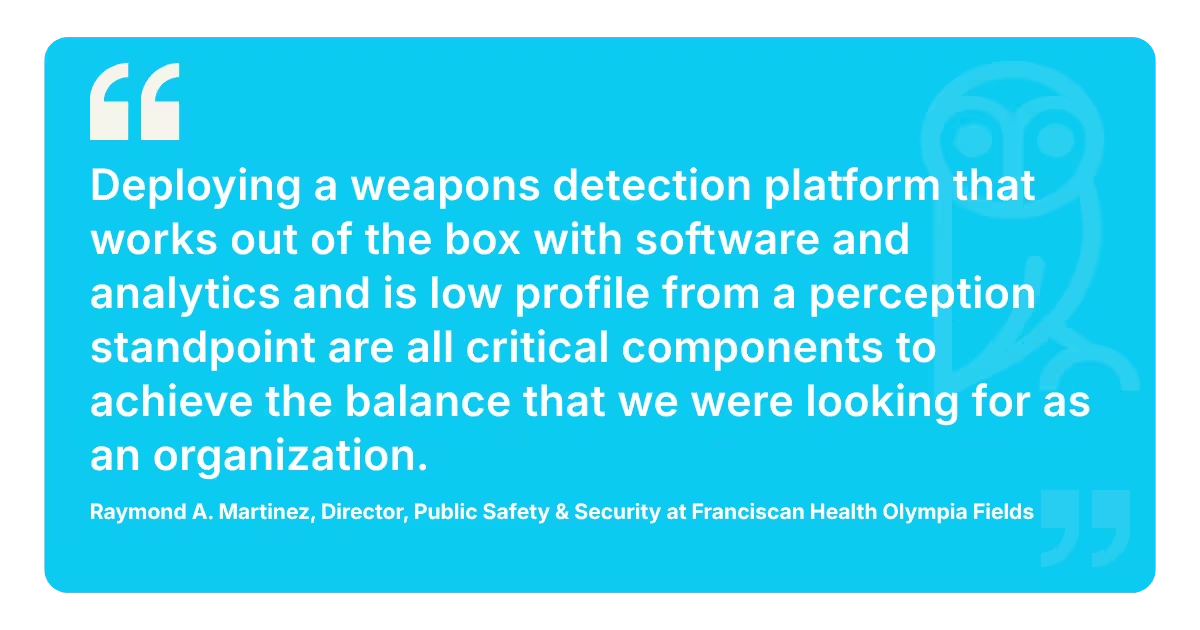
With AB 2975 deadlines approaching and more states following California’s lead, hospitals that start their pilot now avoid the scramble of last-minute compliance.
Book a free, no-obligation demo, and we’ll tell you how you can map out the right screening setup for your entrance.
Frequently Asked Questions About Weapons Screening Pilot At Hospital
Before you book a demo, you probably have a few practical questions. Below, we have answered the most common questions we hear from hospital admins and security leaders.
And if your question is not here, you can always reach out to us at +1-833-928-4362.
1. How Can Hospitals Measure The Impact Of Weapons Screening On Patient Experience And Satisfaction During The Pilot?
Hospitals can measure patient experience by watching how screening affects the people entering the facility. Track whether patients and visitors can walk in without long lines, repeated stops, confusing instructions, or unnecessary bag checks. Also review whether false alarms are low enough that people are not being pulled aside again and again for harmless items.
Hospitals can also collect direct feedback from patients, visitors, and staff. The goal is to know whether screening feels safe and respectful, not stressful or disruptive.
2. What Should Hospitals Do If The Pilot Increases Wait Times Or Creates Bottlenecks At Busy Entrances?
A weapons screening pilot should not slow down a busy hospital entrance if it is planned and installed correctly.
If bottlenecks happen, first check whether the system requires people to stop, empty pockets, or move through one by one. Hospitals should use a free-flow walk-through setup wherever possible. If bags are slowing the line, add AI-assisted X-ray bag screening instead of relying on manual bag checks. During peak traffic, add a second operator so one person is not managing alerts, bags, and line movement alone.
In no scenario should hospitals lower threat sensitivity just to move the line faster. That can make the pilot look smoother while weakening overall screening accuracy.
This is why we recommend working with an experienced partner to plan the pilot better.
3. What Are The Best Hospital Security Companies I Must Know?
The best hospital security company is the one that can support the specific risks and workflows of your facility. If your hospital is comparing vendors, look for a partner that understands patient flow, bag volume, staff response, false alarms, secondary screening, and full-scale rollout planning.
For more details, read our article on the top hospital security companies.
4. What Are The Best Hospital Security Solutions?
The best hospital security solutions are the ones that protect people without slowing down care. For most hospitals, this means using layered security across key entry points. That may include walk-through weapons detection, AI-assisted X-ray baggage screening, ambulance bay screening for stretcher arrivals, visitor management, video surveillance, access control, cybersecurity, and trained security staff.
For more details, read our guide on 5 hospital security solutions every healthcare facility needs.
Disclaimer: The images have been created using AI-based tools and are intended for illustrative purposes only. They may not accurately represent real individuals, locations, or situations. Any resemblance to real persons, living or dead, or actual events is purely coincidental.