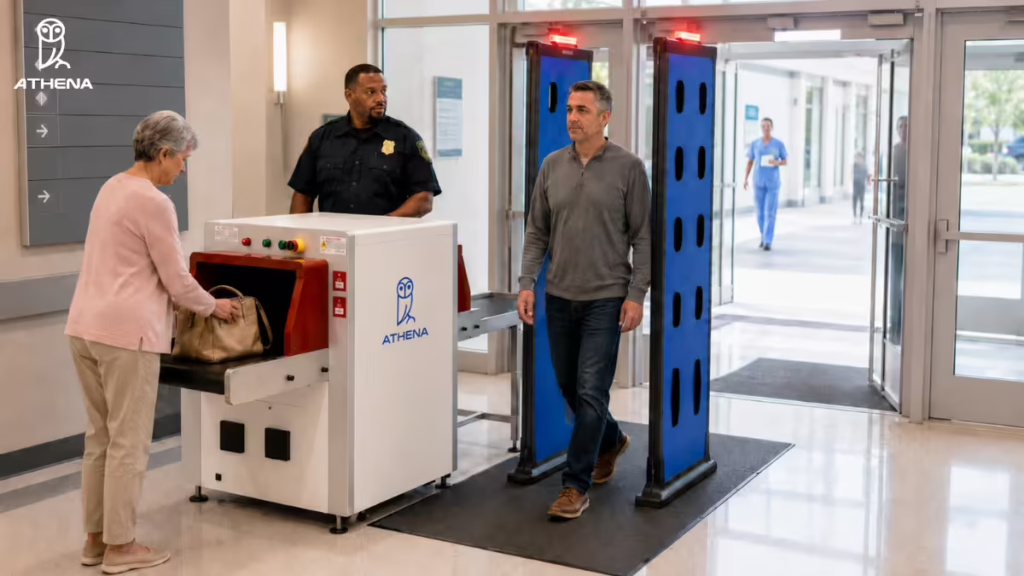

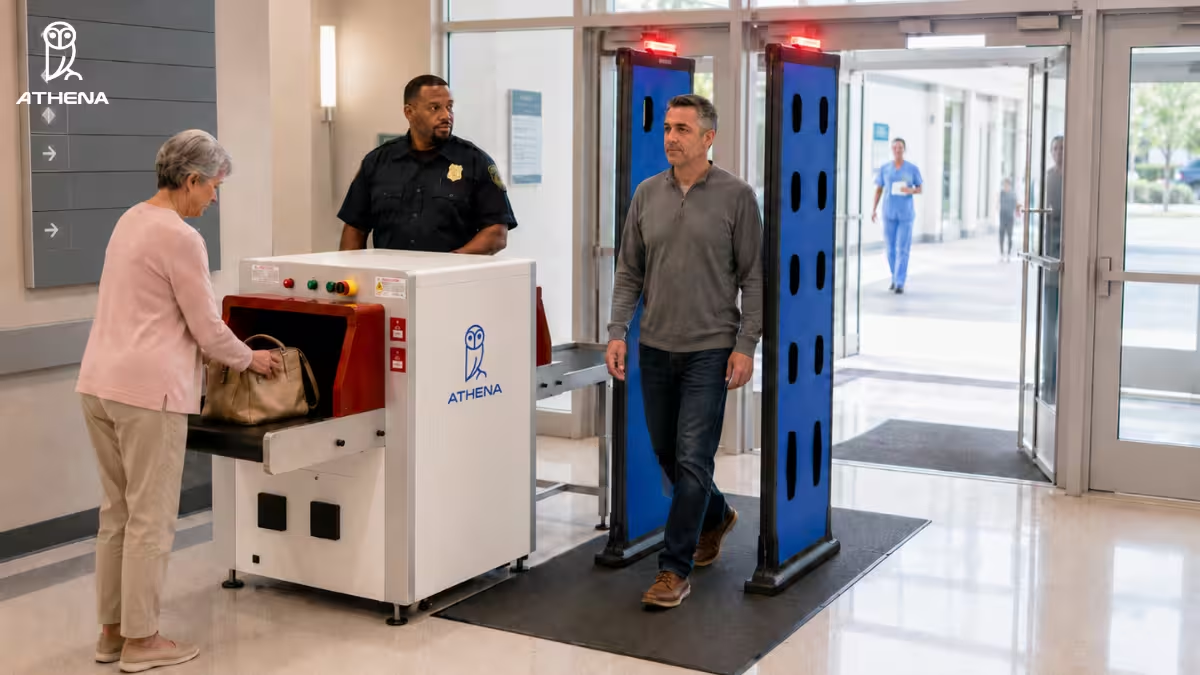
| Summary: X-ray baggage scanners are important for hospital security because bags can hide firearms, knives, restraint materials, and other threats that visual checks or metal detectors may miss. Hospitals need a separate bag-screening layer at high-risk entrances to protect patients, visitors, and staff without creating long lines. AI-assisted X-ray scanners help security teams inspect carried items faster, reduce manual searches, manage false alarms, and keep emergency and lobby flow moving. |
Imagine someone walking into a hospital on an ordinary morning with a gray backpack. There are no alarm sounds. No one checks the bag. Inside are a loaded handgun, zip ties, and duct tape.
This may sound like a worst-case security drill. But it was real.
On February 22, 2025, an armed man entered UPMC Memorial Hospital in Pennsylvania, reached the ICU, took staff hostage, and opened fire.
Incidents like this show why hospitals cannot rely only on visual checks or front-desk observation. Bags need their own screening layer.
In this article, we’ll explain why X-ray scanners are important for hospital security and how AI-assisted X-ray screening can help detect weapons hidden inside backpacks, purses, sling bags, packages, and other carried items.
Why Is Hospital Security Screening Becoming More Urgent?
Hospital security screening is becoming more urgent because hospitals are seeing more violence, more weapons at entrances, and more pressure to protect staff, patients, and visitors before a threat reaches clinical areas.
The urgency is being driven by four realities:
1. Healthcare Workers Are Facing More Violence
Workplace violence is no longer an occasional hospital security concern. It is becoming a daily operational risk.
Recent data shows that:
- According to the American Hospital Association, violent incidents in U.S. hospitals reportedly increased by 57% in 2022.
- According to the U.S. Bureau of Labor Statistics, healthcare and social service workers are five times more likely to suffer a workplace violence injury than workers in other industries. The same report also found that healthcare and social assistance accounted for nearly 73% of all nonfatal workplace violence injuries requiring days away from work, job restriction, or transfer.
- According to an Emergency Nurses Association survey, 56% of emergency department nurses reported being physically assaulted, verbally assaulted, or threatened within a single 30-day period.
These numbers show why hospitals should move from reactive security response to proactive screening at entrances.
2. Hospitals Are Open, Accessible, And Hard To Lock Down
Hospitals are different from stadiums, airports, or courthouses. They need to stay open for patients, caregivers, visitors, family members, staff, vendors, emergency responders, ambulance arrivals, and more. That accessibility makes hospitals vulnerable. A threat can move from the front entrance to a waiting room, emergency department, ICU, or staff area within minutes.
3. Weapons Are Already Reaching Hospital Entrances
Hospitals are already intercepting large numbers of weapons. A safety review at Ohio State’s Wexner Medical Center found that screening systems intercepted more than 9,500 weapons in one year, including 72 firearms, 231 stun guns, and more than 6,600 knives and blades. That volume shows why visual checks and front-desk observation are not enough. Bags, backpacks, purses, and carried items need their own screening layer.
4. Concealed Weapons Detection Is Becoming A Standard Security Layer
Hospital security leaders are also seeing weapons detection become part of a more formal security plan.
As Eric Sean Clay, VP of Security at Memorial Hermann Health System and former President of IAHSS, said:
“Concealed weapons detection is becoming more prevalent. I think that’s one of the things that we’re going to start to really see be part of a standardized security management plan over the next three to five years.”
Regulatory pressure is adding to that shift. The Joint Commission has expanded workplace violence prevention expectations, and California’s AB 2975 will require hospitals to install weapons detection systems at main public entrances and emergency department entrances by March 2027.
Together, these trends point in the same direction: Hospitals need to identify weapons before they reach patient care areas.
Suggested read on Forbes: Could Recent California Law Trigger A Federal Technology-Led Mandate?
What Security Risks Do Unscreened Bags Create At Hospital Entrances?
Unscreened bags create a serious security gap because they allow dangerous items to move past the hospital’s first line of defense without being detected.
A person may look ordinary at the entrance, but a backpack, purse, sling bag, delivery bag, or package can carry a weapon into the building.
The risks usually show up in 3 ways:
1. Weapons Can Enter Without Being Seen
Bags make it easy to conceal serious threats that staff may not notice during a visual check. That includes firearms, small knives and blades, stun guns, explosive components, zip ties, duct tape, restraint materials, and other prohibited items.
Without bag screening, those items can move from the lobby into patient care areas before anyone has a chance to intervene.
2. A Threat Can Move Quickly Into Vulnerable Areas
Once someone enters with an unscreened bag, they may be only minutes away from waiting rooms, emergency departments, or other sensitive areas.
If the bag is not screened at the door, the hospital may not discover the threat until it has already reached patients, nurses, physicians, or visitors.
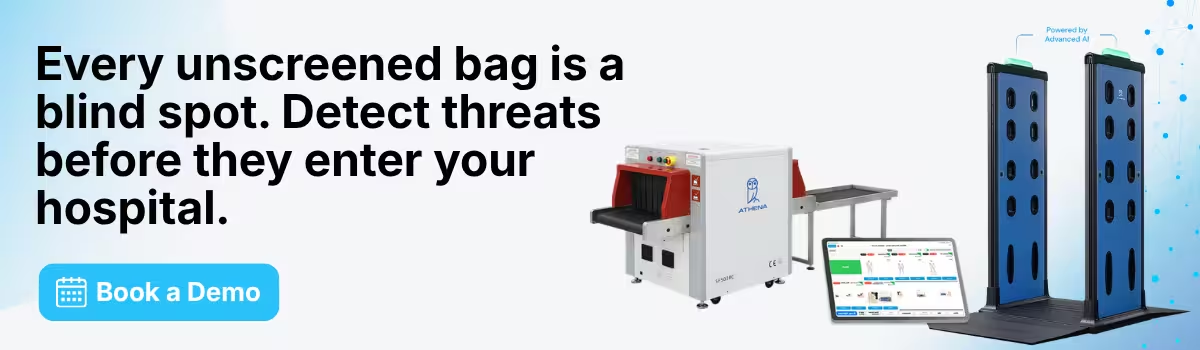
3. The Wrong Screening Setup Can Create False Alarms
Bags often contain dense metal and electronic items. If those bags go through a person-screening system, the hospital may see constant alerts from harmless everyday items like chargers, umbrellas, steel water bottles, and medical devices.
That creates two problems. First, the entrance slows down because staff have to resolve too many unnecessary alarms. Second, the hospital may feel pressure to lower sensitivity just to keep the line moving.
That tradeoff is risky because lowering sensitivity can make it easier for small, concealable weapons to slip through.
Unscreened bags turn the hospital entrance into a porous checkpoint. A stronger workflow separates people screening from bag screening, so both can happen faster and with better accuracy.
Recommended read: How to Prevent Weapons From Entering a Hospital.
What Happens When Hospitals Rely Only On Manual Bag Checks Or Metal Detectors?
Hospitals that rely only on manual bag checks or traditional metal detectors often face a tradeoff: move people quickly or screen them carefully.
- Metal Detectors Create Too Many False Alarms: Traditional metal detectors alert on metal, not intent. Phones, keys, laptops, chargers, umbrellas, medical devices, and water bottles can all trigger alarms, creating delays, alert fatigue, and pressure to lower sensitivity.
If you are considering metal detectors, check out these 3 Best Walk-Through Metal Detectors For Hospitals.
- Manual Bag Checks Are Slow And Inconsistent: Manual searches depend on how carefully each guard checks each bag. In a busy hospital entrance, small weapons can hide inside cluttered backpacks, purses, delivery bags, or patient belongings bags.
- The Hospital Ends Up Choosing Between Flow And Security: If hospitals screen aggressively, they create lines and delay care access. If they speed up the line, they may reduce checks or lower sensitivity. That is why many hospitals use automated weapons detection for people and AI-assisted X-ray screening for bags.
That is why many hospitals move toward a layered workflow: automated weapons detection for people and AI-assisted X-ray screening for bags.
How Do X-Ray Baggage Scanners Help Hospitals Improve Security?
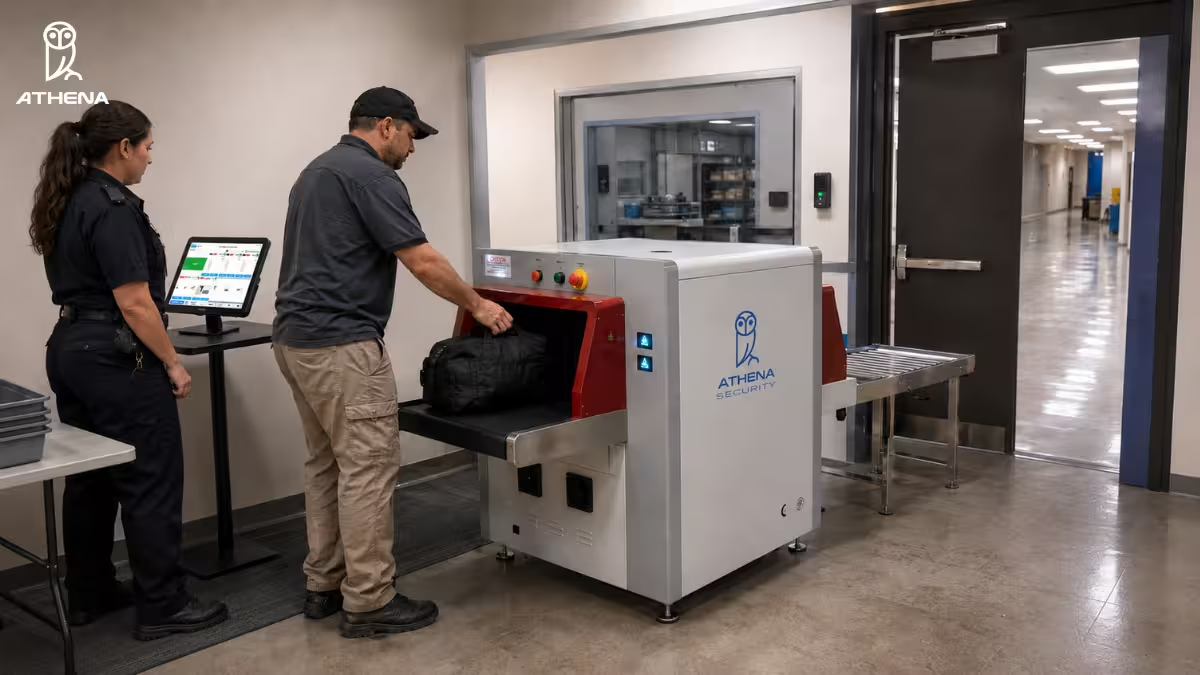
X-ray baggage scanners help hospitals improve security by giving staff a faster, safer, and less intrusive way to detect weapons hidden inside backpacks, purses, sling bags, packages, and other carried items.
Here is how X-ray screening helps hospitals improve their physical security:
1. It Reduces The Need For Intrusive Manual Bag Searches
Manual bag checks can feel slow, personal, and inconsistent. They also depend heavily on the staff member’s attention, training, and ability to inspect cluttered bags quickly.
AI-assisted X-ray screening gives hospitals a less intrusive option. Visitors can place a backpack, purse, sling bag, package, or personal bag on the conveyor without having every item handled in public.
That helps preserve:
- Patient and visitor dignity because people do not feel like their personal belongings are being searched by hand in front of others.
- Privacy because staff can inspect the bag image instead of physically opening every compartment.
- Trust because the hospital can show it is taking safety seriously without making every visitor feel suspected.
2. It Gives a Visible Sign of Security Without Creating Panic
Hospitals need security measures that are visible enough to reassure people, but not so aggressive that they make the environment feel hostile.
A well-run X-ray screening process can sit quietly in the background of the entrance workflow. People see that bags are being screened, but the process does not need to feel disruptive or confrontational.
3. It Helps Keep Emergency And Main Lobby Flow Moving
Continuity of care depends on people reaching the right area quickly. If security screening creates long lines, it can delay patients, caregivers, staff, vendors, and emergency department visitors.
AI-assisted X-ray scanners help because they can screen bags quickly and give staff clearer information about what is inside.
Modern systems like the Athena Security AI X-ray baggage scanner are designed for high-volume environments. The conveyor speed can be configured from 0.30 meters per second to 0.75 meters per second, and at the fastest setting, the system can process up to 2,000 bags per hour.
That kind of throughput helps hospitals screen bags without turning the entrance into a bottleneck.
4. It Reduces False Alarms From Everyday Hospital Items
Hospital bags are full of items that can confuse basic screening workflows. If every harmless item triggers an alert, the line slows down and staff start dealing with alarm fatigue.
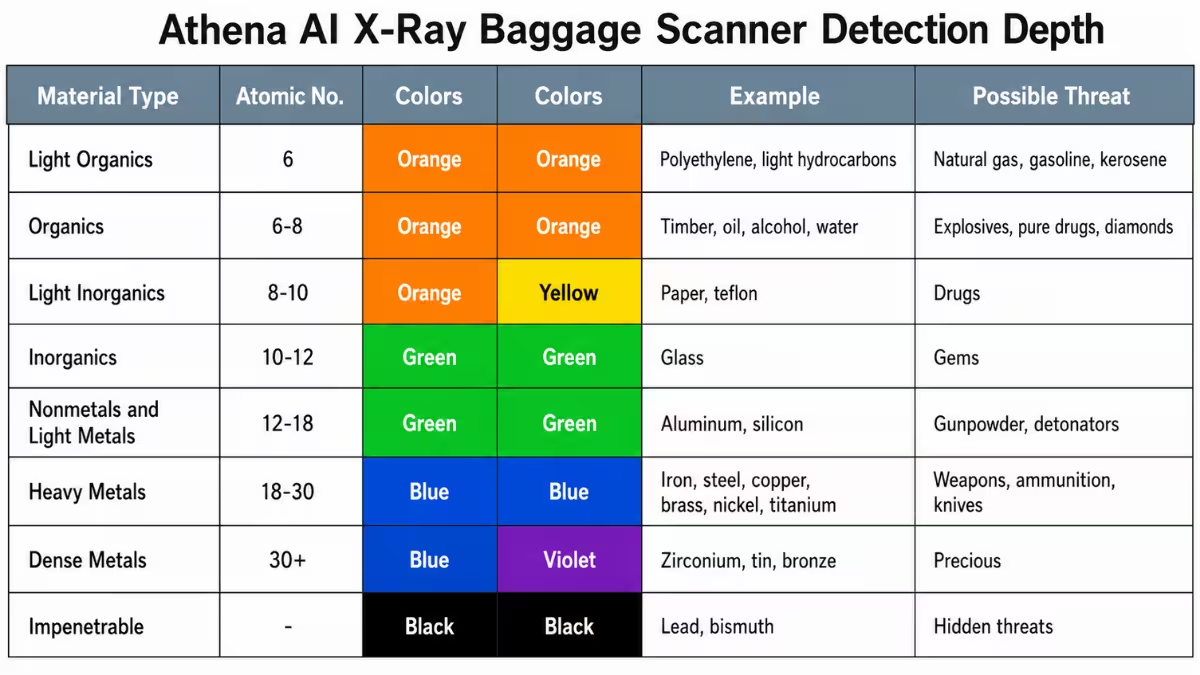
This is where advanced imaging matters. For example, Athena Security’s X-ray scanner uses dual-energy imaging to analyze material characteristics such as density, material type, and atomic number. It also uses a seven-color visual spectrum to help distinguish between organic, inorganic, metallic, and non-metallic items. That gives operators and AI more context than a basic shape-based view.
5. It Adds A Second Layer Of Review Without Slowing The Line
Even trained staff can miss threats when they review images for hours, especially when bags are dense or cluttered. Athena’s “Second Look” workflow is one example of how AI-assisted screening can support hospital teams. When a bag is scanned, the image can be sent to a secure central review process where cloud-based AI and a remote human expert re-evaluate the scan.
Watch this in action below:
6. It Can Help Contain A Threat Before The Bag Leaves The Scanner
Some AI X-ray scanners can be configured to stop the conveyor belt and hold the suspicious bag inside the X-ray tunnel. That matters because it can prevent the person from immediately accessing the weapon.
Athena’s system also gives hospitals another option: the belt can keep moving while the system visually links the flagged bag to the person carrying it. This can help hospitals balance threat response with patient flow, depending on the entrance type, risk profile, and security protocol.
7. It Helps Security Teams Do More Without Adding Friction
Hospitals are often trying to improve security without adding too many guards or slowing down every entrance. That is why the operator workflow matters.
Athena’s AI X-ray baggage scanner uses an Apple iPad interface with pinch-to-zoom controls instead of a traditional keyboard-heavy console. This can make the system easier for staff to learn and operate.
X-ray screening protects patient trust when it feels respectful, fast, and consistent. It protects continuity of care when it detects dangerous items early without delaying access to treatment, staff movement, or emergency response.
Why Is Athena AI X-Ray Baggage Scanner Important For Hospital Security?
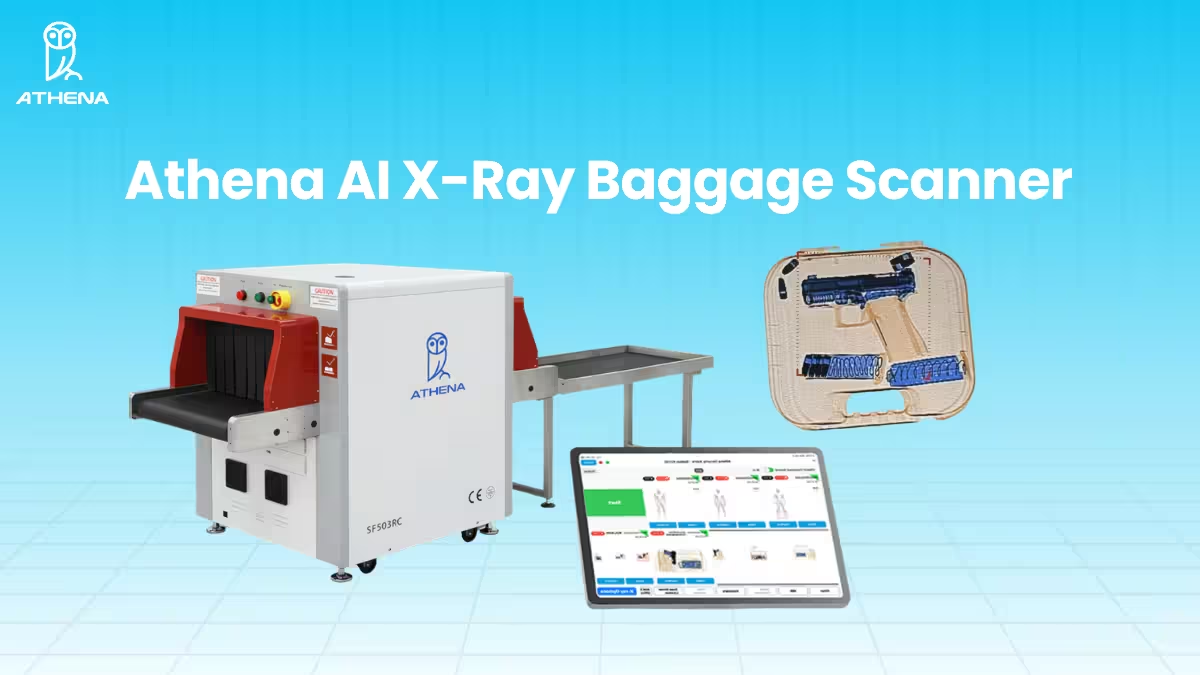
As one of the leading hospital security companies, Athena AI X-Ray Baggage Scanner is important for hospital security because Athena is not only offering a screening machine. It is helping hospitals plan a working entrance security program.
That matters because buying an X-ray scanner is only one part of the decision. Hospitals also need to know where to place it, how to staff it, how to manage visitor flow, how to train officers, how to handle alerts, how to improve hospital security without adding more guards, and how to avoid slowing down care access.
Athena has supported numerous renowned healthcare organizations, such as Duke Health, Memorial Hermann, Jefferson Regional Medical Center, Franciscan Health Olympia Fields, Yale New Haven Hospital, Nuvance, Unity Health, and more.
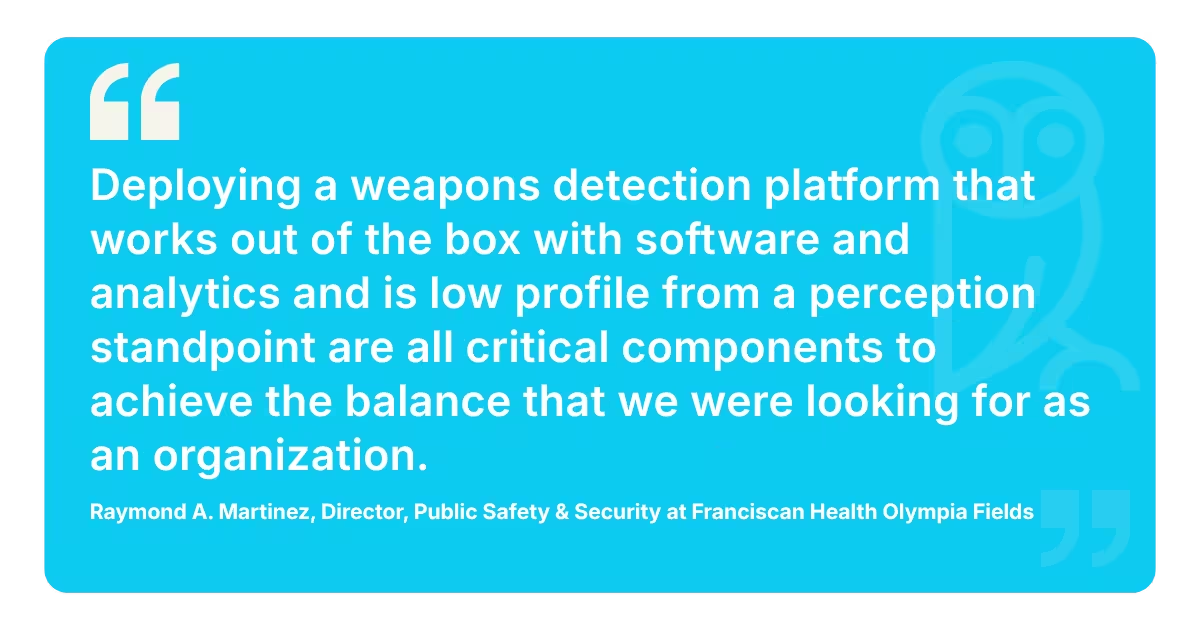
Here is what Raymond A. Martinez, Director, Public Safety & Security at Franciscan Health Olympia Fields, had to say about us:
If your hospital is planning to improve entrance security, Athena can help you.
Book a demo below or call us at +1-833-928-4362 to talk through what the right setup could look like for your facility.
Frequently Asked Questions
Hospitals often have practical questions before adding X-ray baggage scanners to their security workflow. These FAQs cover placement, entrance selection, and what to evaluate before choosing a system. For questions specific to your facility, you can also call us at +1-833-928-4362.
1. Where Should X-Ray Baggage Scanners Be Installed In A Hospital To Maximize Security Without Disrupting Patient Flow?
Hospitals should place X-ray baggage scanners at high-risk, high-traffic access points such as main lobbies, emergency department entrances, mailrooms, delivery areas, staff entrances, and temporary event checkpoints. To avoid delays, hospitals should separate bag screening from body screening and use a workflow that keeps patients, visitors, and staff moving.
2. What Factors Should Hospitals Evaluate When Choosing An X-Ray Baggage Scanner?
Hospitals should evaluate tunnel size, throughput, dual-energy imaging, AI threat detection, radiation safety, threat containment, ease of use, system integrations, reporting, maintenance support, and vendor experience in healthcare. They should also request a live demo using real hospital bags, laptops, medical items, and typical visitor flow.
If you want to avoid the hassle of evaluating an X-ray baggage scanner, check out these 5 Best X-Ray Baggage Scanners for Hospitals.
3. Should Hospitals Screen Ambulance Bays For Weapons Too?
Yes. Ambulance bays can create a security gap because patients, bags, visitors, and responders may enter without going through the main lobby checkpoint. Hospitals should use a stretcher-compatible screening workflow that can detect weapons without triggering false alarms from metal gurneys. One example of such a solution is an Ambulance Bay Weapons Detection System.
Read our guide on how to screen ambulance bays without triggering false alarms from gurneys.
Disclaimer: The images have been created using AI-based tools and are intended for illustrative purposes only. They may not accurately represent real individuals, locations, or situations. Any resemblance to real persons, living or dead, or actual events is purely coincidental.