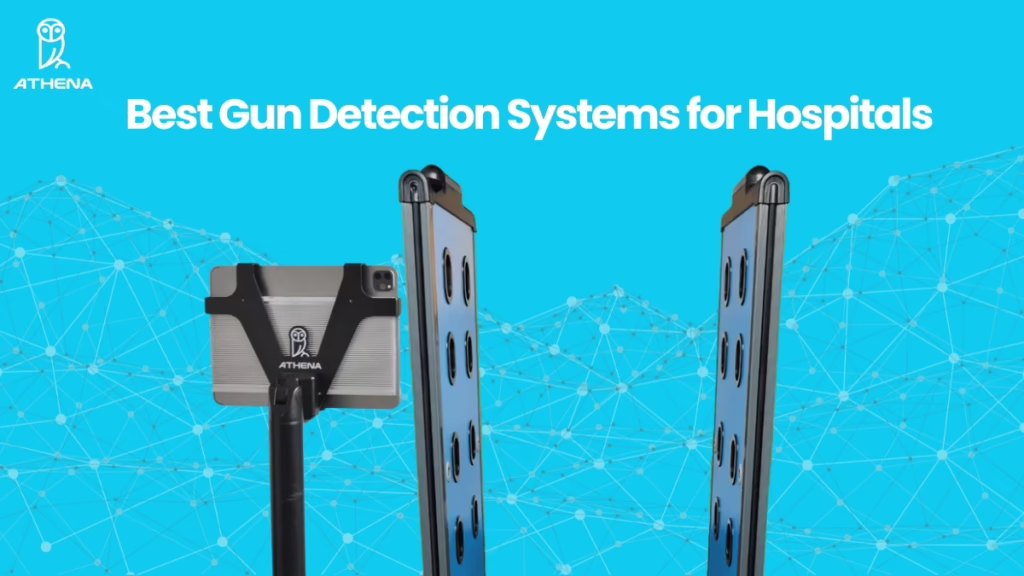

| This guide explores the best gun detection systems for hospitals in 2026. It covers why hospitals need these systems, how they were evaluated, a side-by-side comparison of top vendors, detailed reviews of three leading options (including Athena Security, Evolv, and ZeroEyes), a hospital-specific checklist to choose the right system, common deployment mistakes to avoid, and a step-by-step process to partner with Athena. Includes FAQs and pricing insights to help hospital security teams make informed decisions. |
It’s been nearly a year since a gunman walked into the ICU at UPMC Memorial Hospital in York, Pennsylvania. He took hostages. Opened fire. And when it was over, a police officer was dead. So was the shooter. Seven others were injured, most of them hospital staff.
If you manage hospital security, this story hits too close to home. Because you know the truth: it could happen in your hospital too. And when it does, the gun detection system you’ve chosen is the only thing standing between security and danger.
The challenge? Not all gun detection systems are built for hospitals. To help you make this critical decision, we have compiled this guide about the 3 best gun detection systems for hospitals. Because in hospitals, protecting lives may stop at the bedside, but it begins at the door.
Why Gun Detection Systems Matter in Hospitals
If you work in hospital security, you already know this job’s getting harder. Violence in healthcare settings is becoming more unpredictable. And unlike a stadium or courthouse, your hospital can’t just shut down access. You have patients coming in by the minute. Staff doing life-saving work. Visitors carrying bags, emotions, and sometimes worse.
That’s where gun detection systems come in.
Here’s why they matter more than ever:
- Violence is rising fast. Healthcare workers are now more likely to face workplace violence than police officers or prison guards. Therefore, you can’t afford to wait and react. You MUST be proactive.
- You need early warning. AI-powered weapon detection systems can detect firearms and suspicious objects before anything happens. This gives your team precious seconds to respond.
- Your patients are vulnerable. Whether it’s a pediatric wing, mental health unit, or ICU, you’re protecting people who can’t always protect themselves.
- Your staff are stressed. Knowing there’s an intelligent system watching out for them makes a real difference. It reduces anxiety and helps them stay focused on care.
- It doesn’t have to feel harsh. Today’s gun detection systems aren’t intimidating. They scan quietly in the background and cause little to no disruption.
- They work with what you’ve got. Many systems (including ours) integrate with your existing workflows, making upgrades more affordable and easier to roll out.
Because in hospitals, safety isn’t just about stopping violence. It’s about preventing fear from walking in the door in the first place. And when you do that well, you are giving peace of mind to everyone who is present in your facility. And that’s a big win for any healthcare organisation.
So how do you know which system is purpose-built for a hospital? That’s exactly what we set out to evaluate.
How We Evaluated Hospital Gun Detection Systems
Athena Security has been working with hospitals for years, through deployments, upgrades, tough feedback, and even a few hard lessons of our own.
We’ve listened to the stories of teams forced to switch vendors, systems that slowed down emergency care, and products that looked promising on paper but broke down under pressure.
We’ve taken all of that experience—ours and the industry’s—and built a strict evaluation framework around it.
Here’s what we look at when evaluating any gun detection system for hospitals:
- Gun Detection Accuracy and Coverage: Can it detect a range of firearm types—including concealed ones—and cover multiple entry points without blind spots?
- Speed and Alert Delivery: How fast does it detect a threat, and how quickly does that alert reach the right person? Does it send alerts to other devices?
- False Positives in Crowded Environments: Can it tell the difference between a phone charger and a firearm during visiting hour rush?
- Alerting and Response Workflow: Does it integrate with your existing SOPs, tools, and devices like AthenaVision AR Glasses?
- Integration with Hospital Infrastructure: Can it plug into your current CCTV, access control, or SOC setup, or does it require a rip-and-replace?
- Privacy, Compliance, and Patient Safety: Does it screen non-invasively and meet standards for patient dignity, HIPAA, and overall hospital safety?
- Deployment, Scalability, and Reliability: How long does it take to install? Can it grow with your hospital without constant reconfiguration?
- Cost, ROI, and Operational Risk Reduction: Is the system cost-effective over time? Does it reduce staffing pressure and help avoid costly incidents?
This evaluation is based on what hospitals are going through right now, and what actually works on the ground.
Up next: A side-by-side comparison of the top systems on the market.
Quick Comparison of the Top Gun Detection Systems for Hospitals
Before we dive into the details, here’s a quick snapshot to help you compare the top gun detection systems side by side.
| Functionality | Athena Security | Evolv Technology | ZeroEyes |
| Detects concealed weapons | Yes | Yes | Yes |
| Non-invasive and safe for medical implants | Yes | Yes | Yes |
| Detects both guns and knives | Yes | Yes | No |
| Instant alerts without a human verification delay | Yes | Yes | No |
| Multi-floor coverage | Yes | No | Yes |
| Differentiates between ferrous and non-ferrous metals | Yes | No | No |
Next, we’ll break down each system one by one. What it is, how it works, and how it performs in real hospital environments.
3 Best Gun Detection Systems for Hospitals in 2026
Based on the evaluation criteria we outlined earlier, these are the three gun detection systems that stood out as the best options for hospitals in 2026.
Each of these gun detection systems uses a distinct technology to help hospitals balance threat detection, patient flow, privacy, and operational efficiency.
- Athena Security’s Weapons Detection System.
- Evolv Technology’s Evolv Express® and Evolv eXpedite™.
- ZeroEyes’s ZeroEyes Software.
Let’s start with us.
Athena Security’s Weapons Detection System: For Real-Time, Hands-Free Threat Response in Hospitals
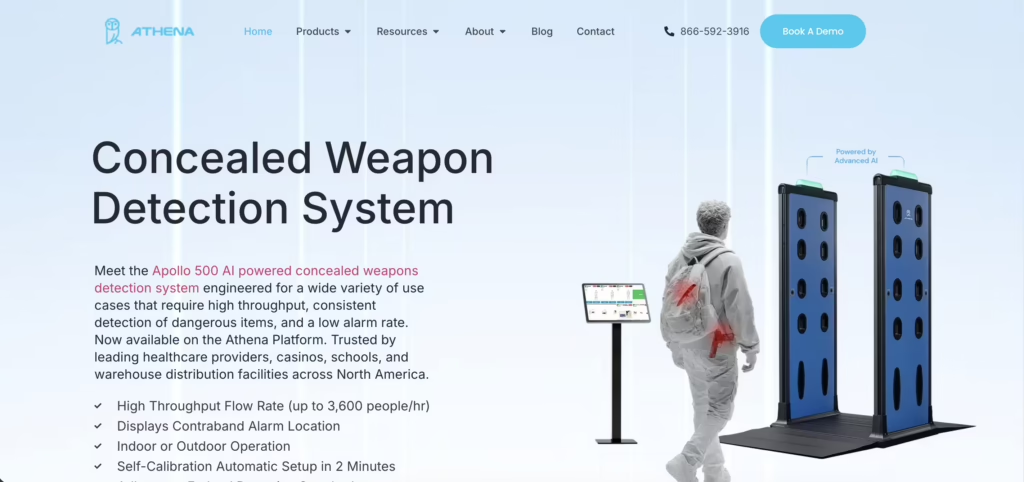
Our Apollo 500 Weapons Detection System utilizes advanced AI to instantly identify guns and other threats in real-time. It alerts security teams the moment a weapon is spotted, reducing response time and enhancing safety. Designed for high-traffic environments, it improves situational awareness while minimizing false alarms, helping hospitals proactively prevent potential violence and protect people.
How This Gun Detection System Works
- AI-powered visual analysis screens individuals as they walk through.
- Detects firearms and knives without relying on metal detection.
- Filters out phones, keys, belts, and medical devices.
- Triggers real-time alerts the moment a threat is identified.
- Visually highlights the weapon’s location on the body.
- Passive, non-invasive operation for continuous high-traffic screening.
Watch below how Apollo 500 hardware works in real hospital scenarios:
Gun Detection Accuracy and Coverage
- AI-based threat recognition focused on guns and knives.
- Extremely low false alarm rate in busy environments.
- Visual localization removes uncertainty during secondary screening.
- Maintains accuracy during peak traffic periods.
- Consistent coverage across multiple hospital entry points.
- Designed for healthcare and other public-facing facilities.
Speed and Alerts
- Real-time detection without stopping or slowing foot traffic.
- Instant alerts delivered at the point of detection.
- Visual threat indicators accelerate response decisions.
- Optional audible alerts for high-noise environments.
- Built for high-throughput entrances and continuous operation.
Integration and Deployment Fit
- Frontline weapon detection within a unified security ecosystem.
- Integrates with AI-Assisted X-ray scanners, visitor management, AthenaVision AR glasses, and telepresence security officers.
- Open and documented APIs for third-party cameras and sensors.
- Real-time two-way data sharing between systems.
- Monitoring from one central security location.
- EPIC-compatible deployment.
- Includes H-Shield DNS security as part of the platform.
Privacy, Compliance, and Patient Trust
- Privacy-first detection that triggers only when a threat is identified
- Encrypted data governed by hospital security policies.
- Passive screening with no physical searches.
- Safe for individuals with medical implants.
- ADA-compliant and accessible for all visitors.
- Calm, patient-friendly screening experience.
Pricing
- Rent-to-own pricing model with predictable monthly payments.
- Typical cost is approximately $2,000 per month.
- The payment period generally spans 4 to 5 years.
- Full system ownership after completion of payments.
- No large upfront capital investment required.
Athena Security Gun Detection System is a Good Fit For
- Emergency departments and behavioral health units.
- Main hospital entrances with high daily foot traffic.
- Facilities requiring non-invasive weapon screening.
- Security teams, who need visual confirmation of threats.
- Hospitals prioritizing safety without disrupting care.
May not be ideal if:
- You are looking for a legacy metal detector that alerts on every metallic object.
- Your security approach prioritizes sensitivity over accuracy.
- You prefer generic screening tools rather than advanced systems designed for hospital workflows.
- Your team does not require visual confirmation to guide response decisions.
Case Study Highlight
Jefferson Regional Medical Center deployed our gun detection and visitor management systems to transform its security operations. The system connects visitor check-in with weapons screening and sends real-time alerts when a person of interest enters. This integrated setup saved the hospital time, money, and staffing costs, while giving security a clearer picture of who’s coming in and what they’re carrying.
Watch this video to see the details of this partnership.
Here’s what our other clients are saying:
“It catches what the human eye cannot. It’s a force multiplier.”
— District Police Chief, Texas School District.
If you want to experience how our AI-powered gun detection system can improve your hospital’s security, book a free demo with Athena Security or call +1-866-592-3922.

Evolv Technology’s Evolv Express and Evolv eXpedite: For Concealed Weapons Detection
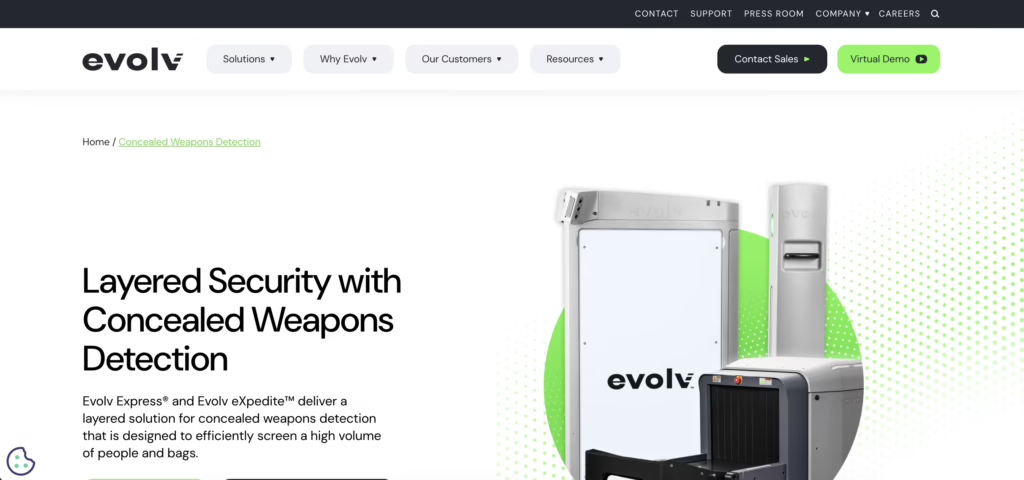
Evolv’s weapon detection system combines Evolv Express®, a touchless AI-based concealed weapons scanner that lets people walk through without stopping while detecting potential threats on their person, and Evolv eXpedite™, an autonomous AI-powered X-ray bag screening solution that scans bags at high speed without unpacking. Together, they create a layered, high-throughput checkpoint that flags threats with clear alerts for fast secondary screening.
 Source: evolv.com/concealed-weapons-detection
How This Gun Detection System Works
- Screen people and bags for hidden weapons using Evolv Express® and Evolv eXpedite™ together.
- Designed for high-clutter bag environments requiring heightened sensitivity.
- AI-driven detection of concealed firearms, knives, and explosives.
- Real-time alerts delivered via the Express tablet with “Red Box” visual localization.
- Software-driven performance improvements delivered through ongoing algorithm updates.
Gun Detection Accuracy and Coverage
- Detects a wide range of firearms and bladed weapons.
- Identifies concealed weapons in bags and on the body during walk-through screening.
- Screens multiple people at once without slowing foot traffic.
- Visually pinpoints the individual and object when a threat is detected.
- May trigger false alerts from dense metal items like laptops or wheelchairs.
Speed and Alerts:
- Evolv Express can screen up to 4,000 people per hour for a dual-lane system.
- Families and groups can enter a venue together at their normal walking pace.
- The alert is sent to the security staff in charge through the Express tablet.
- The alerts are primarily visual but can be integrated with the alarming system.
Integration and Deployment Fit
- Integrates with existing CCTV camera infrastructure.
- Connects with SOCs through major VMS platforms like Genetec and Milestone.
- Sends alerts, metadata, and threat images to third-party security systems.
- Uses open APIs for custom workflows and integrations.
- Delivers alerts via tablet without direct lockdown or access control.
Privacy, Compliance, and Patient Trust
- Captures standard images and short video clips only when a potential threat is detected.
- Does not collect, process, or use personally identifiable information.
- No facial recognition; AI evaluates objects.
- Threat images are displayed with visual highlighting and automatically deleted after 30 days.
- Reported as HIPAA-compliant for healthcare deployments, with SOC 2–aligned security practices.
Pricing and Best Fit
- Subscription-based pricing per system, not per camera.
- Operates using two modules: Evolv eXpedite™ and Evolv Express®.
- Typical cost ranges from $2,500 to $3,000 per month over a four-year lease.
- Total system pricing commonly falls between $5,000 and $10,000.
- Significantly higher cost compared to traditional metal detectors.
Evolv’s Gun Detection System is a Good Fit For
- Organizations with the budget to absorb high upfront and long-term lease costs.
- Environments willing to trade higher operational complexity for layered entrance screening.
- When additional staffing is available to manage frequent secondary screenings and false alerts.
May not be ideal if:
- You want to have a gun detection system at a lower cost.
- You expect reliable operation without dependence on continuous power and network availability.
ZeroEyes’s Software: For Automated Optical AI Firearm Detection
ZeroEyes’ firearm detection platform connects to existing security cameras and uses AI to analyze live video for visible firearms continuously. Potential threats are instantly flagged and reviewed by trained analysts before verified alerts are delivered within seconds. Together, AI detection and human verification create a real-time monitoring layer that improves situational awareness and enables faster, more informed responses.
Source: zeroeyes.com
How This Gun Detection System Works
- Analyzes over 36,000 images per second from live video feeds.
- Flags suspected firearms and forwards images to the ZeroEyes Operation Center.
- Uses trained specialists to verify whether a firearm is present.
- AI is trained on real-world data to detect guns only.
- Does not perform facial recognition, voice recording, or invasive tracking.
Gun Detection Accuracy and Coverage
- Detects pistols and AR-style rifles.
- Continuously updates AI to recognize more types of firearms.
- Cannot detect guns hidden in bags or under clothing.
- Uses 24/7 human verification before confirming threats.
- Detects guns in crowded areas with minimal visibility.
Speed and Alerts
- Sends alerts within 3–5 seconds after human verification.
- Uses 24/7 review by trained military and law enforcement staff.
- Delivers visual alerts with weapon images and location details.
- Escalates through a centralized set response plan.
Integration and Deployment Fit
- Integrates with existing CCTV cameras and monitors live video feeds for firearms.
- Connects with access control, lockdown systems, and VMS platforms.
- Streams live captured imagess and alerts directly to responders.
- Logs all detections for review and incident analysis.
- Supports SOC integration using existing security infrastructure.
Privacy, Compliance, and Patient Trust
- Detects firearms only and does not analyze personal identity data.
- Does not use facial recognition or biometric identification.
- Complies with privacy regulations such as HIPAA.
- Stores detection images only when permitted, using encrypted transmission and storage.
- Allows customers to define data retention timeframes.
Pricing
- Priced under $60 per camera per month, with discounts at scale.
- Subscription enhances existing cameras with added situational awareness.
ZeroEyes Gun Detection System is a Good Fit For
- Detecting only visible guns.
- When hidden weapons are not a priority.
- Environments focused on guns only, not other threats.
- Situations where human verification delays are acceptable.
- Fits use cases prioritizing low cost over broader coverage.
May not be ideal if:
- You need to detect hidden or concealed weapons.
- The environment needs non-gun threat detection.
- Fully automated, instant alerts are required.
How to Choose the Right Gun Detection System for Your Hospital
“In healthcare, it all comes down to reliability when every second counts. Other directors I know always ask for a live demo, right here in our environment. A reference from another hospital can help, but seeing the system work in real time is what actually seals the deal.”
Says Aja Chavez, Executive Director of Mission Prep Healthcare, and we couldn’t agree more.
Our one strong recommendation before you make a final decision: Book a demo.
Every vendor on your list should be able to show you how their system works live. And when you’re in that demo, use the following checklist.
It’s simple and designed specifically for hospital security teams like yours. These are the questions that separate marketing claims from operational reality. Bring it to every vendor meeting.
Hospital Gun Detection System Evaluation Checklist
- Does the system detect both visible and concealed firearms reliably?
- Has the product been deployed successfully in hospital environments before?
- Can it integrate with your existing security infrastructure (cameras, access control, SOC, EPIC)?
- How often does it trigger false positives?
- How quickly are alerts delivered and to whom? (Mobile, SOC, security officers, AR glasses for security officers)
- Does it allow your team to respond silently and in real time, without escalation?
- Can it scale across multiple entrances, buildings, and facility types?
- Is the screening process non-intrusive and ADA/HIPAA-compliant?
- Does the vendor offer software-level protections beyond just hardware detection? (Like DNS security for healthcare)
- Is the system continuously updated and improving through AI and client feedback?
- Do they offer free live demos tailored to hospital workflows?
- Will your staff need minimal retraining to use it day-to-day?
- Does it reduce long-term operational risk and staffing burden?
- Can you roll it out in phases without disrupting care delivery?
While this checklist gives you a solid starting point, there are still a few things hospitals often get wrong when deploying these systems. In the next section, we’ll break down what those mistakes are and how to avoid them.
Common Deployment Mistakes Hospitals Make While Deploying a Gun Detection System
Even with the right product in hand, it’s easy to run into problems during deployment. We’ve seen hospitals spend time and money on systems that underdeliver because the rollout missed key considerations.
Here are some of the most common mistakes to watch out for:
- Deploying technology without clear operational protocols: Even with top-tier systems, hospitals regularly fail to define what staff should actually do when an alert triggers or a weapon is found. Without clear, documented procedures, dangerous weapons will inevitably slip through the cracks.
- Neglecting human verification for alerts: Hospitals make the mistake of trusting automated alerts blindly rather than verifying them with the human eye. This lack of validation can lead to severe and dangerous false positives, such as the “Dorito bag incident,” where police were dispatched because a system mistook a student’s snack for a firearm.
- Misunderstanding the specific detection technologies: Hospitals frequently confuse concealed weapons detection with visual light gun detection, mistakenly assuming these entirely different technologies do the same thing.
- Ignoring fire marshal regulations and egress rules: Facilities often install heavy, unmovable detection systems in tight spaces or small hallways. If the system does not have a quick-release feature to be easily dismantled during a fire, it will violate fire egress codes and be rejected by the fire marshal.
- Poor placement and ignoring critical entry points: Mistakes include placing the screening systems too far from the facility and leaving highly vulnerable areas, like the ambulance bay, completely unmonitored.
If you want to avoid these missteps and work with a partner who won’t just sell you a system but stay with you through every phase of protecting your hospital, talk to Athena Security.
A Gun Detection System That Protects People, Not Just Perimeters
We know how heavy this decision can feel. Choosing the right gun detection system for your hospital isn’t only about specs or pricing. There is pressure, liability, and the unspoken weight of knowing that one decision could save a life or fail to.
At Athena Security, we get that. We’ve worked with hospitals that were overwhelmed by the process. They were unsure about performance, worried about budget, and scared of picking the wrong solution. But more than anything, they were looking for someone who actually understood what was at stake.
That’s why we don’t approach this as just a deployment. We treat it like what it really is: a shared responsibility to protect lives.
When you partner with us, you’re not getting a vendor. You’re gaining a security ally. One who listens, supports, adapts, and walks with you every step of the way.
When you reach out, here’s what happens:
We’ll walk you through a live demo of our AI-powered Weapon Detection System, showing exactly how it works in a hospital environment. Then, we’ll sit with your team to understand your facility, your traffic flow, and your security priorities.
Our system is customizable, fast to deploy, and already trusted by hospitals across the country. And because it’s designed specifically for healthcare, it fits in without disrupting care, privacy, or flow.
At the end of the day, our mission is simple: to save lives. And if your hospital shares that mission, we’d be proud to stand with you.
If that sounds like the kind of partner you need, book a demo with us today.
FAQs About Hospital Gun Detection Systems
Choosing a gun detection system for a hospital can feel overwhelming, especially when hospital environments are so unique. Here are some of the most common questions we get from security leaders.
Don’t see your question listed? Call us at +1-866-592-3916. We’re here to help.
1. What Is The Best Gun Detection System?
Our AI-powered weapons detection system is one of the best options available. It’s built to spot concealed weapons, helping security teams respond faster and prevent violence.
That said, every hospital is different. Some systems may suit other environments better. But our solution works across a wide range of hospital sizes and workflows. Refer to this to find a solution suited for you. Or even better, book a demo and use the checklist to see which gun detection system is best for you.
2. How Much Does A Gun Detection System Cost?
Costs can vary based on how many entrances you’re securing, what kind of integrations you need, and your hospital’s size. We offer flexible pricing based on your setup.
To get exact numbers, it’s best to book a demo and talk through your needs with our team.
3. Can Gun Detection Systems Detect Improvised Or Unusual Firearms?
Yes. Our gun detection system is designed to detect a wide range of firearms, including non-traditional or improvised weapons that don’t look like standard guns. The AI helps identify shape, size, and other visual cues, making it more reliable than basic metal detectors.
4. Can Gun Detection Systems Be Bypassed?
No. Our system is designed to detect and respond if someone tries to bypass it. The evasion detection feature identifies when a person avoids the screening checkpoint. When that happens, it can trigger alerts or even lock down access points, ensuring the person is stopped and reviewed.
Check out how our weapons detection system identifies and flags people who are trying to bypass the gun detection system.
5. What Happens After A Gun Is Detected?
When a weapon is detected, our system immediately triggers an alert with lights, an audible signal, and a visual display on the operator tablet showing exactly where the weapon is located (e.g., in a bag, boot, or waistband).
The person is then directed to secondary screening, where a security officer does a quick check and ensures any items are removed. The process is fast, clear, and built to reduce panic while keeping everyone safe.
Watch it happen below.
6. How Do Patients, Visitors, And Staff Typically React When They Learn A Gun Detection System Is In Place?
Most feel safer because our system doesn’t require bag checks or pat-downs. It blends into the environment without creating fear or friction. Staff appreciates the added protection, and visitors see it as a sign the hospital takes safety seriously.
7. How Should Smaller Hospitals Or Outpatient Facilities Decide If A Gun Detection System Is Right For Them?
Start by reviewing your foot traffic, entry points, and security incident history. If your facility is open to the public and patient-facing, even at a smaller scale, a gun detection system can help reduce risk without adding staffing pressure.
8. How Do I Start A Partnership With Athena Security?
It’s simple. Book a free demo with us. We’ll walk you through how the system works, understand your hospital’s unique needs, and show you exactly how we can help. From there, we’ll create a deployment plan tailored to your facility.
Disclaimer: The information provided in this article is based solely on publicly available sources and is intended for general informational and guidance purposes only. It should not be relied upon as a final decision-making resource or as a substitute for professional advice. While we strive for accuracy and completeness, we make no representations or warranties regarding the correctness, reliability, or suitability of the content. If you believe any information should be updated, corrected, or removed, please contact our team for review.