Highlights:
Screen 400+ people per hour at normal speed
Reduce false positives by 99.9% compared to metal detectors
Deploy across multiple entry points with one monitoring station
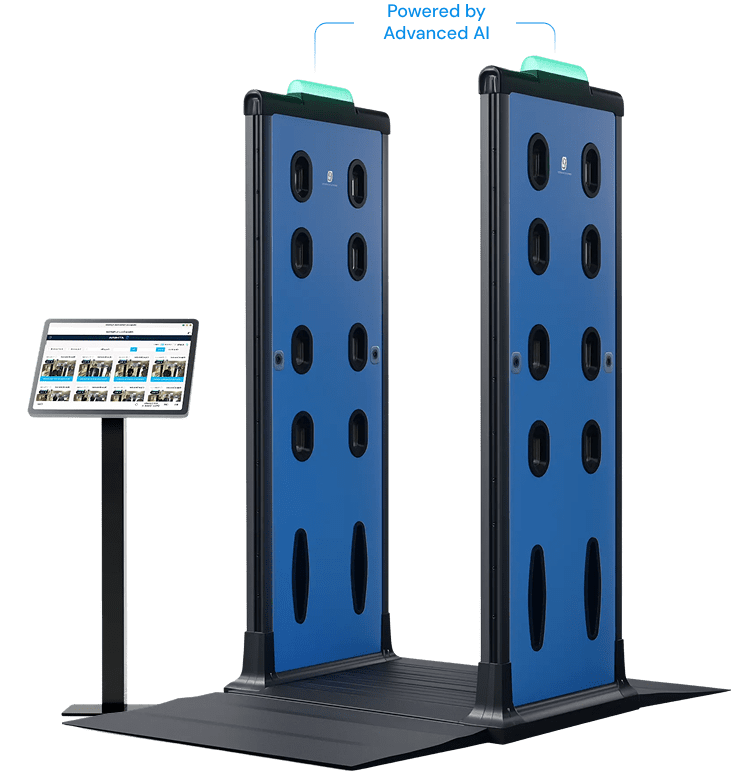

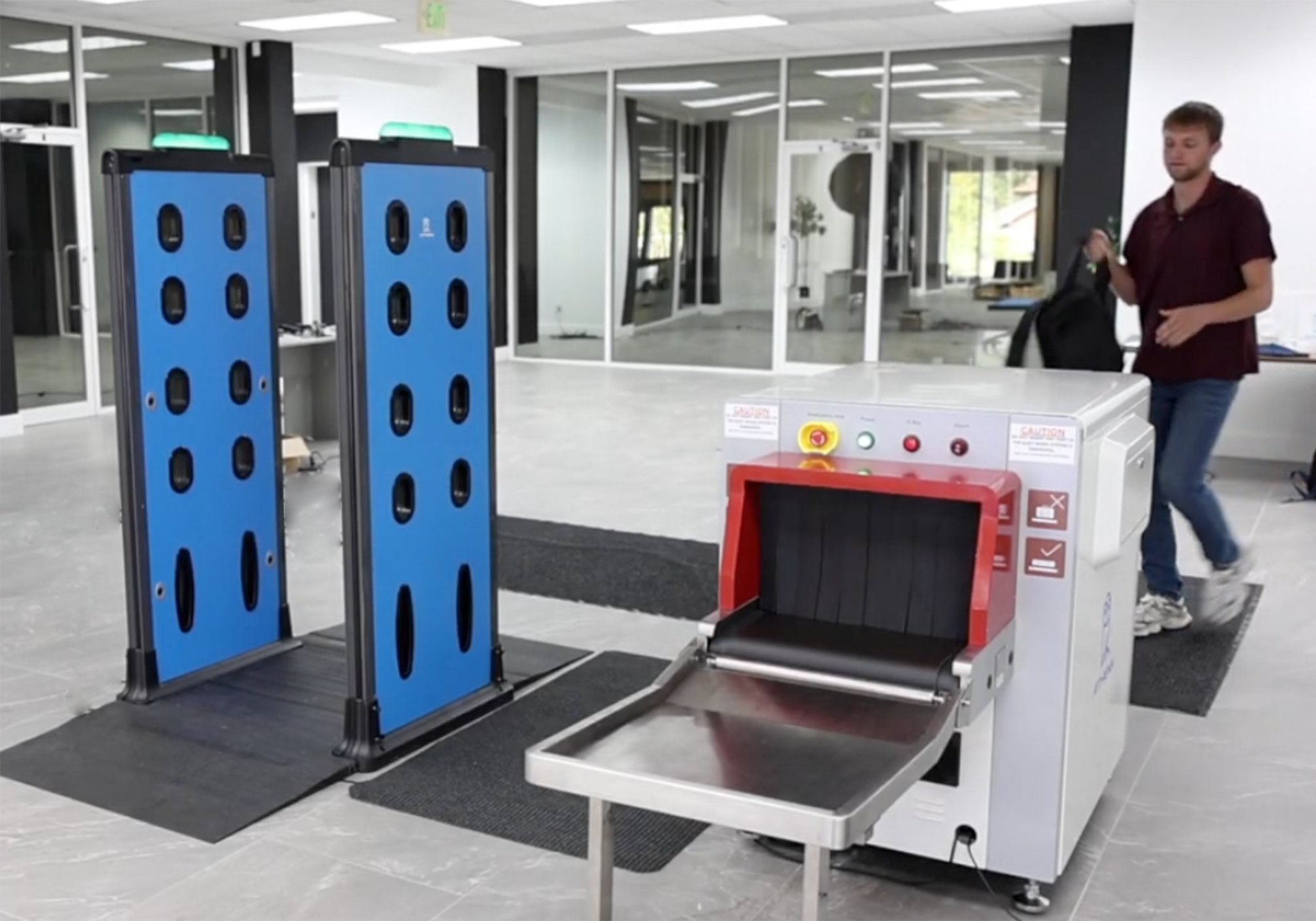
Athena Security has deployed weapons detection systems in over 500 healthcare facilities nationwide since 2018. Our platform is trusted by Duke Health, Memorial Hermann Health System, and Jefferson Regional Medical Center.
Our AI-powered system works passively as people walk through at normal speed. Your staff stays focused on patient care, not security operations. The system distinguishes between genuine threats and medical devices, reducing false alarms.
Our weapons detection system screens every person entering your hospital without slowing foot traffic. Healthcare facilities use this technology to maintain welcoming environments while preventing firearms and dangerous items from reaching patient care areas.
The platform uses computer vision and thermal imaging to analyze concealed objects as people pass through. Security teams receive silent alerts with visual verification on tablets or phones. The screening process remains invisible to patients and families.
Our AI X-ray technology enhances baggage screening in emergency departments where bags must be checked. Hospitals use this solution to identify threats inside bags and packages without manual inspection while security operators focus on response.
The system runs on Apple iPad Pro, processing threat detection locally for faster alerts. If an operator steps away, the system automatically locks and shuts down. Your team receives instant notifications of screening process violations.
Our visitor management platform integrates with weapons detection to create a unified hospital security solution. Healthcare institutions use this system to screen visitors against watchlists, verify identities, and track everyone entering the facility.
Visitors check in using a self-service kiosk that scans driver’s licenses and prints badges with destination information. Your security teams see real-time data on who’s in the building and whether they’ve been screened for weapons.
Our AR alert glasses provide security personnel with hands-free threat notifications. Healthcare security teams receive weapons detection alerts instantly, even when managing visitor flow or assisting patients.
When the weapons detection system identifies a threat, the AR glasses immediately notify the assigned officer with visual details and location data. Your security staff responds faster without checking tablets or waiting for radio calls.
Athena delivers capabilities other security solutions cannot match. Our platform addresses real-world challenges security personnel face while helping organizations meet federal compliance requirements.
Most weapons detection vendors lock you into proprietary equipment. That means limited choices and potential vendor dependence for years. Athena’s platform works with Apollo 500, Apollo 650, CEIA Opengate, Garrett, and Metrasens Ultra systems. You select hardware that matches your throughput requirements, budget constraints, and facility layout.
Athena is the only platform designed specifically around Department of Homeland Security best practices for patron screening. The system digitizes and enforces guidelines including documentation requirements, testing protocols, and secondary screening procedures. When auditors arrive, you have complete documentation.
We pioneered and patented technology that detects visitors attempting to bypass screening entirely. Traditional metal detectors only monitor the portal itself. Our computer vision algorithms monitor the entire screening area continuously. When individuals attempt to evade detection, security staff receive instant notifications. This proactive threat detection catches attempts other gun detection systems miss completely.
While competitors offer point solutions, Athena integrates weapons detection with visitor management, AI X-ray screening, telepresence security, and augmented reality alert glasses. When the X-ray system detects a threat, it automatically alerts AR glasses and triggers personalized hologram instructions. That integration creates layered security measures traditional systems cannot provide.

Security leaders at Duke Health, Memorial Hermann, and Lamar Consolidated ISD trust Athena to protect their people. See why hospitals, schools, and government buildings choose our platform. Book a 30-minute demo and we’ll show you exactly what our concealed weapons detection system can do for your facility.
You schedule a consultation, and we listen. Our specialists respond within 24 hours to understand your hospital’s specific security requirements, entry point configurations, and patient flow patterns.
We visit your facility to assess entry points, traffic patterns, and integration requirements with your existing systems. Your operations continue without interruption while we develop a comprehensive security plan.
You receive a detailed proposal with ROI projections, DHS compliance documentation, staffing impact analysis, and answers to all your questions before you commit to any purchase.
We install during off-hours so your hospital stays fully operational. Our team integrates seamlessly with your existing security infrastructure, access control systems, and video management platforms.
Your security teams get comprehensive training on system monitoring, alert response, and compliance procedures. We stay on-site for two days post-installation and provide 24/7 support for all technical issues.
Healthcare facilities face a unique challenge: maintaining open, welcoming environments for patients and visitors while protecting against active threats and workplace violence. Traditional security measures create bottlenecks and project an institutional atmosphere that contradicts healing environments.
Metal detectors create 10-15 minute wait times at hospital entrances during visiting hours, frustrating families and delaying access to patients.
Our passive screening technology processes 400+ people per hour with zero wait times. Visitors walk through.
Traditional systems trigger alarms for medical devices, wheelchairs, insulin pumps, and personal items, requiring constant security intervention and creating patient anxiety.
AI-powered detection distinguishes between genuine threats and harmless items, reducing false positives by 99.9% compared to metal detectors.
Healthcare facilities have multiple entry points, but can’t staff security personnel at every door without significant cost increases and staffing challenges.
One monitoring station covers all entry points simultaneously, with AI prioritizing alerts so security operators respond only to actual threats.
Emergency departments experience the highest rates of workplace violence in healthcare settings, with staff members facing verbal and physical threats daily.
Real-time threat detection at ED entrances prevents weapons from entering treatment areas, giving staff confidence to focus on patient care.
Manual screening processes fail to generate the documentation required by Joint Commission, CMS, and state healthcare security regulations for accreditation.
Automated logging captures every screening event, prohibited item, and security response with timestamps and images for complete DHS compliance.
Security personnel worry that screening technology will interfere with pacemakers, defibrillators, and other implanted medical devices that patients depend on.
Low-frequency electromagnetic technology is third-party tested and proven safe for all medical devices, with full compliance documentation for regulatory reviews.
Many hospital administrators delay security upgrades, prioritizing immediate patient care needs or waiting for capital budget cycles. The costs of inaction compound daily, affecting your staff safety, regulatory compliance, and community reputation.

Hospitals without modern threat detection face lawsuit settlements of $2-5 million after violent incidents. Your liability insurance premiums increase 30-50% following publicized security failures.
Healthcare workers who experience threats report 40% higher burnout. Hospitals with security incidents face 23% higher staff turnover, with replacement costs averaging $52,000 per nurse.
Joint Commission and CMS require documented violence prevention programs. Facilities without threat detection risk failed surveys, Medicare penalties, and accreditation delays that halt admissions.
Security incidents spread through your community within 48 hours. Competing hospitals with visible safety measures capture your referrals, causing 15-25% declines in elective procedure volumes.
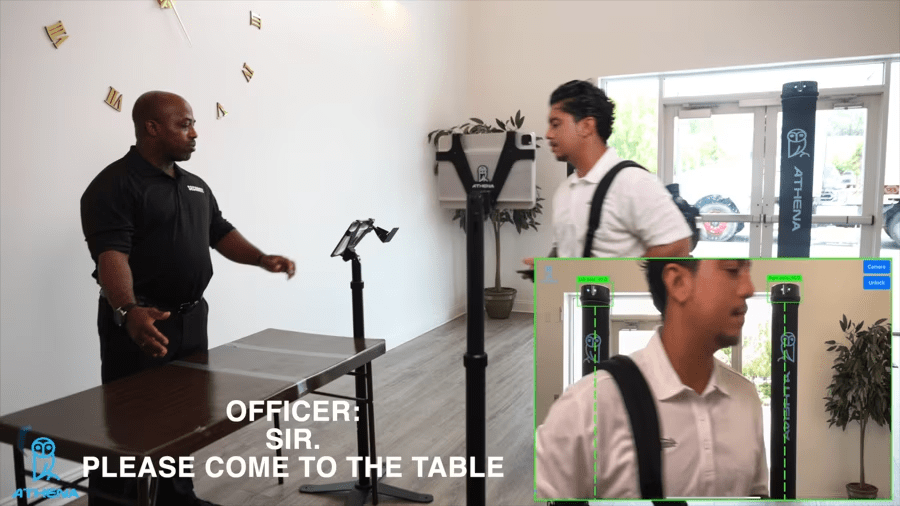
Costs vary based on your facility size, number of entry points, and integration needs with existing security infrastructure. We provide free security assessments to recommend the right solution for your budget. Many hospitals see ROI within 18 months through reduced security staffing requirements, lower liability insurance premiums, and improved operational efficiency. Total cost includes hardware, software licensing, installation, and training.
Athena is the only weapons-detection platform designed to meet Department of Homeland Security best practices. We work with multiple hardware options (CEIA Opengate, Apollo, Garrett, Metrasens) instead of locking you into proprietary systems. Our platform integrates weapons detection, visitor management, and AI X-ray into one unified solution. We’ve deployed in over 500 healthcare facilities with documented results that prove effectiveness.
Yes. Our platform integrates with major video management systems, access control platforms, and alarm systems that hospitals already use. The weapons detection system connects to your existing security infrastructure through standard protocols. We work with your IT and security teams during installation to ensure seamless integration without disrupting hospital operations or requiring replacement of functional equipment.
Most hospital deployments take 4-6 weeks from contract signing to full operation. This includes security assessment, custom configuration, installation at multiple entry points, integration with existing systems, and comprehensive staff training. We install during off-hours to avoid disrupting patient care. Emergency departments and high-priority entrances can be operational within 2-3 weeks if timeline acceleration is needed.
If your facility has experienced threats, if staff members report feeling unsafe, if you’re located in an area with high crime rates, or if you’re struggling to meet Joint Commission or CMS security requirements, it’s worth scheduling an assessment. Emergency departments, behavioral health units, and main entrances face the highest risk. California hospitals must comply with AB 2975 by 2027, requiring weapons detection.
We provide comprehensive on-site training for security teams, covering system monitoring, alert response, secondary screening procedures, and DHS compliance documentation. Our team stays on-site for a minimum of two days after installation to ensure smooth operation. You receive 24/7 technical support through our support portal, with average response times under 15 minutes for critical issues affecting patient safety.
Our system is designed to be invisible to patients and visitors. People walk through at normal speed without stopping, emptying pockets, or removing personal items. There are no visible metal detector gates or security theater that creates anxiety. False alarms are reduced by 99.9%, so visitors aren’t subjected to embarrassing secondary screening for medical devices or harmless items. The screening process maintains the welcoming environment healthcare facilities need.
Our AI-powered system detects both ferrous and non-ferrous weapons with high accuracy rates that exceed traditional metal detection. The technology identifies firearms, knives, and dangerous items that metal detectors miss. More importantly, our system dramatically reduces false positives by distinguishing between threats and everyday items like keys, phones, medical devices, and wheelchairs. Security operators focus on genuine threats instead of constant false alarm management.
Our AI-powered system detects both ferrous and non-ferrous weapons with high accuracy rates that exceed traditional metal detection. The technology identifies firearms, knives, and dangerous items that metal detectors miss. More importantly, our system dramatically reduces false positives by distinguishing between threats and everyday items like keys, phones, medical devices, and wheelchairs. Security operators focus on genuine threats instead of constant false alarm management.
Our AI-powered system detects both ferrous and non-ferrous weapons with high accuracy rates that exceed traditional metal detection. The technology identifies firearms, knives, and dangerous items that metal detectors miss. More importantly, our system dramatically reduces false positives by distinguishing between threats and everyday items like keys, phones, medical devices, and wheelchairs. Security operators focus on genuine threats instead of constant false alarm management.
You need a platform that catches threats before they enter your facility. Athena’s AI-powered system works with the hardware you choose while adding intelligent oversight that traditional metal detectors lack. Our technology helps you meet DHS best practices, reduce staffing gaps, and document every screening for compliance auditing.