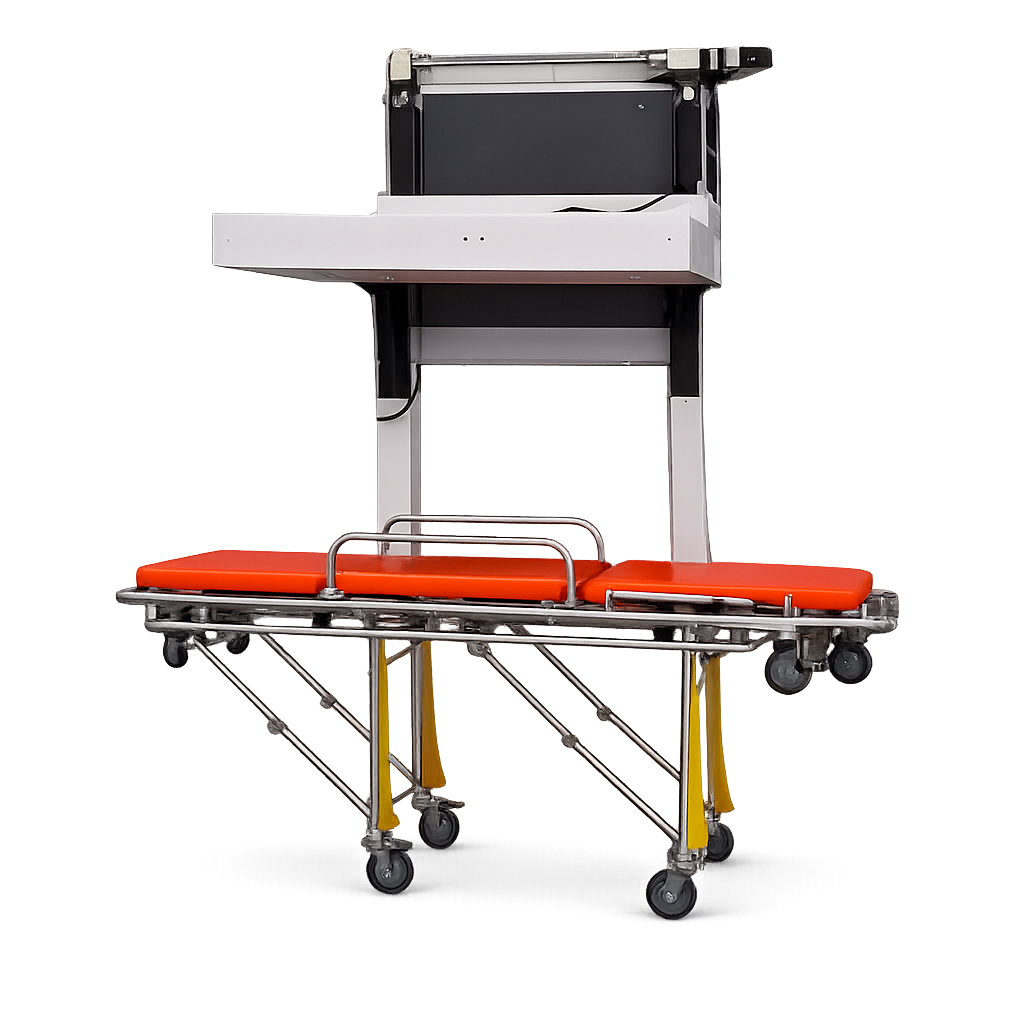
Your front-door screening checkpoint does not cover ambulance bay arrivals. Stretcher patients cannot walk through standard weapons detection systems, and that gap creates an unmonitored process where undetected weapons entering the emergency department bypass every control you have in place. Athena Security’s ambulance bay weapons detection workflow screens patients arriving by emergency medical services (EMS) at the entry point itself, with documented screening protocols built into every intake.
Highlights:
Screens stretcher patients at EMS entry
DHS best practices aligned workflow
Digital documentation with photo capture
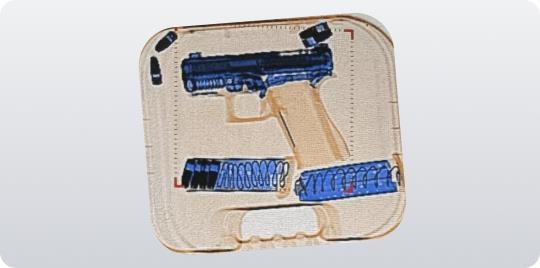
Athena Security has deployed AI-assisted X-ray solutions across airports, government facilities, and high-security venues since 2018. Our platform integrates with existing baggage screening operations and works with major X-ray hardware systems.
Unlike traditional X-ray scanners that require operators to manually identify every potential threat, our artificial intelligence analyzes each scan automatically. Your security personnel focus only on verified alerts, improving accuracy while reducing operator fatigue.
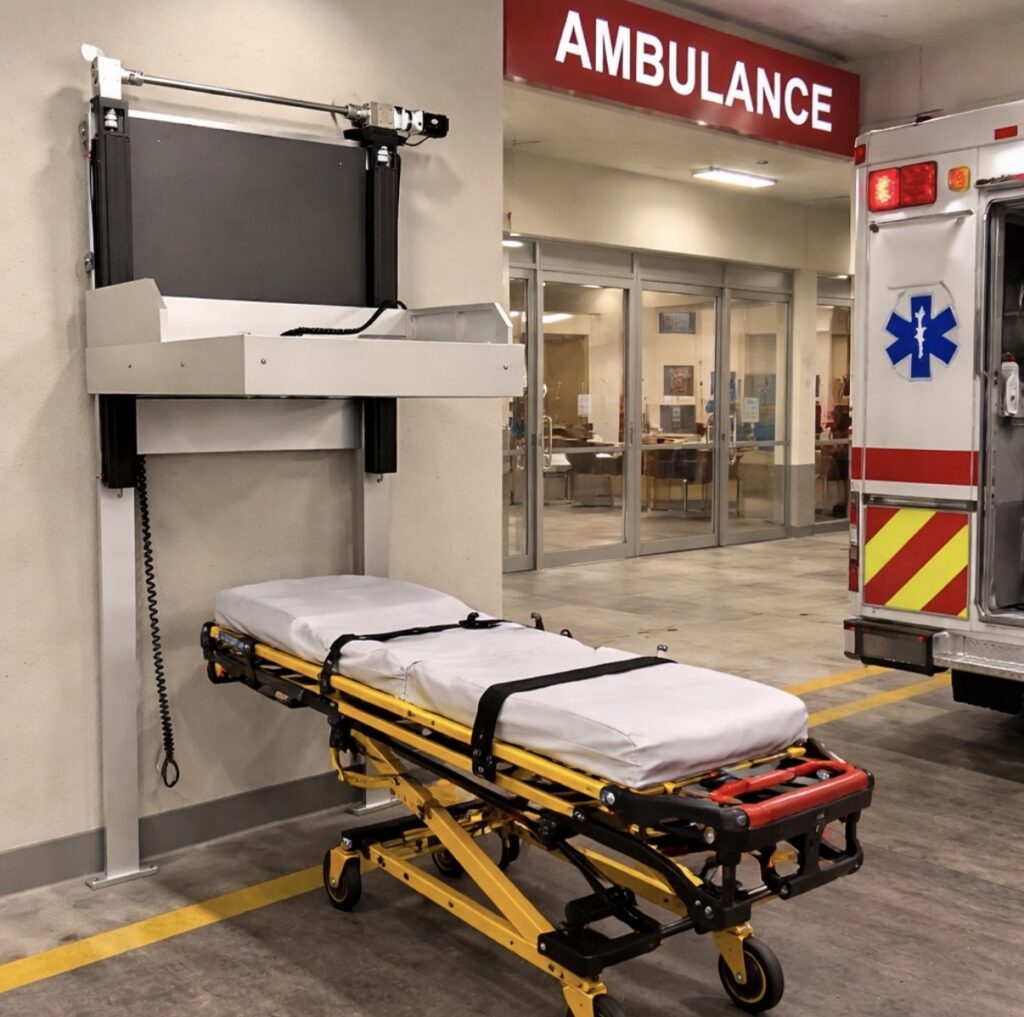
Ambulance bay weapons screening uses radar imaging positioned at the emergency bay entrances. Unlike the standard concealed weapons detection system at your lobby, the AB-WDS detects both metallic and non-metallic threats on patients who cannot stand or walk. The system resolves images through clothing and some medical equipment to identify concealed weapon shapes while ignoring the stretcher itself.
An operator runs the screening from a single Apple iPad console. The onboard AI analyzes threats in real time and displays a heat-map or skeletal overlay, pinpointing the location of any suspected weapon. Every screening generates a digital record with photo capture, confiscated-items log, operator attribution, and chain-of-custody receipt. Operator App and AI Oversight enforce accountability and integrate with your existing Athena entryway security systems.
Consistent screening surfaces weapons that ad hoc manual processes miss. A 2023 study published in the Journal of Emergency Nursing found that 567 weapons were confiscated after screening 43,321 patients and visitors over six months at a single institution.
The AB-WDS uses non-ionizing imaging radar energy to generate images. It does not alter cells or DNA and is considered safe for continuous use around patients, staff, and visitors. Radiation output stays at or below 2 W/m², well under public safety limits.
Noise output is 55 dB or lower, comparable to a normal conversation. The system operates without disrupting the emergency department (ED) environment, and it requires no special shielding or patient preparation. Your clinical team can work around the scanner during every screening without protective equipment or workflow interruption.
Emergency nurses report high rates of workplace violence. According to the Emergency Nurses Association, 56% of ED nurses were physically assaulted or verbally threatened in the previous 30 days. Screening at the ambulance bay closes a specific entry point where weapons bypass front-door controls and reach the emergency department staff who face the highest violence exposure in healthcare.
Every ambulance bay screening generates a centralized digital record: photo capture, confiscated-items log, operator attribution, and chain-of-custody receipt. Joint Commission expectations for safety and security incident documentation require facilities to document security incidents with specificity. Our platform records relevant details automatically during the screening, not after, so your compliance and reporting records are audit-ready without additional manual steps.
Manual screening at ambulance bay entry points varies by officer availability, shift staffing levels, and individual judgment under chaotic patient arrivals. Inconsistent screening leads to gaps that widen during high-volume periods. The platform enforces a repeatable, DHS best practices aligned protocol for every arrival, so screening does not depend on who is working or how busy the shift gets.
One operator manages the entire ambulance bay screening workflow from a single Apple iPad console. Traditional weapons screening checkpoints carry a significant staffing burden per entry point. Our single-console approach keeps the ambulance bay covered without pulling staff from other positions, and the system integrates with your broader Athena entryway platform so all screening data flows to one dashboard.
For hospitals with EMS entry points, the decision depends on whether stretcher arrivals are screened or bypass the checkpoint entirely.
| Factor | Ambulance Bay Screening | Lobby-Only Screening |
|---|---|---|
| Stretcher patient screening | Screens patients on stretchers at EMS entry | Requires ambulatory walk-through |
| Documentation at intake | Digital record with photo capture at point of arrival | Depends on manual officer documentation |
| Protocol consistency | Enforced screening protocol for every arrival | Varies by officer availability |
| Staffing at EMS entry | Single operator at ambulance bay console | No dedicated EMS entry screening staff |
| Weapons found in high-acuity arrivals | Addresses documented weapons presence in trauma bay arrivals per American College of Surgeons (ACS) and International Association for Healthcare Security and Safety (IAHSS) protocols | Does not screen trauma-bay arrivals |
Lobby-only screening is adequate when EMS volume is low and ambulance arrivals already route through a controlled checkpoint with existing detection. Dedicated ambulance bay screening becomes necessary for trauma centers, high-acuity EMS volume, and facilities where the ambulance bay connects directly to the ED without passing through any checkpoint that can detect concealed weapons.
Not every hospital needs screening at the ambulance bay. These conditions signal when it matters.
EMS arrivals bypass the lobby checkpoint entirely. Trauma activations involve patients arriving on stretchers who cannot be walked through standard screening, and the volume of those arrivals determines how large the unscreened gap is.
Your facility currently relies on hand wands or officer judgment for ambulance arrivals. Coverage varies across shifts, requiring manual screenings that depend on who is available and how they assess each situation.
Your ambulance bay connects directly to the ED without passing through any screening checkpoint. Weapons threats enter undetected through most emergency bay entrances that lack dedicated screening, and hospital emergency rooms face this as a unique security challenge distinct from lobby access.
Facilities with very low EMS volume where ambulance arrivals are negligible may not need a dedicated screening workflow. The same applies when all EMS arrivals already route through a controlled lobby checkpoint with existing weapons detection in place.
Organizational policy or accreditation expectations now require documented screening accountability and incident records at every entry point. IAHSS Guideline 04.05 (2025) formally recognizes weapons detection placement planning as a structured evaluation topic. Compliance pressure is driving hospitals to close gaps they previously accepted.
California’s AB 2975 requires hospitals to implement weapons detection by 2027. The mandate covers entry points broadly, and ambulance bays represent a gap that front-door screening alone does not close. Facilities building their compliance program should evaluate whether ambulance bay arrivals require dedicated screening to meet the standard.
You share your ambulance bay layout, EMS workflow, and current screening process so we can map the new system to your entry point configuration.
You see the ambulance bay screening workflow in action, configured for your specific entry point and stretcher-arrival conditions.
Hardware setup and software configuration happen at your ambulance bay entry. Integration with your existing Athena platform connects the new screening capability to your broader security program.
Your security team receives on-site training on the ambulance bay workflow. Our team remains on-site for a minimum of two days for configuration and issue resolution.
Cloud-based monitoring runs through the Athena Control Center Cloud. Your dedicated customer success team and support portal handle updates, questions, and configuration changes.
The platform works with Apollo 500, CEIA Opengate, Garrett, and Metrasens Ultra hardware, so you choose the system that fits your facility. Patented AI evasion detection catches bypass attempts at the ambulance bay entry. Every screening follows DHS best practices, documented automatically. Case studies show how this works in practice.
Screening won’t slow care. The workflow integrates into the EMS handoff process, not around it. One operator runs the process from a single Apple iPad console, and the platform captures documentation during the screening itself without adding manual steps.
No threat detection system can guarantee 100% effectiveness. Athena detection products are designed to enhance safety and help reduce threats when properly configured, deployed, and utilized. Athena solutions should be used as part of a comprehensive, multilayered security strategy.
Athena delivers capabilities other security solutions cannot match. Our platform addresses real-world challenges security personnel face while helping organizations meet federal compliance requirements.
Most weapons detection vendors lock you into proprietary equipment. That means limited choices and potential vendor dependence for years. Athena’s platform works with Apollo 500, Apollo 650, CEIA Opengate, Garrett, and Metrasens Ultra systems. You select hardware that matches your throughput requirements, budget constraints, and facility layout.
Athena is the only platform designed specifically around Department of Homeland Security best practices for patron screening. The system digitizes and enforces guidelines including documentation requirements, testing protocols, and secondary screening procedures. When auditors arrive, you have complete documentation.
We pioneered and patented technology that detects visitors attempting to bypass screening entirely. Traditional metal detectors only monitor the portal itself. Our computer vision algorithms monitor the entire screening area continuously. When individuals attempt to evade detection, security staff receive instant notifications. This proactive threat detection catches attempts other gun detection systems miss completely.
While competitors offer point solutions, Athena integrates weapons detection with visitor management, AI X-ray screening, telepresence security, and augmented reality alert glasses. When the X-ray system detects a threat, it automatically alerts AR glasses and triggers personalized hologram instructions. That integration creates layered security measures traditional systems cannot provide.
Security leaders at Duke Health, Memorial Hermann, and Lamar Consolidated ISD trust Athena to protect their people. See why hospitals, schools, and government buildings choose our platform. Book a 30-minute demo and we’ll show you exactly what our concealed weapons detection system can do for your facility.
| Category | Specification | Value |
|---|---|---|
| Imaging | Technology | Imaging Radar (non-ionizing) |
| Grid | 160 x 160 x 128 | |
| Mesh spacing | 6mm | |
| Scanning volume | 960 x 960 x 768mm | |
| Resolution | 10mm spatial / 5mm line | |
| Frame rate | 5 FPS or higher | |
| Safety | Noise | 55 dB or lower |
| Electrical | Voltage | 120V (±10%) |
| Power | 500W | |
| Frequency | 50 to 60 Hz | |
| Physical | Protection rating | IP20 (indoor, covered environments) |
| Interfaces | Connections | Power switch, leakage protector, power input, Gigabit Ethernet |
The AB-WDS mounts on a hydraulic stand that adjusts to patient intake height. The unit’s footprint is 1,076mm x 1,148mm with a depth of 101.5mm, compact enough for most ambulance bay configurations. At 30 kg, the system does not require structural reinforcement.
Power requirements are standard: 120V at 500W, comparable to a desktop computer. No dedicated circuit is needed in most facility configurations. The system connects to your network via Gigabit Ethernet, so your IT team will need a network drop at the ambulance bay entry point. The IP20 protection rating means the unit is designed for covered environments, so placement should be under the ambulance bay canopy or inside the vestibule rather than in an exposed outdoor location.
[Hospital Security →]
[School Security →]
[Casino Security →]
[Courthouse Security →]
[Hospital Security →]
[Airport Security →]
[Warehouse Security →]
[Corporate Security →]
[Stadium Security →]
[Venue Security →]
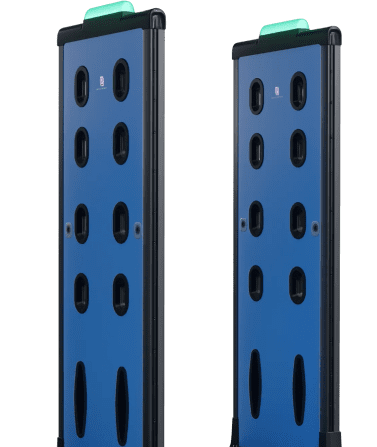
The device uses low-frequency electromagnetic technology, dynamic non-contact detection, and meets EMC electromagnetic radiation standards. It is safe for pregnant women, children, and other humans, as well as pacemakers and electronic devices.
EN 45502-2-1:2003. (Cardiac pacemakers)
EN 45502-2-2:2008. (Implantable defibrillators)
ISO 14117:2019. (Cardiac pacemakers, cardioverter defibrillators, cardiac resynchronization devices)
ISO 14708-1:2014 (Implants for surgery)
ISO 14708-2:2019 (Cardiac pacemakers)
ISO 14708-3:2017 (Implantable neurostimulators)
ISO 14708-4:2008 (Implantable infusion pumps) ISO 14708-5:2020 (Circulatory support devices) ISO 14708-6:2019 (Implantable tachyarrhythmia treatment devices) ISO 14708-7:2019 (Cochlear implants, auditory brainstem implant systems)
Athena protects 500+ facilities across the United States. Our AI-powered gun detection system helps security teams at leading organizations create safer environments.
Duke Health deployed our weapons detection platform across 21 screening locations. Memorial Hermann relies on our technology at facilities across Houston. Lamar Consolidated ISD installed 24 systems throughout their school district. Jefferson Regional Medical Center, Franciscan Health Olympia Fields, Indiana Regional Medical Center, and Parkwest Casino chose Athena for integrated entryway security.

Ambulance Bay is on a yearly lease model structure.
Ambulance bay weapons detection screening targets stretcher arrivals at EMS entry points that bypass lobby checkpoints.
Lobby screening handles ambulatory visitors who can walk through standard systems. Ambulance bay screening handles patients who arrive horizontal on metal stretchers and cannot use walkthrough detection. The AB-WDS uses radar imaging rather than the electromagnetic technology in walkthrough systems, so it detects both metallic and non-metallic threats on a patient lying on a stretcher. The ACS finding that 9% of audited trauma activations had weapons present shows why this distinction matters for your facility’s risk profile: those arrivals never pass through your lobby.
The cloud-based platform receives continuous updates through Athena Control Center Cloud.
After installation, our team stays on-site until system is up and staff has been trained. Ongoing support runs through the Athena support portal and your dedicated customer success team. Software updates, monitoring, and configuration changes are delivered through the cloud platform without requiring on-site visits.
The workflow screens stretcher patients at the ambulance bay entry point during the EMS handoff process.
EMS personnel or staff push the stretcher under the AB-WDS scanner at normal walking pace. The scan completes in seconds, and the patient does not need to stand. Screening integrates into the arrival workflow rather than creating a separate checkpoint that interrupts patient transfer. The operator runs the process from a single console at the entry point while the EMS team continues its standard transfer procedures.
Ambulance arrivals bypass front-door screening, creating an unscreened path for weapons into the emergency department.
This is a risk-management gap, not just a detection gap. Hospital security programs that screen only the lobby leave the ambulance bay as an open entry point for undetected weapons threats. IAHSS Guideline 04.05 (2025) formally recognizes weapons detection placement planning as a structured evaluation topic, signaling that the industry now treats ambulance bay screening as a distinct consideration in healthcare security program design.
The screening workflow done on an Apple iPad creates a digital record with photo capture, operator attribution, and receipt at point of confiscation.
Joint Commission expectations for safety and security incident documentation require specificity in what was found, who found it, and when. The ACS case study showed 82% documentation compliance after adding weapon-screening fields to the EMR narrator. Our platform generates this documentation automatically during the screening, creating an audit trail that meets accreditation expectations without requiring officers to complete separate paperwork.
Evaluate workflow fit for stretcher arrivals, documentation capability, staffing model, and integration with your existing security program.
IAHSS Guideline 04.05 provides a framework covering placement, staffing, deployment planning, and process integration. Your evaluation should evaluate the type of detection as metal detectors will always alarm while a system purpose built for stretchers and Ambulance Bay will not.
Manual screening is hard since the stretcher is made of metal and screening depends on staff availability and judgment, which creates inconsistent screening coverage across shifts and arrival conditions.
Selective manual approaches rely on individual officers deciding who gets screened and when. During high-volume periods or shift changes, that discretion creates security gaps. One institution’s broader screening program found 567 weapons across 43,321 screenings by applying consistent protocols, surfacing weapons that selective processes miss.
A traditional weapons detection checkpoint can require the full-time equivalent of 4.3 individuals to staff during the week, per ASIS Security Management.
That figure accounts for shift coverage, breaks, and relief staffing for a single entry point. Workflow-integrated approaches like the hospital visitor management system reduce the staffing burden by consolidating screening onto a single operator console. For hospitals adding ambulance bay screening, the staffing model matters as much as the detection technology.
The ambulance bay screening workflow connects with the broader Athena entryway security platform including visitor management and incident reporting.
Joint Commission incident reporting expectations require facilities to link security events to patient records and facility documentation. Our platform connects weapons detection, the visitor management system, AI X-ray, and Athena Control Center Cloud into a single ecosystem. Ambulance bay screening data flows into the same centralized dashboard as your lobby screening, visitor records, and incident reports.
You need a platform that catches threats before they enter your facility. Athena’s AI-powered system works with the hardware you choose while adding intelligent oversight that traditional metal detectors lack. Our technology helps you meet DHS best practices, reduce staffing gaps, and document every screening for compliance auditing.