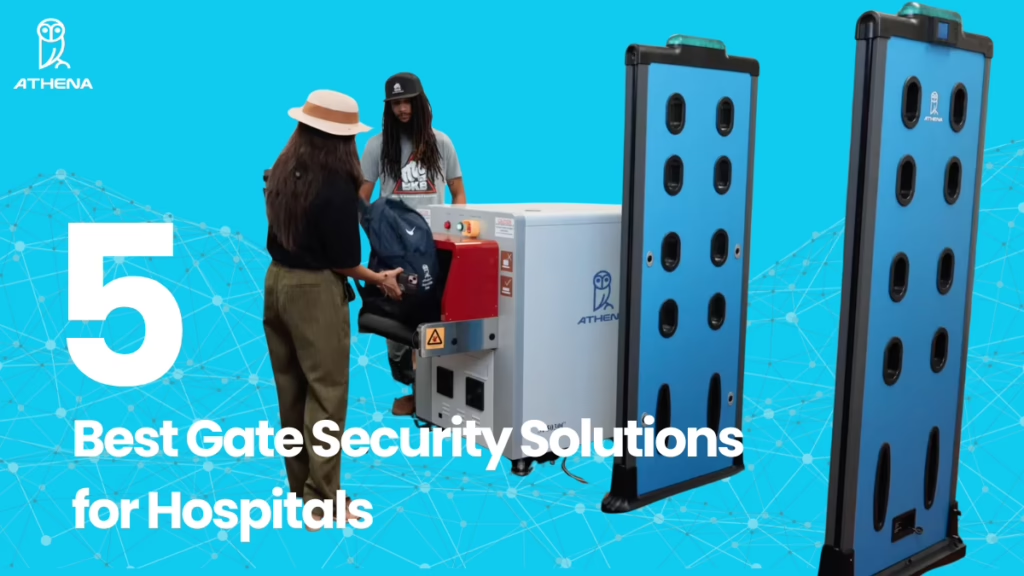

| TL:DR: This guide to the best gate security solutions for hospitals compares top systems built for threat detection, hospital safety, and patient flow. It covers why hospital gate security needs a higher standard, what effective gate security means in healthcare, and how modern AI-powered systems like Athena Security outperform traditional methods. Includes reviews, mistakes to avoid, and FAQs. |
A recent safety review at Ohio State’s Wexner Medical Center found that hospital metal detectors stopped more than 9,500 weapons in just one year. That included 72 firearms, 6,606 knives and blades, 231 stun guns, and nearly 800 other dangerous items.
That shows how important it is to stop threats before they enter the building.
For hospitals, this isn’t another interesting statistic. It’s a wake-up call. It’s your first and often only chance to stop a threat before it walks through the door. That’s why we put together this guide to walk you through the best gate security solutions for hospitals.
But first, let’s discuss,
Why Hospital Gate Security Needs a Different Standard
Hospitals aren’t like airports, schools, or office buildings. They’re open 24/7, filled with people in crisis, and designed to be as accessible as possible. But that openness comes at a cost.
Hospital entrances are often the highest-risk access points, where emotions run high, people arrive without warning, and bags, clothing, or even medical equipment can conceal weapons.
Guards, badge readers, and cameras do help, but let’s be honest: they can’t detect what they can’t see. And by the time a threat is visible, it may already be too late.
As Bryon Callies Jr., Associate Chief Security Officer, from Mayo Clinic Rochester, Minnesota, puts it:
“Weapons detection isn’t designed to prevent active shooters per se, but minimize weapons access. As a highly emotional environment, limiting weapons access can help minimize violence severity.”
That’s the difference with hospitals. You’re not just trying to keep out intruders. You’re trying to maintain a calm, healing environment while protecting your staff, patients, and visitors from the worst-case scenario.
The stakes are higher because:
- Violence is rising in healthcare. Nurses and security officers face more threats than ever.
- Patients are vulnerable. Many can’t defend themselves or even move quickly.
- Hospitals never close. You can’t shut the gates, but you still need control.
- What’s inside matters. Controlled substances, expensive equipment, sensitive data, it all needs protection.
The bottom line?
The best gate security solution isn’t just about controlling access. It’s about preventing a weapon from entering the building in the first place. But to do that, we need to redefine what gate security actually means inside a hospital.
What Gate Security Really Means in a Hospital Environment
Hospital security is no longer just about locked doors, security guards at entrances, or cameras watching from above. The threats have changed and grown more unpredictable, more dangerous. And so, the response has to change, too.
That’s why healthcare organizations across the U.S., including Mayo Clinic and OhioHealth, are rolling out advanced metal detectors and X-ray baggage scanners at public entrances.
So, what does a real gate security solution for a hospital look like today?
- The Entrance Is the First Point of Care and Security: It starts outside, at the parking lot, sidewalk, or ambulance bay. Security staff are often the first people visitors see. They guide families, calm tensions, and control who enters. That first interaction sets the tone.
- Stopping Threats Before They Happen: Modern gate security is proactive, not reactive. A modern AI-assisted weapons detection system and real-time surveillance at high-risk entry points help prevent incidents before they escalate.
- Tech + Training Working Together: The best systems combine trained personnel with smart tools: A visitor management system, panic buttons, AI-powered surveillance, and a virtual security officer trained in de-escalation. Because tech is powerful, but only when paired with the right people and processes.
- Placement and Fire Egress Compliance: Gate security must account for physical space constraints, as fire marshals will reject heavy, immovable systems placed in tight hallways. To pass fire codes, systems must feature a quick-release mechanism so they can be easily dismantled and moved out of the way during a fire emergency to ensure safe egress
Next, let’s look at how we evaluated the top solutions on the market and what makes one stand out above the rest.
How We Evaluated the Best Gate Security Solutions for Hospitals
We’ve worked closely with hospitals as they modernize entrance security through new deployments, system upgrades, workflow changes, and real-world operational challenges.
Along the way, we’ve seen which gate security solutions improve safety without disrupting care, and which ones introduce friction, slow patient flow, or compromise the patient experience.
We’ve taken those lessons—both our own and the industry’s—and built a practical evaluation framework around them.
Here’s what we look at when evaluating gate security systems for hospitals:
- Detection Capability and Threat Focus: Can the system reliably detect firearms and other dangerous items while ignoring harmless everyday objects? Does it identify both ferrous and non-ferrous threats without over-alerting?
- Throughput and Patient Flow Impact: Can people move through entrances without stopping, queuing, or creating bottlenecks, especially during emergencies or peak visiting hours?
- Voluntary Divestment and De-Escalation: Does the system support calm, discreet handling of unintentionally carried items, allowing visitors to comply without embarrassment or escalation?
- Radiation Safety and Regulatory Compliance: Is the system safe for vulnerable patients, including those with medical implants, and appropriate for continuous use in healthcare settings?
- Privacy, Dignity, and Patient Experience: Does it screen non-invasively, avoid biometric data storage, and maintain a welcoming environment for patients, visitors, and staff?
- Integration with Hospital Security Operations: Can it integrate with existing cameras, command centers, incident response workflows, and reporting tools—or does it operate in isolation?
- Reliability, Maintenance, and U.S.-Based Support: Is the system built for 24/7 hospital operations, with dependable uptime, accessible maintenance, and responsive U.S.-based support?
- Compliance and Healthcare Readiness: Is the solution designed specifically for U.S. hospitals, compatible with ADA-compliant entrances, transparent in data handling, and proven in real healthcare deployments?
This evaluation reflects what hospitals are dealing with today, and what actually works in live, high-pressure healthcare environments.
5 Best Gate Security Solutions for Hospitals
Not every gate security system is built for the demands of healthcare. Hospitals need something faster, smarter, and more sensitive to the unique environment of patient care.
Based on the criteria we just covered, here are the five best gate security solutions for hospitals in 2026. Each offers something different, but only one checks every box for modern, hospital-grade protection.
- Athena Security’s Weapons Detection System + AI-Assisted X-Ray
- Metrasens’s Ultra
- SoundThinking SafePointe
- Liberty Defence’s Hexwave
- Evolv Technology’s Evolv Express
Let’s start with Athena Security’s hospital gate security solution.
Athena Security: For AI-Assisted Concealed Weapons Detection
Athena Security’s gate security platform combines AI-powered weapons detection with AI-assisted X-ray baggage scanning. As people walk through, the system quietly screens for real threats like guns and knives while ignoring harmless items like phones, keys, and medical devices. Simultaneously, bags are scanned by intelligent X-ray systems that highlight potential weapons in real-time, giving security teams clear, actionable insight without the guesswork.
Everything is fast, non-invasive, and purpose-built for busy hospital environments. The result? Stronger protection, smoother flow, and greater trust from patients and staff alike.
What This Gate Security System Offers
- AI-based Weapon Detection: Flags guns and knives. Not wallets, phones, or keys.
- Walk-through Screening: Let people pass at normal speed without emptying pockets.
- Credible Alerts Only: Cuts false alarms so guards can focus on real threats.
- Unified Platform: Connects seamlessly with Athena’s X-ray, AR glasses, and telepresence officers.
- Privacy by Design: No facial recognition, no personal data collected.
Integration and Deployment Fit
- Integrates with X-ray scanners, visitor management, AthenaVision AR glasses, and telepresence security officers.
- Open APIs enable real-time integration with cameras, sensors, and access control.
- Centralized monitoring from a single hospital security operations center.
- Supports EPIC-compatible deployments with built-in DNS security.
Speed and Alerts
- Walk-through screening at normal walking speed.
- Real-time alerts are triggered only for credible weapon threats.
- Visual, annotated alerts with video snapshots for verification.
- Alerts delivered via tablet, control center, and optional AR glasses.
- Minimal nuisance alarms, reducing response fatigue and delays.
Privacy, Compliance, and Patient Trust
- Low-frequency EM sensing: Safe for patients with pacemakers and implants; no radiation risk.
- Privacy-first design: No facial recognition or personal data collected.
- HIPAA- and ADA-compliant: Designed for dignity, accessibility, and uninterrupted patient care.
- Encrypted cloud hosting: Secure data storage with audit logging.
- H-Shield DNS Security: Embedded DNS-level protection for hospital networks.
Pricing
Unlike many vendors that require $100,000+ upfront, we offer a flexible rent-to-own model.
Hospitals pay $2,000/month per system, plus a $3,400 annual service fee for support, maintenance, and training. After 4 to 5 years of continuous rental, you own the system outright. Pricing may vary slightly based on setup or integration needs.
Athena Gate Security Solution Is For
- Hospitals requiring high-throughput, walk-through weapon screening.
- Facilities seeking minimal disruption to the patient and visitor experience.
- Hospitals that need a calmer screening process for visitors carrying prohibited items.
- Organizations that seek proper information when a system fails.
- Health systems aiming to reduce entrance staffing without lowering security.
May not be ideal if
- You’re only looking for a basic metal detector as a gate security solution.
- You prefer manual bag checks over automated scanning.
- You don’t need system integrations or centralized monitoring.
- You’re focused only on the lowest upfront price.
If you want to experience how our AI-powered gate security solutions can improve your hospital’s security, book a free demo with Athena Security or call +1-866-592-3922.

Metrasens Ultra: For High-Sensitivity Ferromagnetic Detection
Metrasens Ultra (metrasens.com/solution/metrasens-ultra/) is a passive ferromagnetic detection system widely used in high-security and healthcare environments, including behavioral health and controlled-access areas. It is highly sensitive to ferrous weapons such as firearms, but because it detects only ferromagnetic objects, deployments often require careful tuning and operational controls to manage alarms and throughput.
What This Gate Security System Offers
- High-sensitivity ferromagnetic detection for ferrous firearms and weapon parts.
- Passive, touchless screening with no emitted radiation or EM fields.
- Safe for pacemakers, implants, and medical equipment.
- Walk-through screening at normal walking pace (one person at a time).
- Real-time visual and audible alerts on detection.
- Integrates with existing VMS/PSIM and CCTV systems.
- Scales by adding additional units for higher throughput.
Pricing
- Custom-quoted based on the number of units and integration requirements.
- Hardware priced per unit with optional services and support.
- Scales by adding additional detectors per entrance or zone.
- Long-term value through reduced manual screening demands.
Metrasens Gate Security Solution Is For
- Environments that are comfortable with passive detection and no alerts during power loss.
- Sites focused only on ferromagnetic weapon threats.
- Low-to-moderate flow areas requiring single-person screening.
- Teams relying on existing VMS/PSIM for monitoring rather than a unified platform.
May not be ideal if
- You need system health alerts or monitoring during power outages.
- You want detection beyond ferromagnetic weapons.
- You require high-throughput, multi-person walk-through screening.
- You prefer a unified, AI-driven security platform over standalone sensors.
While Metrasens Ultra suits controlled, high-sensitivity screening needs, SafePointe is ideal for open, high-throughput hospital entrances requiring unobtrusive, free-flow weapon detection.
SoundThinking’s SafePointe: For Unobtrusive, High-Throughput Screening
SafePointe (soundthinking.com/security/weapons-detection/) is a passive magnetic weapons detection system that uses distributed sensor bollards rather than a physical gate. It enables free-flow pedestrian movement while detecting ferromagnetic weapons and associating alerts with specific individuals using AI and computer vision. Because it relies on passive magnetometry, it does not detect non-metallic or non-ferrous threats, nor does it physically control access.
What This Gate Security System Offers
- Passive magnetic detection identifies ferromagnetic firearms and metal knives with no RF or X-ray emissions.
- Free-flow, no-stop screening enables high-throughput entrances without portals or divestment.
- Distributed sensor bollards cover wide walkways without creating choke points.
- AI and computer vision link alerts to specific individuals with a rating that shows how likely the alert is to be a real threat.
- Human-verified alerts improve accuracy and reduce unnecessary interventions.
- Integrations with other security systems enable centralized monitoring and scalable deployment.
Pricing
- Total cost depends on entrances, sensor count, and integrations.
- Typically positioned as lower overhead in comparison with staffed checkpoints.
- Cloud service and support included; detailed SLA contract-specific.
- Scales easily by adding bollards per entrance.
SafePointe Gate Security Solution Is For
- Situations where you do not need to detect non-ferrous weapons, like ceramic knives.
- Entries where you do not need an X-ray scanner.
- Environments comfortable with passive threat detection only.
May not be ideal if
- You require the detection of non-ferrous or non-metallic weapons.
- You expect a physical gate or access-control enforcement at the entrance.
- You prefer instant alerts without human-in-the-loop verification.
- You want explicit vendor-listed integrations rather than API-based flexibility.
SafePointe can be considered for hospitals that need discreet, high-throughput weapon detection at open entrances without physical gates or screening interruptions.
Liberty Defence’s Hexwave: For Advanced 3D Imaging for Enhanced Security
Liberty Defense’s HEXWAVE (libertydefense.com/product/hexwave/) is an active millimeter-wave, AI-driven weapons detection portal designed for high-traffic public environments, including healthcare facilities. Unlike traditional metal detectors, HEXWAVE detects both metallic and non-metallic threats—such as firearms, ceramic knives, and improvised weapons—while allowing people to walk through at a near-normal pace without divestment. Its 3D imaging and AI-based threat classification make it well-suited for hospitals, balancing security, throughput, and patient experience.
What This Gate Security System Offers
- Detects metallic and non-metallic weapons using AI-driven millimeter-wave imaging.
- Walk-through, no-stop screening at near-normal walking pace.
- Precise body-map alerts pinpoint the exact threat location.
- A design that supports safe movement during emergencies.
- Integrates via APIs with VMS, SOC, and centralized monitoring systems.
Pricing
- Final cost varies by configuration, integrations, installation, and support.
- Pricing provided directly by Liberty Defense or authorized partners.
Liberty Defence gate security solution is For
- Hospitals seeking non-intrusive, walk-through weapons detection without divestment.
- High-traffic public entrances where speed and visitor experience matter.
- Facilities needing detection of both metallic and non-metallic threats.
- Organizations prioritizing life-safety, privacy, and open egress over physical barriers.
May Not be Ideal if
- You want an access-control or anti-tailgating solution by itself.
- You need an internal power backup in case of a system failure.
- You need a divestment gate security solution.
Overall, HEXWAVE combines advanced 3D imaging and AI to secure high-traffic environments without slowing people down.
Evolv Technology’s Evolv Express: For High-Throughput, Low-Interruption Screening
Evolv Express (evolv.com/concealed-weapons-detection/express/)is a touchless, AI-powered weapon detection system built for high-throughput environments. Using sensor fusion and machine learning, it screens up to 4,000 people per hour in dual-lane setups—nearly 10x faster than traditional metal detectors—while ignoring harmless personal items like phones, keys, and coins.
What This Gate Security System Offers
- AI-powered sensor fusion: Detects weapons like guns and knives while ignoring phones, keys, and coins.
- Fast, touchless screening: Processes up to 4,000 people per hour in dual-lane setups.
- Red Box visual alerts: Pinpoints areas of concern for targeted secondary screening.
- Open API: Integrates with VMS, access control, and mass alert systems.
Pricing
Evolv is positioned as a premium solution with up to 70% lower staffing costs than traditional metal detectors. Pricing isn’t publicly listed.
Evolv Express Gate Security Solution Is For
- Hospitals with high visitor volumes needing quick, dignified entry.
- Health systems focused on patient experience and visual deterrence.
- Large, centralized entrances where traffic bottlenecks must be avoided.
May Not Be Ideal If
- You need consistent detection of knives or non-ferrous weapons.
- You’re working with a limited security budget or low-traffic zones.
- You want guaranteed performance without manual sensitivity adjustments.
Why Weapons Detection Is Replacing Traditional Hospital Gate Security
Hospitals across the U.S. are moving away from old-school metal detectors, and with good reason.
Traditional systems are slow, inaccurate, and outdated for the kinds of threats healthcare facilities face today. Modern weapons detection systems are stepping in as the smarter, safer replacement. They bring faster screening, fewer false alarms, and seamless integration with the rest of a hospital’s security infrastructure, all while improving the experience for patients and staff.
Here are a few compelling reasons:
- Faster Screening Without Delays:
Legacy metal detectors create lines—especially at high-traffic ER entrances.
Modern WDS are designed for “free-flow” screening. People walk through naturally, without stopping or removing personal items. Throughput can reach up to 7,200 people per hour, without compromising safety.
- Smarter Detection, Fewer False Alarms
Metal detectors tend to go off for keys, phones, and belt buckles, creating noise, distractions, and alert fatigue. AI-powered systems distinguish between personal items and actual threats like firearms or knives, allowing security teams to focus only on real risks.
- Safer for All Patients
Traditional systems can pose risks for individuals with medical devices like pacemakers.
Newer WDS use passive, non-invasive technology that’s safe for everyone.
- Real-Time Threat Alerts
Instead of vague alarms, modern systems trigger immediate, specific alerts sent directly to security dashboards or wearables like AR glasses. Our Apollo 500 hardware highlights where the detected weapon is located. This shortens response time and helps prevent incidents before they unfold.
Watch below how our Apollo localization feature works:
- Seamless Integration with Hospital Systems
Modern WDS works as part of a holistic security strategy.
They integrate with:
- Video surveillance
- Access control
- Visitor management
- Emergency alert systems
- EPIC
This creates a connected security setup that helps teams respond faster, which is far beyond what metal detectors can offer on their own.
- Lower Long-Term Costs
Traditional detectors often require multiple staff per entrance, driving up labor costs.
Modern systems reduce staffing needs while offering 24/7 automated monitoring. More importantly, by helping prevent incidents, they protect hospitals from the financial and reputational damage that follows a security breach.
- Better Patient Experience
Hospitals should feel safe, not intimidating. Advanced screening systems maintain a welcoming environment while delivering visible, reliable protection, building confidence among patients, visitors, and staff.
As evident, a weapons detection system is no longer a luxury for any hospital. It’s becoming the foundation of modern hospital security. But even the most advanced gate security solution can fall short if it’s used the wrong way.
From poor placement to overburdened staff, there are common mistakes that can quietly weaken your entire security posture.
Let’s walk through the most critical ones and how to avoid them.
Common Hospital Gate Security Mistakes (And How To Avoids Them)
A security system is only as good as its setup. Even the most advanced technology can underperform—or worse, backfire—if it’s poorly deployed.
Here are the most common mistakes hospitals make when implementing gate security, and how to avoid them.
- Placing Screening Too Far Inside the Facility
One of the most frequent errors is setting up weapons detection or screening checkpoints after visitors have already entered the building. By that point, a potential threat has already crossed into patient care areas.
How to avoid it?
Screen at the perimeter. Wherever possible, place your screening solution at the first physical entry point, such as the main entrance, ER doors, or visitor entry bays.
- Overloading Security Staff with Manual Monitoring
When guards are expected to watch multiple screens, manage lines, check IDs, and respond to every alert. It leads to burnout and missed signals.
How to avoid it?
Look for systems that automate low-risk decisions, filter false positives, and provide clear, prioritized alerts. This keeps staff focused on real threats, not routine noise. Additionally, you can deploy virtual security officers to let one remote operator secure up to four locations.
- Causing Bottlenecks at Emergency Entrances
Security should never interfere with care. But when a system slows entry during a surge or shift change, it can delay critical treatment and frustrate both staff and visitors.
How to avoid it?
Use solutions that support walk-through screening or fast lane configurations. Avoid setups that require people to stop, empty their pockets, or be manually scanned one by one.
- Letting Alert Fatigue Set In
If your system triggers too many false alarms—especially for harmless items like keys or phones—your team will eventually start tuning them out. That’s when real threats slip through.
How to avoid it?
Choose a solution with AI-assisted threat recognition that minimizes false positives. Make sure alerts are clear, actionable, and rare enough to matter.
- Failing to Connect Security Systems
A standalone system may detect a weapon, but if it’s not connected to your cameras, access control, visitor management, or response teams, the insight doesn’t translate to action.
How to avoid it?
Ensure your gate security is part of an integrated hospital security solution. When detection, alerting, and response tools work together, your security becomes smarter and faster.
Avoiding these mistakes can make the difference between a false sense of security and real, proactive protection.
And if you need a partner that will help you get it right from day one, contact us!
The Right Gate Security System Helps You Cover More Risk Points
If you’ve made it this far, you already know one thing: what’s standing between safety and risk often starts at the front door. And if your current system isn’t built to handle that pressure—around the clock, under stress, without fail—it’s time for something stronger.
That’s what our gate security solution was built for.
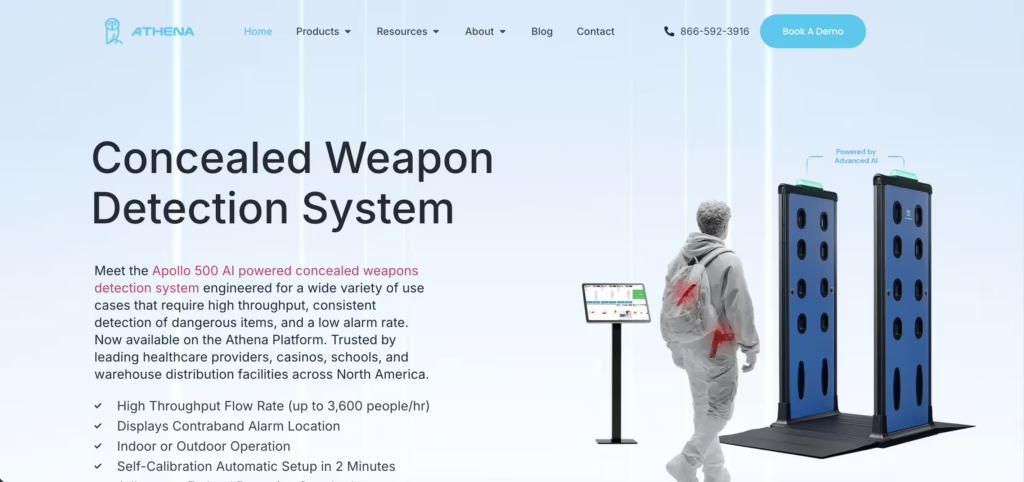
We build connected physical and cybersecurity systems that help you think fast, adapt instantly, and scale with your hospital. We understand the security gaps hospitals face at busy entrances and public access points, because we’ve worked shoulder to shoulder with the people solving them.
When you partner with Athena, you’re not just screening visitors. You’re empowering your team, protecting your flow, and making safety a part of the healthcare environment.
Here’s what Larry Kennedy, Administrative Director of Supply Chains at Jefferson Regional Medical Center, has to say about us:
So if you’re ready for a gate security solution that actually fits how hospitals work, book a free live demo. See what’s possible when security meets real-world hospital needs.
FAQs About Gate Security Solutions for Hospitals
Have questions about the best gate security solutions for hospitals? We’ve answered some of the most common ones below to help you make informed, confident decisions.
If your question is not here, call us at +1-866-592-3916. We’re here to help.
1. How To Protect Hospitals From Cybersecurity Threats?
Hospitals should secure the DNS layer to block threats like hijacking and data exfiltration. Athena’s H-Shield uses DNS security to block unauthorized access, separate DNS protection for internal and external traffic, and embeds DNS security on the Athena’s H-Shield platform.
For more, read our article on DNS Security for Healthcare.
2. What Are Popular Hospital Security Companies?
Some well-known hospital security companies include Athena Security and Allied Universal, both widely used across U.S. healthcare facilities.
To explore more options, check out our guide on the top 5 hospital security companies.
3. What Are the Best Gun Detection Systems?
Some of the top-rated systems include Athena Security, Evolv Express, and Omnilert, each offering unique strengths in AI-powered, non-invasive threat detection built for healthcare environments. These systems help hospitals prevent weapons from entering while preserving patient flow and safety.
Explore all options in our article on 5 Best Gun Detection Systems for Hospitals.
4. What Are the Best Walk-Through Metal Detectors?
Athena Security and Garrett PD 6500i are top-rated for hospital use. These systems balance accuracy, speed, and patient safety in healthcare settings.
Explore how these detectors improve safety and efficiency in our full guide: Best Walk-Through Metal Detectors for Hospitals.
5. What Are The Best X-Ray Baggage Scanners?
Top hospital-grade X-ray scanners include Athena Security’s AI-powered scanner, Smiths Detection HI-SCAN 6040, and Rapiscan Orion® 920DX. These systems enhance hospital safety through real-time threat detection and reliable screening performance.
Explore the Best X-Ray Baggage Scanners for Hospitals here.
6. What Happens When A Weapon Is Detected In Athena Security’s Gate Security Solution?
When a visitor carrying a weapon walks through Apollo 500 hardware, the system immediately detects the threat. Lights on the unit show the precise location, while the operator’s tablet displays a real-time alert with clear threat details.
Simultaneously, the X-ray system secures the bag and blocks access. The subject is guided to secondary screening, where they divest any flagged items. After scanning a driver’s license, the system auto-fills visitor details—speeding up incident documentation while maintaining safety.
Watch this in action here:
7. How Can Hospitals Measure The Real Effectiveness Of A Weapons Detection System Beyond Detection Counts?
Effectiveness can be measured through reductions in violent incidents, fewer staff injuries, faster response times, and improved visitor screening efficiency.
Athena Security’s platform offers built-in analytics that go deeper: administrators can monitor exact foot traffic patterns, catalog every weapon intercepted, and generate data-backed reports that show the system’s real-world value. These insights not only help optimize operations but also reduce caregiver anxiety, giving frontline teams the confidence that real threats are being stopped before they ever enter the facility.
8. How To Procure Athena Security’s Gate Security Solutions?
The first step is to book a free demo. Our team will walk you through the system, assess your facility’s needs, and guide you through deployment options tailored to your environment. Book a free demo below today to get started.
Disclaimer :The information provided in this article is based solely on publicly available sources and is intended for general informational and guidance purposes only. It should not be relied upon as a final decision-making resource or as a substitute for professional advice. While we strive for accuracy and completeness, we make no representations or warranties regarding the correctness, reliability, or suitability of the content. If you believe any information should be updated, corrected, or removed, please contact our team for review.