
| Summary: The best way to improve hospital security without adding more guards is to use a virtual security officer as a workforce multiplier at key entry points. It gives hospitals a visible security presence, handles routine visitor guidance, and escalates issues to a live remote operator when needed. |
A 2026 systematic review found that hospital-based shootings in the U.S. have increased steadily over the past 25 years. The risk became painfully clear in February 2025, when a gunman entered UPMC Memorial Hospital’s ICU in Pennsylvania, took hostages, and opened fire, leaving two dead, including the shooter, and seven injured. Reports said he carried a handgun and zip ties into the hospital.
For hospitals, incidents like this do not just raise safety concerns. They expose a staffing problem. Many hospitals need stronger screening. Not just that, they also need better entrance coverage, and faster response. But they cannot place a guard at every door, on every shift, without stretching budgets further.
That is why security leaders are asking how to improve hospital security without adding more guards. This article explains how hospitals can close coverage gaps with telepresence security officers and other workforce multiplier technologies.
Why Is It Hard to Improve Hospital Security by Adding More Guards?
Adding more guards is hard because hospitals need 24/7 coverage across too many entry points. But security hiring is expensive, inconsistent, risky, and difficult to scale. Recent data shows this clearly.
The 2024 Healthcare Crime Survey found that most healthcare facilities rated recruiting security staff as neutral, difficult, or very difficult. A 2023 survey also found that 65% of hospitals said it was difficult or very difficult to retain fully qualified security staff.
That means hospitals are being asked to protect more areas at a time when hiring and retaining security staff is already a challenge.
A hospital may need coverage at the main lobby, ER entrance, ambulance bay, staff entrances, restricted areas, parking access points, and after-hours doors. In a traditional model, every new post usually means another officer, another shift, and more overtime risk.
But even when hospitals can hire more guards, there is another issue: the job itself can be dangerous.
Why is The Security Guard Job at Hospital Dangerous
In July 2023, Bobby Smallwood, a 44-year-old unarmed security guard, was shot and killed in the maternity ward of Legacy Good Samaritan Medical Center in Portland while protecting staff and patients.
So the challenge is not only “How do we afford more guards?” It is also “How do we protect the guards we already have?”
That creates four problems for hospitals:
- Coverage gaps: Low-traffic doors may stay under-secured because they do not justify a full-time guard.
- Officer safety risk: Guards placed at high-risk access points may become the first people exposed during violent incidents.
- High labor cost: One full-time officer can cost somewhere between ~$38,000–$46,000 annually, and most hospitals need several per shift.
- Operational pressure: Guards often split attention between visitor questions, screening instructions, alerts, incident response, and access control.
- Repetitive monitoring work: Some guards spend large parts of their shift watching for routine access issues, such as tailgating at entrances, when cameras, virtual security officers, or automated alerting can help monitor those gaps more efficiently.
So the issue is not that hospitals do not need human security officers. They do. The issue is that using one guard for every entrance or repetitive task is expensive, hard to scale, and risky for the officers themselves.
That is why hospitals need a workforce multiplier model: more coverage with fewer exposed posts, lower staffing pressure, and human officers reserved for the moments where their judgment and response matter most.
What Is the Best Way to Improve Hospital Security Without Adding Guards?
The best way to improve hospital security without adding guards is to deploy a Virtual Security Officer at key hospital entry points.
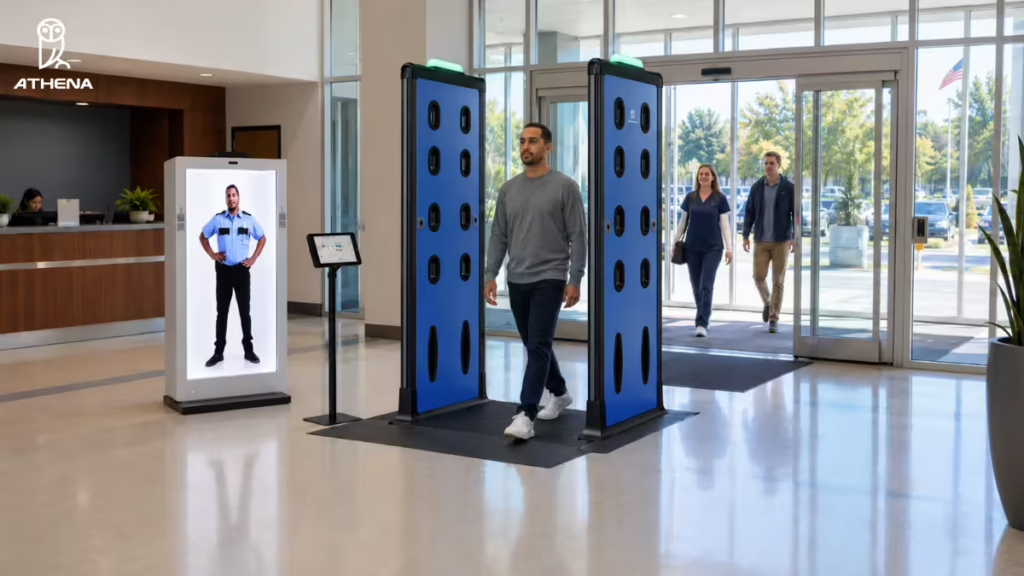
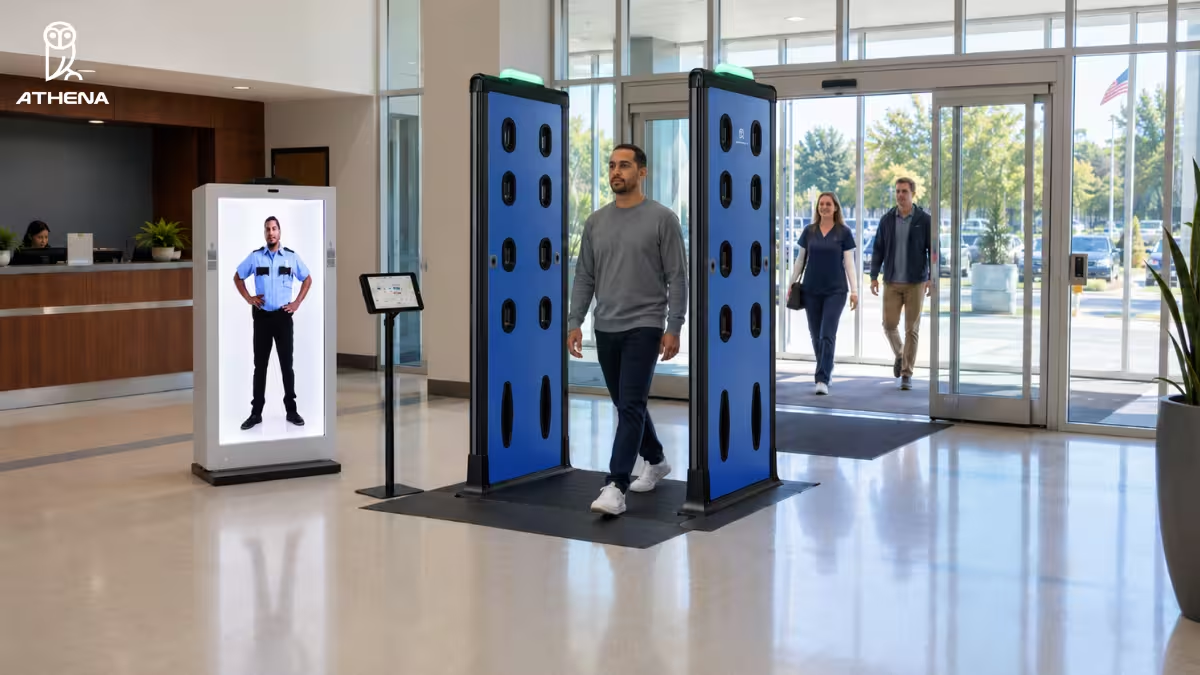
Instead of placing one physical guard at every entrance, Telepresence security officer projects a life-size virtual security officer that can greet visitors, give screening instructions, answer common questions, and escalate issues to a live remote operator when needed. It can also support repetitive visitor check-in and check-out tasks through the visitor management system, helping hospitals know who entered, who received a badge, and who has left the building. This helps hospitals cover more entry points without stretching the on-site team thinner.
How Does a Virtual Security Officer Help Hospitals Cover More Entrances?
Telepresence security officer technology allows one remote operator to manage up to four locations, while still keeping human oversight available for situations that need intervention. It can also support multilingual visitor guidance, AI-assisted FAQs, and integration with weapons detection, X-ray machines, visitor management, access control, cameras, and alert systems.
A virtual security officer can take over many of those front-end tasks through:
- Visitor greetings at entry points
- Screening instructions before visitors enter
- AI-assisted answers to common questions
- Multilingual visitor guidance
- Pre-recorded or live video interactions
- Escalation to a live remote operator when needed
This means on-site guards do not have to personally handle every routine conversation. They can stay focused on alerts, exceptions, de-escalation, incident response, and areas where physical presence is actually needed.
For hospitals, that is the real staffing advantage. The telepresence officer does not replace trained guards. It reduces the repetitive work that keeps them from doing the job that only trained security staff can do.
How Can Hospitals Reduce Workload on Their Existing Guards?
Hospitals can reduce workload on their existing guards by deploying a virtual security officer as the primary entry-point support layer, then connecting it with AI weapons detection, centralized X-ray review, AR alert glasses, visitor management, and ambulance bay screening.
The virtual officer helps reduce the need for a physical guard at every entrance. The supporting tools reduce the manual tasks that usually consume guard time, such as screening every visitor, watching separate devices, answering repeated check-in questions, monitoring X-ray stations, and handling ambulance bay searches.
These tools are part of the broader stack of best healthcare security systems that help hospitals automate screening, improve alert visibility, and reduce manual checkpoint work.
Let’s look into these deeper:
How Can Hospitals Reduce Guard Workload at Security Checkpoints?
Hospitals can reduce guard workload at security checkpoints by consolidating weapons detection and baggage screening into one operator workflow.
Instead of having separate guards watch separate devices, hospitals can integrate an AI-assisted baggage X-ray with concealed weapons detection so one operator can manage multiple screening systems from a single console or tablet.
Decision angle: This reduces duplicated monitoring work and lets officers focus on alerts, exceptions, and secondary screening.
How Can Hospitals Help Existing Guards Respond Faster Without Hiring More Staff?
Hospitals can help existing guards respond faster by giving them AR Alert Glasses.
AR Alert Glasses send discreet, real-time threat alerts directly into an officer’s field of vision. This helps guards stay aware while answering visitor questions, managing lines, or responding to incidents.
Decision angle: The goal is not to add more people. The goal is to make the guards already on-site harder to distract and faster to activate.
How Can Hospitals Automate Visitor Check-Ins to Free Up Security Staff?
Hospitals can automate visitor check-ins with a visitor management system. They can reduce front-desk workload with visitor management system features, like pre-registration, self-check-in, ID scanning, badge printing, watchlist checks, custom workflows, and auto sign-out.
Decision angle: When routine check-ins are automated, security staff can spend more time on risk-based work instead of paperwork, repetitive questions, and manual logging.
How Can Hospitals Secure Ambulance Bays Without Pulling Guards From Other Posts?
Hospitals can secure ambulance bays without pulling guards from other posts by using ambulance bay weapons detection system.
Emergency departments often need to screen patients arriving on stretchers without slowing EMS flow or assigning multiple guards to manual searches. An ambulance bay WDS supports faster screening while one operator manages the process from a tablet.
Decision angle: This helps hospitals protect one of their highest-risk entry points without draining staff from the lobby, ER desk, or visitor entrances.
Together, these tools reduce the manual work around hospital screening, monitoring, visitor intake, and emergency entry points. That is how hospitals can strengthen security without making “hire more guards” the default answer.
Recommended read: How To Screen Ambulance Bays Without Triggering False Alarms From Gurneys.
How Can Athena Security Help Me Improve Hospital Security Without Adding More Guards?
Improving hospital security without adding more guards is not just about buying more technology. It is about redesigning how your entrances, screening lanes, alerts, and response workflows work together.
That is where Athena Security can help.
As one of the top hospital security companies, Athena works with hospitals to identify where guards are being overused for repetitive tasks, where entrances are under-covered, and where automation can reduce workload without removing human oversight. The goal is to help your existing team cover more ground, respond faster, and stay focused on the situations that actually need trained security judgment.
We have already worked with several hospitals, like Duke Health, Nuvance, and Yale New Haven Hospital.
If your hospital wants to improve hospital security without adding more guards, book a demo with us below or call +1-833-928-4362.

FAQs About Improving Hospital Security Without Adding More Guards
While you assess how a virtual security officer can help you improve your hospital security without adding more guards, our experts have answered the questions that they get asked the most during deployment at hospitals.
1. Does a Virtual Security Officer Replace Hospital Security Guards?
No. A virtual security officer supports hospital guards by handling repetitive visitor guidance, screening instructions, and escalation workflows, so trained officers can focus on incidents and response.
2. How Many Locations Can One Virtual Security Officer Cover?
Athena’s telepresence security officer model allows one remote operator to manage up to four locations, depending on the hospital’s layout, traffic, and risk profile.
3. Is a Virtual Security Officer Useful for Emergency Departments?
Yes. A virtual security officer can help guide visitors, deliver screening instructions, and escalate issues at ER entrances where traffic is unpredictable and guards are often stretched thin.
4. What Hospital Security Solutions Should Healthcare Facilities Consider in 2026?
Healthcare facilities should consider hospital security solutions that protect entry points, screen bags, manage visitors, secure ambulance bays, and connect alerts into one integrated workflow. The core stack includes walkthrough weapons detection, X-ray baggage scanners, visitor management, ambulance bay weapons detection, and an integrated hospital security platform.
For more details, read this article on hospital security solutions.
5. How Can Walk-Through Metal Detectors Reduce Guard Workload at Hospital Entrances?
Walk-through metal detectors can reduce guard workload. It can screen visitors faster and help officers focus on real threats instead of manually checking every person. AI-powered systems can filter out everyday items, show where a threat may be located, and support smoother secondary screening at busy hospital entrances.
For more details, read this article on the best walk-through metal detectors.
6. Where Should A Hospital Deploy Its First Virtual Security Officer If It Cannot Cover Every Entrance On Day One?
A hospital should first deploy a virtual security officer at exit points and badge verification checkpoints because these areas involve repetitive tasks that can often be automated.
Start with:
- Exit points: A virtual security officer connected with the visitor management system can help check visitors out when they leave, so the hospital has a more accurate view of who is still inside the building.
- Badge verification checkpoints: A virtual officer with a verification camera can help confirm whether people walking by have an active, valid badge without requiring a physical guard to sit at that post all day.
- Routine visitor flow tasks: The virtual officer can guide visitors through check-in, check-out, badge return, or basic access instructions without pulling a guard away from higher-risk work.
This helps hospitals reduce guard workload quickly. They can automate low-complexity tasks first, while keeping physical officers focused on alerts, incidents, de-escalation, and response.
7. How Can I Procure a Virtual Security Officer From Athena Security?
You can contact our team directly to discuss your specific needs and receive a customized quote. You can email us at [email protected] or call us at +1-866-592-3922.
If you’d like to see the system in action, you can request a free demo below.
Disclaimer: The images have been created using AI-based tools and are intended for illustrative purposes only. They may not accurately represent real individuals, locations, or situations. Any resemblance to real persons, living or dead, or actual events is purely coincidental.