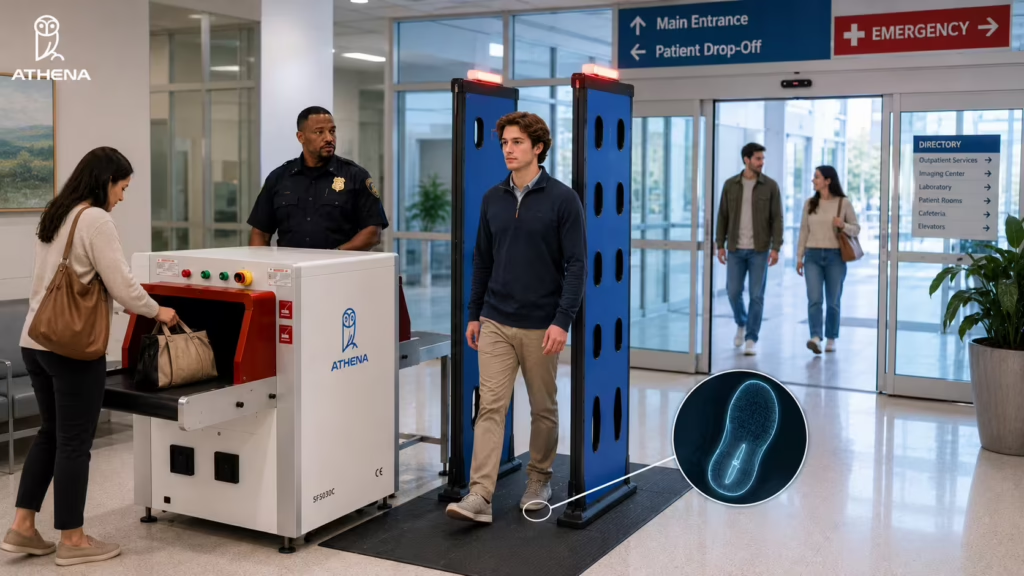

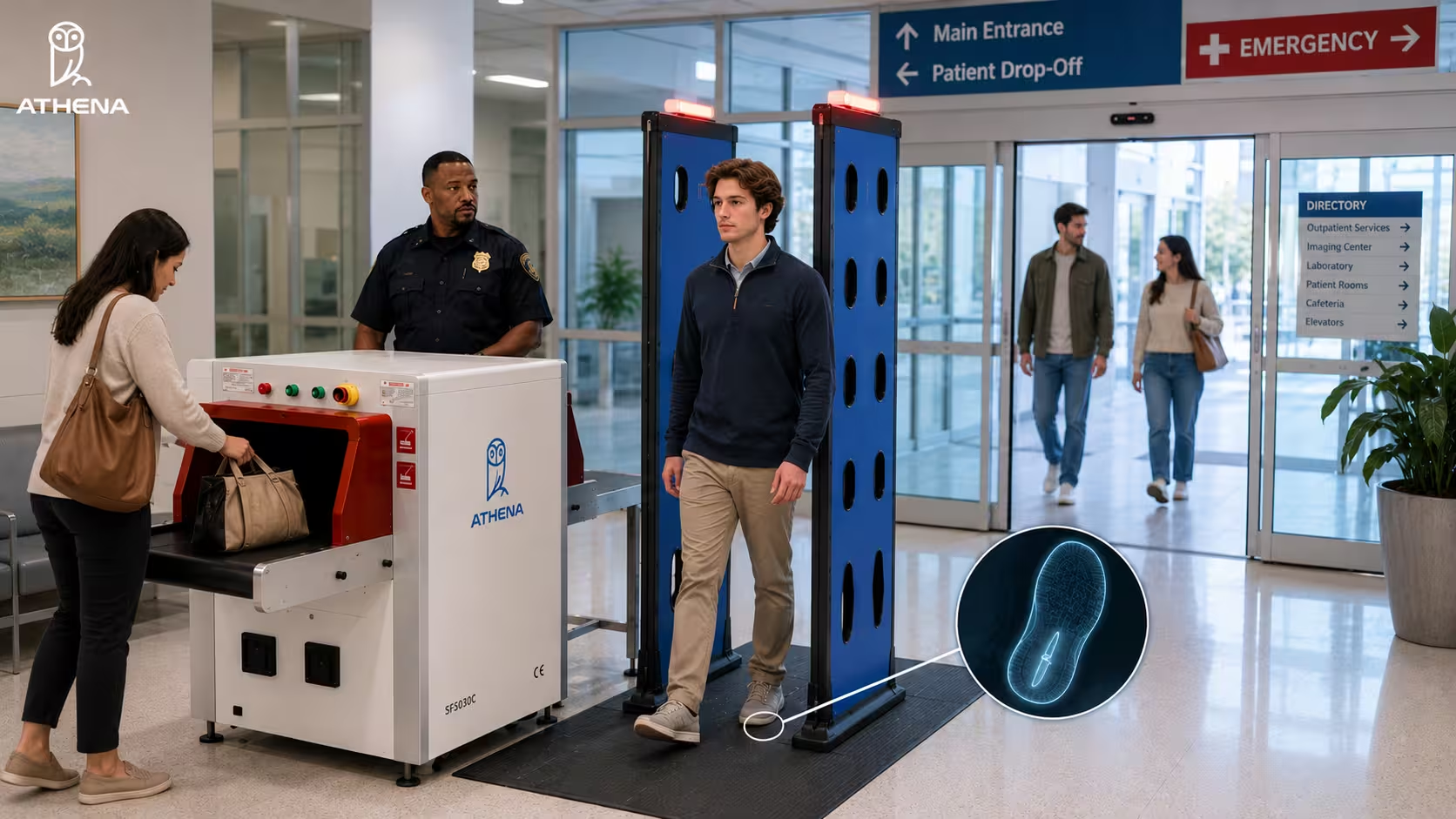
| Summary: To detect knives and small blades in hospitals, we need a concealed weapons detection system to screen personnel and an AI X-ray baggage scanner to screen bags for knives/small blades. Hospitals must also install an ambulance bay WDS to screen stretcher patients for small weapons. |
In December 2025, at Zuckerberg San Francisco General Hospital, a patient with prior concerning behavior returned carrying a 5-inch knife and fatally stabbed a social worker despite existing security measures.
Such incidents show that having security personnel isn’t enough. While they help spot obvious threats and enforce security protocols, they can’t watch every part of the hospital or manually check each bag. It’s time-consuming and tiring. That leaves smaller weapons, like pocketknives or utility blades, easier to conceal. And missing even a single blade can wreak havoc on the hospital.
In this article, we’ll explain how to detect knives and small blades at hospital entrances using an AI-powered concealed weapons detection system and an AI X-ray baggage scanner, and what to do when such a weapon is flagged.
Why Are Knives and Small Blades Hard to Stop at Hospital Entrances
Knives and small blades are hard to stop at hospital entrances because they are compact and easy to hide. They can fit inside pockets, shoes, clothing layers, bags, and other personal belongings.
There can be other reasons, too. For example, in the Zuckerberg San Francisco General Hospital incident, the patient walked into Ward 86, an area that did not have a metal detector at the time.
Below are all the factors that make it hard to detect knives and small blades:
| Factor | Explanation | Example |
| Unmonitored Entrances Create Security Gaps | Many hospitals secure main public lobbies but leave emergency entrances and ambulance bays unmonitored. This creates security gaps because stretcher patients bypass screening and might bring small weapons inside. In fact, AB 2975 mandates screening at three entrances: main public lobbies, ERs, and separately accessible labor/delivery rooms. | In the 2022 Conroe hospital shooting, a woman on a gurney pulled out a hidden gun and fired two shots. |
| Intrusive Searches Can Distress Patients | Manual searches can increase anxiety for patients in crisis. Officers might hesitate to inspect patients or their belongings. As a result, smaller weapons can be smuggled inside a patient/visitor’s clothing or medical equipment like wheelchairs. | In the West Palm Beach VA Medical Center incident, a double-amputee patient pulled a handgun from his wheelchair and fired shots in the ER. |
| Speed vs Security Dilemma | Harmless everyday items like key rings, some earrings, etc., can set off standard metal detectors. When false alarms overwhelm hospital staff, lowering sensitivity can reduce alert fatigue and improve throughput. But that comes at the cost of potentially missing smaller weapons. | According to the National Institute of Justice, items that trigger metal detectors include soda cans, boots with steel shanks, large closed-loop earrings, key rings, and three-ring metal binders. |
| Smaller Knives Can Contain Less Detectable Metal | Traditional metal detectors measure how metal distorts an electromagnetic field. Smaller knives and pocket tools can contain less detectable metal than larger weapons and generate signals too weak to trigger standard metal detectors. Ceramic and other nonmetallic blades contain little to no metal at all. | A 2020 NIST study revealed that when a knife is both small and nonferromagnetic, the detection signal drops dramatically. A standard small nonferromagnetic stainless steel knife registered a baseline signal that was half of what a medium-sized steel knife generated. |
| Manual Bag Checks Are Not Reliable | It can be difficult for security officers to identify weapons concealed among overlapping or cluttered personal belongings in a bag. | In 2023, staff at Cedar Springs Behavioral Health System missed a pocket knife hidden in a ten-year-old patient’s belongings during an admission contraband check. The patient later retrieved the knife and used it to threaten another patient. |
These factors and the Zuckerberg stabbing incident show that improving hospital security requires more than just adding security personnel.
Hospitals need advanced technology to detect smaller weapons quickly and accurately, instead of relying on manual searches. To learn more, read our guide on how to improve hospital security without adding more guards.
How to Detect Knives and Small Blades at Hospital Entrances
To detect knives and small blades in hospitals, we need a layered screening process: people are screened with walkthrough detectors, and bags are screened separately with an X-ray baggage scanner. Additionally, a hospital may also install screening systems built for ambulance bays. Hospitals should also have dedicated secondary screening to resolve alerts non-invasively, and proper staffing to ensure a smooth workflow.
In practice, here’s what this layered screening process looks like:
| Hospital Entrance | Situation | Screening Workflow |
| Main Entrance/ ED Entrance | Person carries no bag | A person walks through the weapon detection system (WDS). |
| Person carries bag | A person walks through the WDS while their bag is screened separately through the X-ray. | |
| Knife or small blade found on person/ inside bag | The person and their belongings are moved to secondary screening for alert resolution. | |
| Ambulance Entrance | Emergency patient arrives on stretcher | The patient passes through the ambulance-bay WDS while lying down on the stretcher. |
| Knife or small blade found on patient | The patient is first stabilized, then the weapon is removed. |
This setup works smoothly because it:
- Separates people-screening from bag-screening, which means compact threats are detected more accurately.
- Secures vulnerable gaps like ambulance bays/ ED entrances and prevents weapons from entering a hospital.
For example, when a person walks through our Apollo 500 concealed WDS, its “Catch-Knives” sensitivity settings can detect small-edged weapons (e.g., 2 to 2.5-inch blades). Officers can see the pinpoint location of the threat on their tablet, which makes secondary searches faster. Plus, our WDS uses non-invasive technology, making it completely safe for walk-in patients at ED entrances.
Here’s a quick video of our Apollo 500 WDS in action:
Our AI X-Ray Baggage Scanner uses dual-energy X-ray to analyze material density, atomic number, and material type. This helps detect both metal and non-metallic weapons. If the scanner flags a potential weapon, the conveyor belt automatically stops to secure the bag inside the scanning tunnel.
Patients arriving on stretchers can be screened using our Ambulance Bay WDS (AB-WDS). It scans top-down instead of left-right, completely ignoring the gurney metal underneath. It can detect both metallic and non-metallic threats, without requiring patients to stand, walk, or move.
Suggested Read: Why X-Ray Baggage Scanners Are Important for Hospital Security
What to Do if a Knife or Small Blade Is Flagged
When a knife or small blade is flagged at a hospital entrance, security teams must follow a structured, rapid-response protocol to resolve the alert without disrupting patient care or creating panic.
The standard protocol involves the following steps:
- Guide the Subject Off-Line for Secondary Screening: Send the visitor or their bag immediately to a designated secondary screening area away from the main screening lane. This prevents long queues at the entrance.
- Use Trained Security Personnel Only: Under compliance standards (like California’s AB 2975), trained non-clinical security personnel must perform searches and confiscations.
- Securely Resolve the Alert: Visitors carrying legal weapons (e.g., pocketknives) have the legal right to leave the facility with the object. Or they can secure it in their vehicle before entering the hospital.
- Follow Special Protocol for Emergency Trauma and Gurney Arrivals: If a weapon is flagged on an incoming stretcher patient, staff must provide emergency care first. Security teams should intervene once the patient is stable.
- Log the Incident: Record who brought in the weapon, where it was found, the weapon type, and who resolved the alert for faster auditing. With our Athena platform, all incident details, threat photos, and officer response actions automatically sync in real time to our centralized cloud center for audit-ready compliance reporting.
- Escalate to Law Enforcement: Contact local police immediately if an individual refuses secondary screening or attempts to run inside with the weapon.
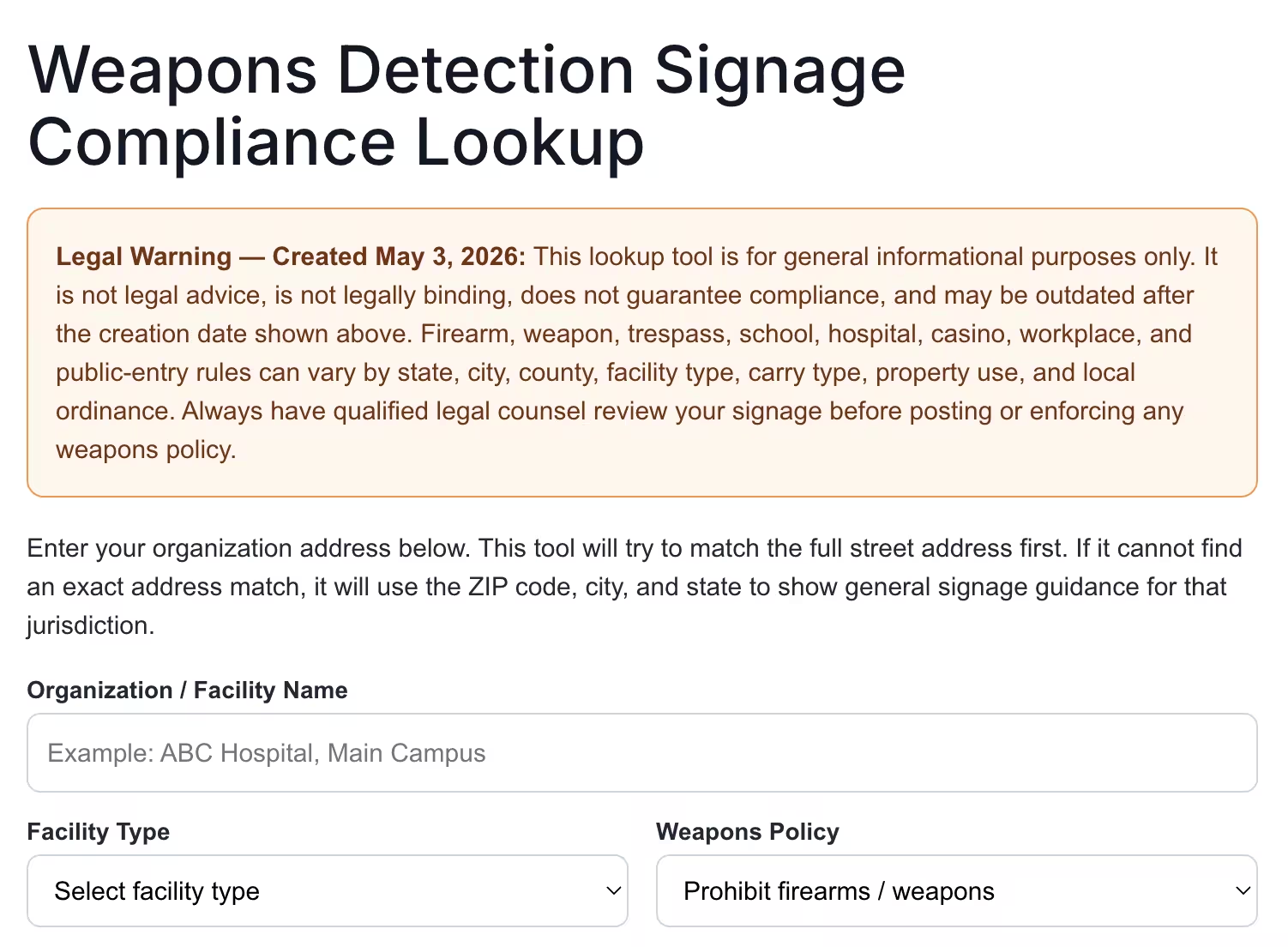
Once a knife or small blade is flagged, send the person for secondary screening. However, traditional metal detectors can also flag everyday items like keys or rings as small-edged weapons. This means more people are sent for secondary screening unnecessarily. A good way to reduce secondary screenings at hospital entrances is to use clear signage that instructs visitors what items to remove before screening.
We’ve created a free weapons detection signage compliance lookup tool to identify your signage requirements. Fill out the short form at the end to check your requirements in seconds (as shown in the image below).
How Can Athena Security Help Detect Knives and Small Blades in Hospitals
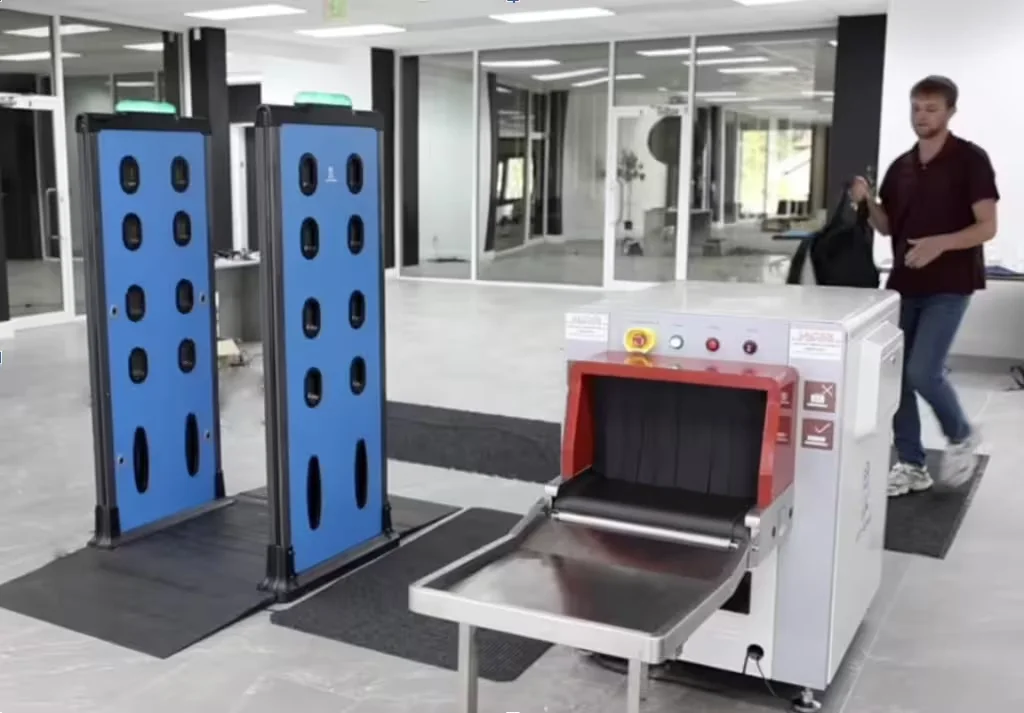
We help hospitals detect knives and small blades by implementing a weapons screening setup that uses both walk-through WDS and an X-ray baggage scanner. Our Apollo 500 concealed WDS can detect small 2” to 2.5” blades on individuals while ignoring everyday items. At the same time, our dual-energy X-ray scanner identifies small-edged threats hidden inside bags. Additionally, our ambulance bay WDS spots metallic and non-metallic threats on stretcher patients.
To ensure everything works smoothly, we provide on-site coaching to train staff on configuring sensitivity, resolving alerts, logging incidents, and following response protocols.
Our team has been trusted by many leading hospitals, including Duke Health, Memorial Hermann, Jefferson Regional Medical Center, Franciscan Health Olympia Fields, etc.
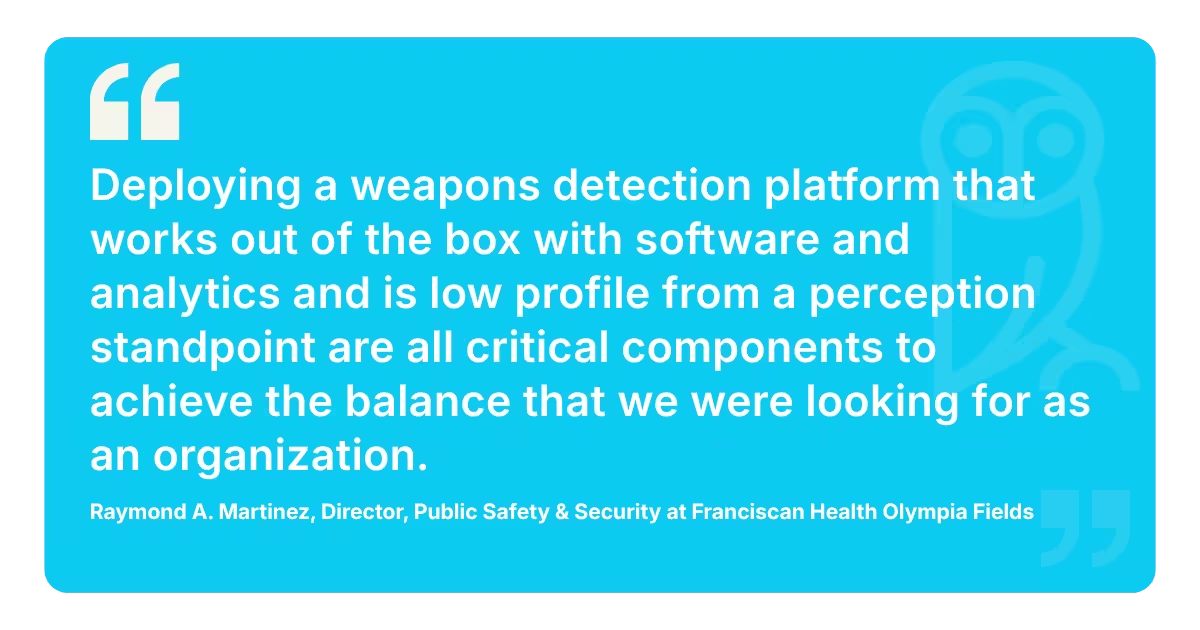
Here’s what Raymond A. Martinez, Director of Public Safety & Security at Franciscan Health Olympia Fields, says about our WDS:
Don’t wait for the next knife to make it through your hospital entrance. Talk to our team today to assess your existing hospital entrances and catch smaller weapons.
Book a free demo below or call us at 1-833-928-4362 to get started.
Frequently Asked Questions About Detecting Knives and Small Blades in Hospitals
While you decide what the next steps are, you might have a few questions regarding small-edged weapon detection. Below, our experts have answered the most common ones they hear during a demo with their clients:
1. What Types of Knives and Small Blades Should Hospital Screening Systems Be Able to Detect?
Hospital screening systems should be able to detect several categories of knives and small blades, including:
- Standard pocketknives and folding knives, especially those with 2-2.5” blades
- Tiny, ultra-thin razor blades and utility box cutters
- Non-metallic knives made of ceramic, carbon fiber, or hardened plastics
- Handcrafted shanks and construction-grade work blades
Most importantly, the screening system should be able to detect these weapons even if they are hidden deep inside a cluttered bag.
2. Where Should Hospitals Deploy Weapons Screening to Detect Knives and Small Blades?
To detect knives and small blades, hospitals should deploy weapons screening at key areas like main lobbies, ED entrances, ambulance bays, staff-only entrances, behavioral health wings, and treatment zones. This creates an ironclad perimeter around your hospital and ensures a welcoming environment focused entirely on patient healing.
3. What Should Security Leaders Evaluate Before Purchasing a Weapons Detection System?
Before purchasing a weapons detection system, security leaders should evaluate the following factors:
- Small Blade Sensitivity: Check if the sensors are sensitive enough to actually catch small weapons like 2” blades, pocketknives, box cutters, etc.
- Throughput Speed: A WDS detection system should be able to screen up to 3,600 people per hour accurately, even at a catch-knives setting.
- Non-Invasive Technology: Ensure the screening system utilizes low-frequency electromagnetic fields that are third-party tested and certified safe for pregnant women, children, and patients with surgical implants or cardiac pacemakers. It should also be ADA-compliant to allow easy wheelchair access.
- Integration with X-Ray Baggage Scanner: While an AI-powered WDS can detect knives, screening many people and bags in a single lane can be time-consuming. An X-ray baggage scanner lets you screen bags separately for small weapons. This way, you can set the WDS to high sensitivity and catch knives efficiently, while maintaining high throughput.
- Pilot Runs: Before signing a contract, request a structured 30-to-60-day pilot. This lets you test the hardware under real-time hospital conditions.
Suggested Read: How to Run a Weapons Screening Pilot at a Hospital
Disclaimer: The images have been created using AI-based tools and are intended for illustrative purposes only. They may not accurately represent real individuals, locations, or situations. Any resemblance to real persons, living or dead, or actual events is purely coincidental.